
Last updated September 19, 2026
Full 25-point door and opener safety check with every visit - springs, cables, rollers, tracks, and your LiftMaster or Chamberlain opener included
You get a price before we start. It does not change when the truck arrives.
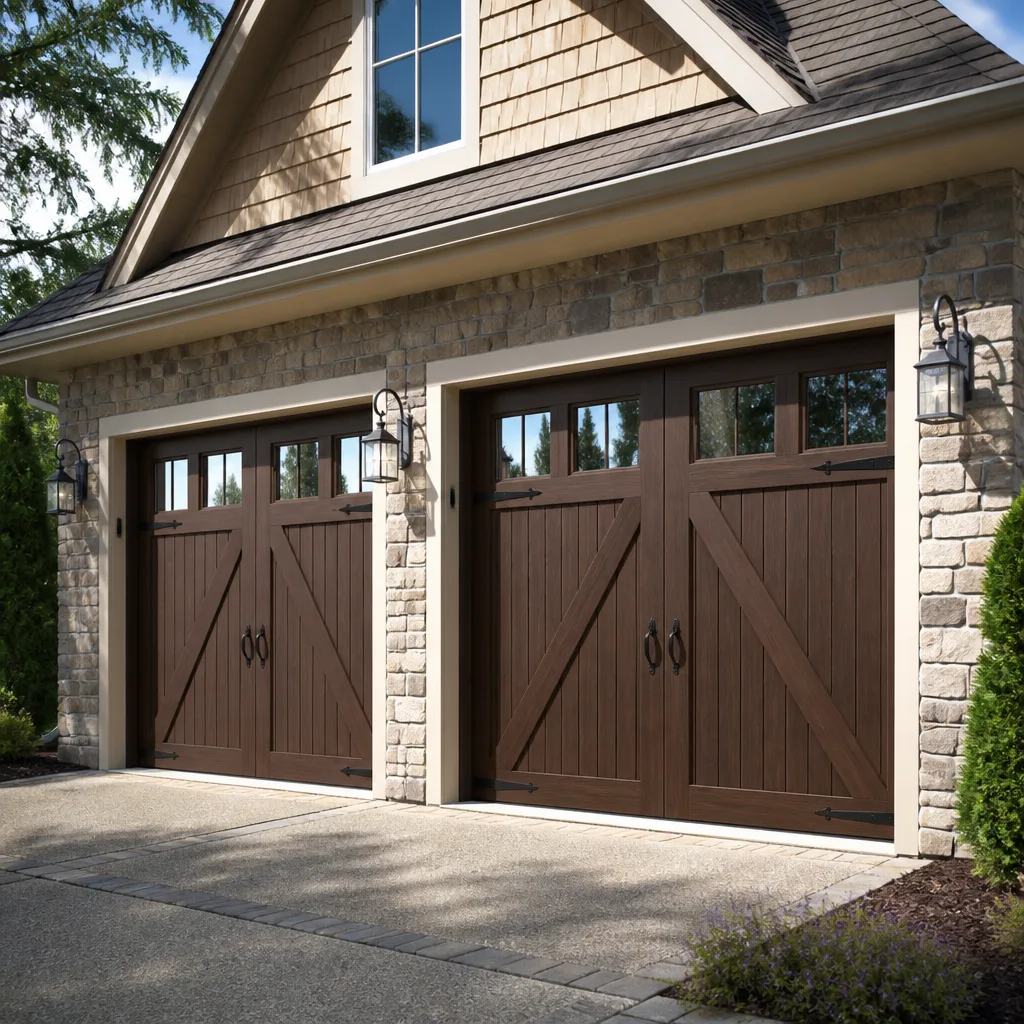
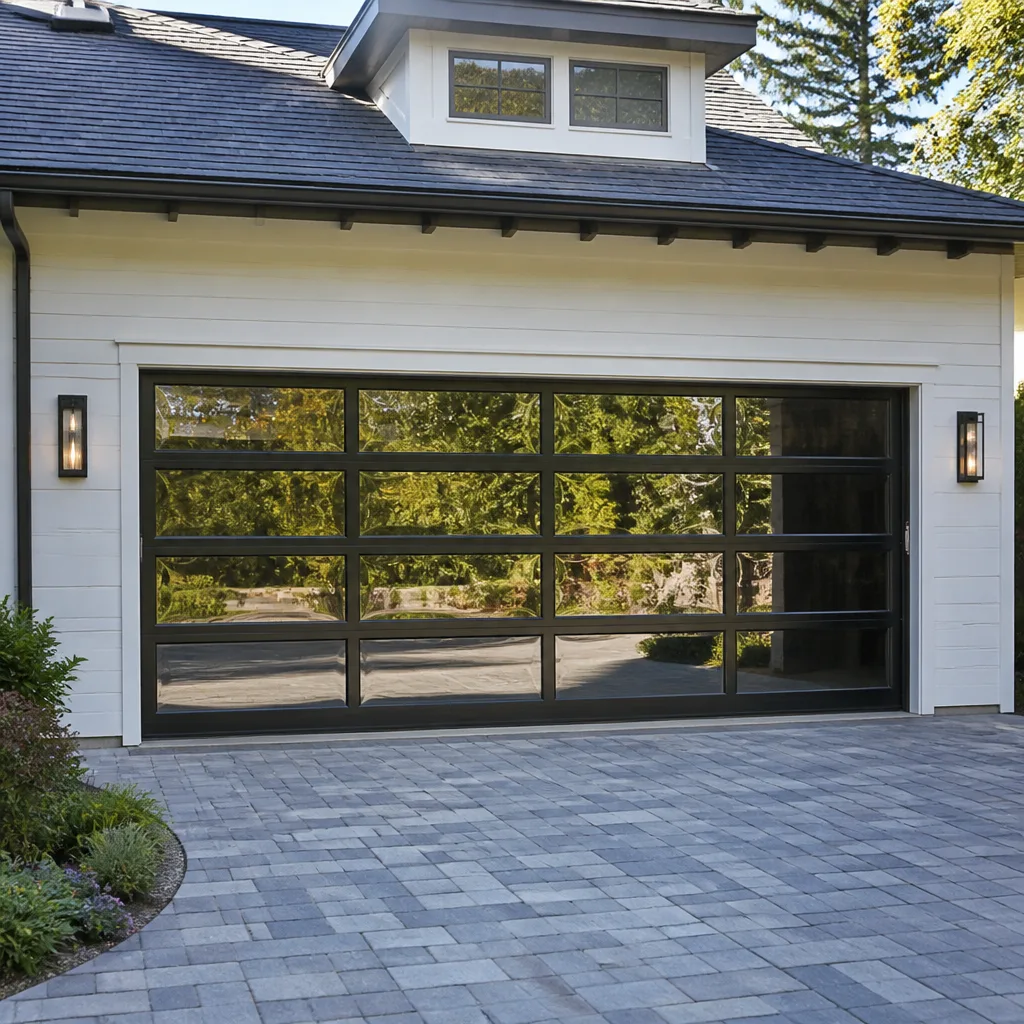
Modern flush
LiftMaster openers
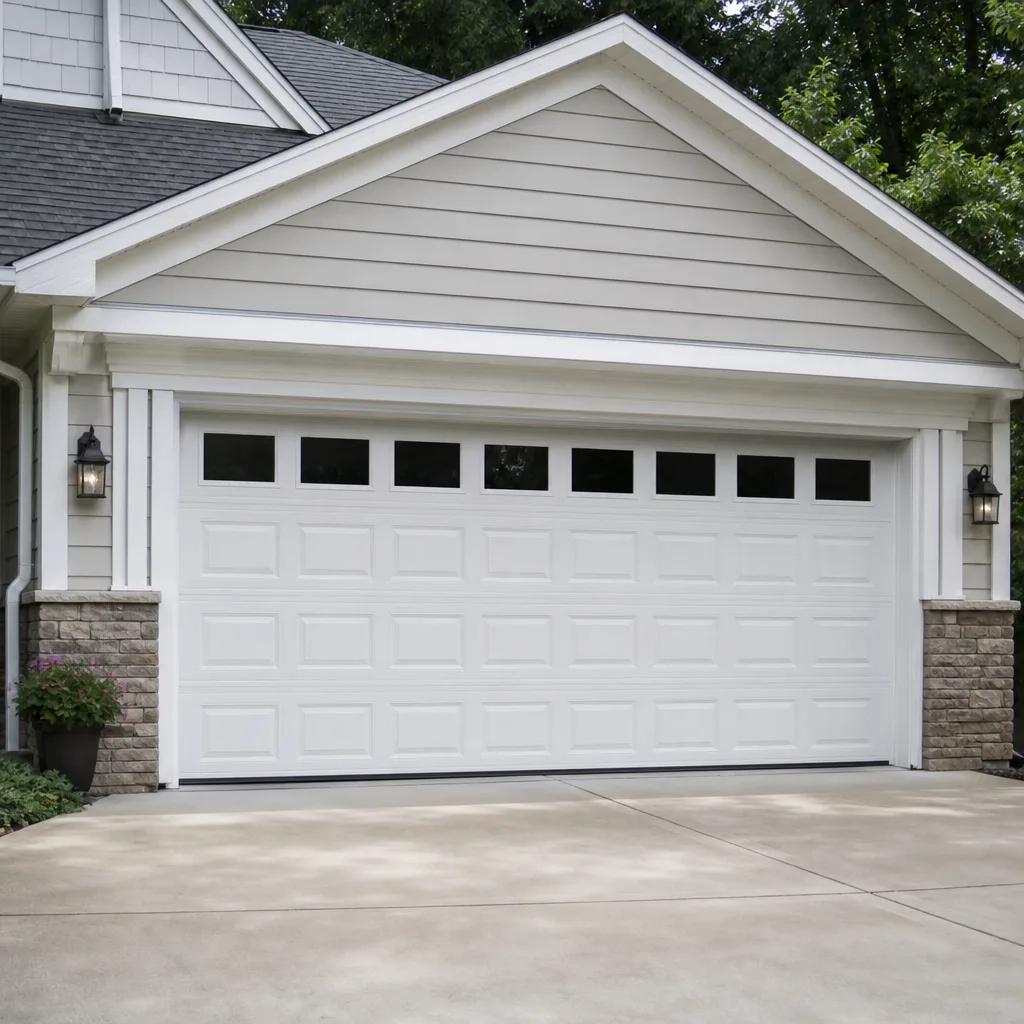
 Before
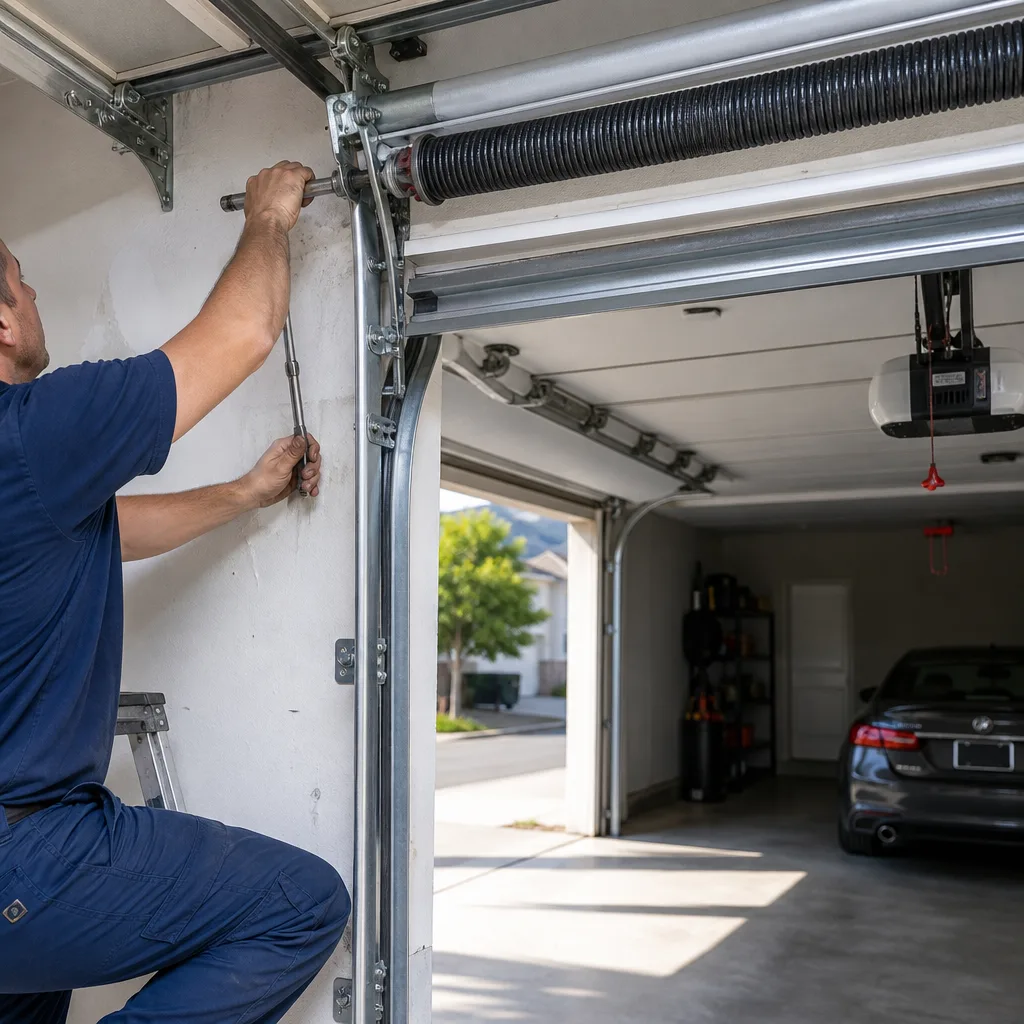 After
After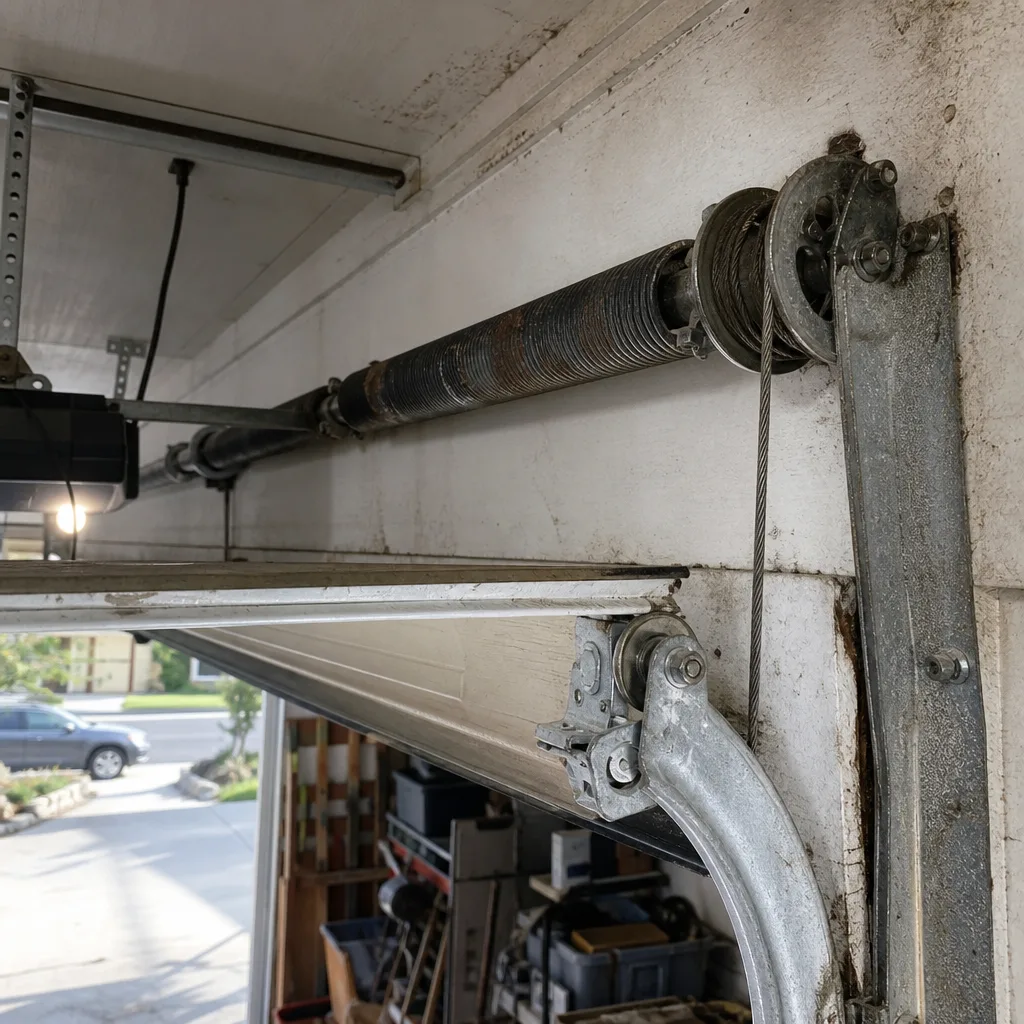 Before
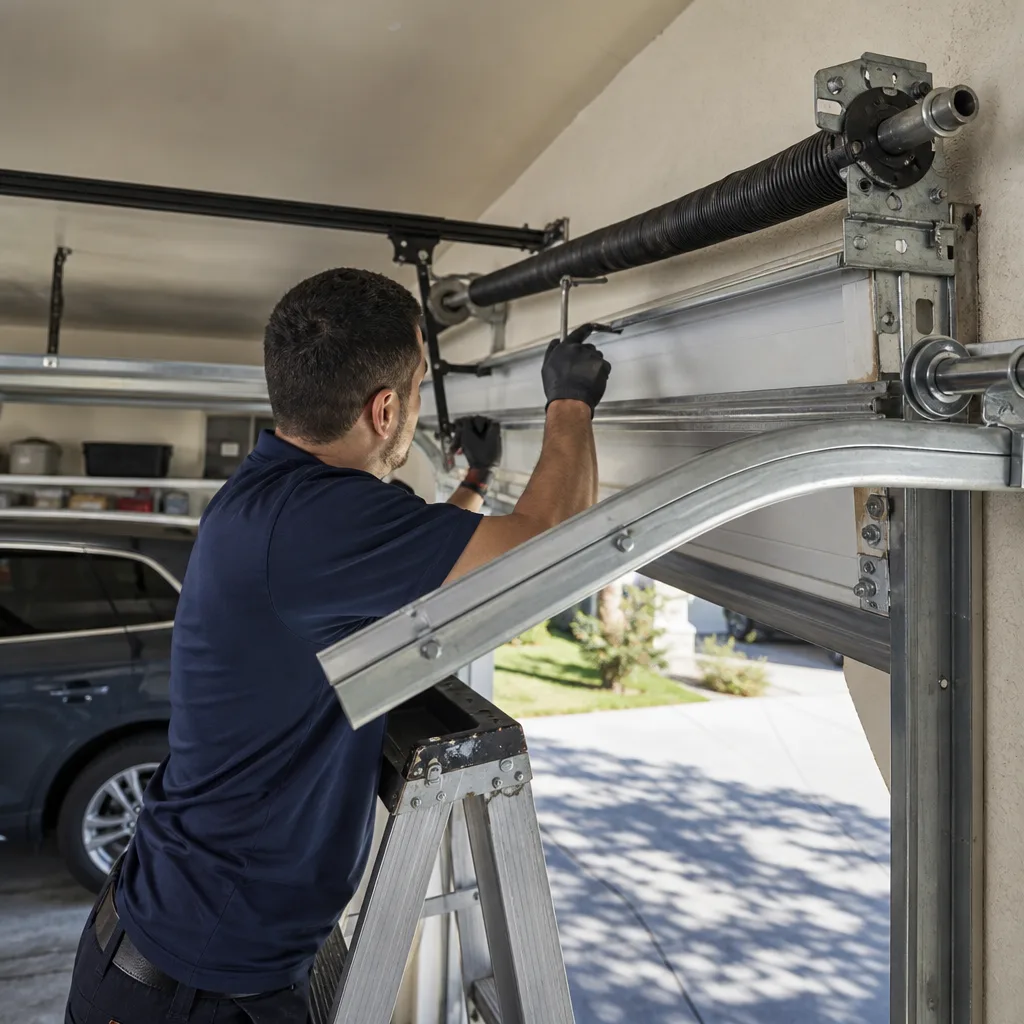 After
After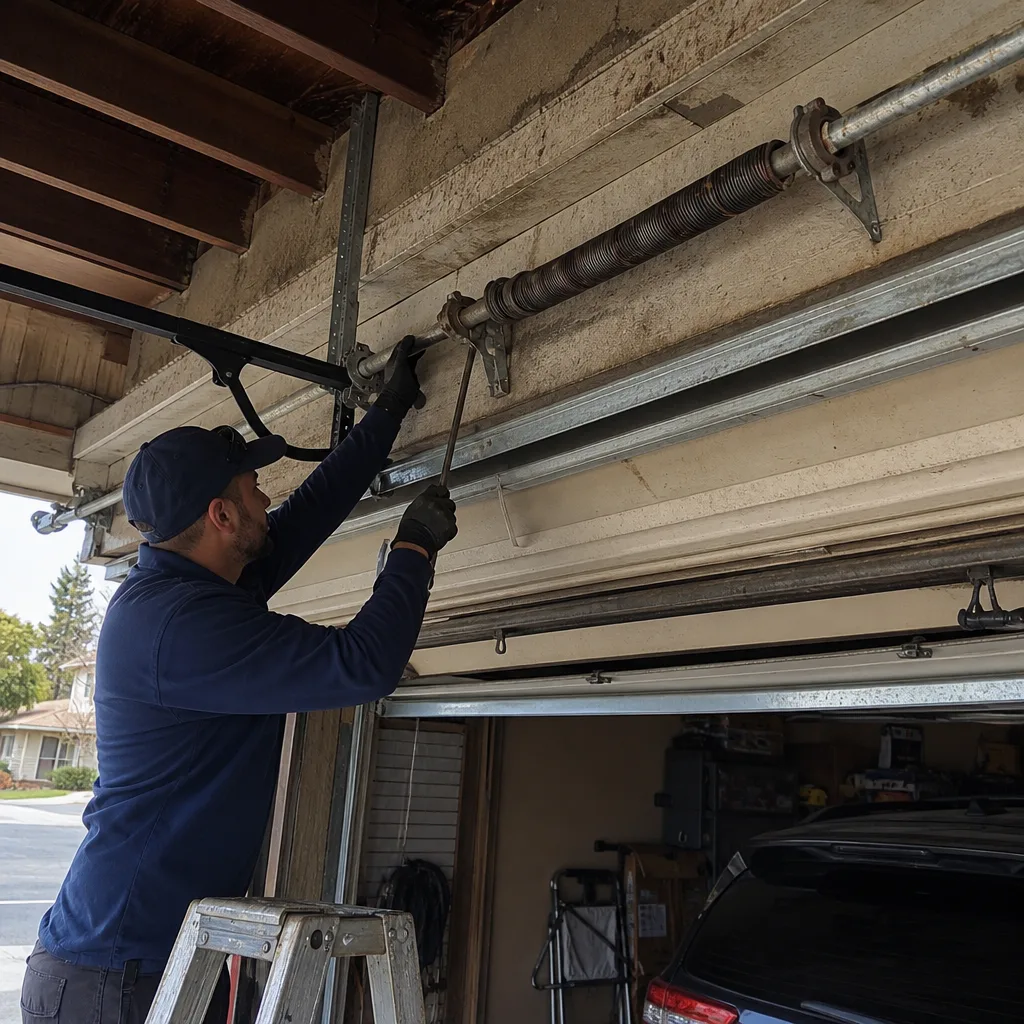 Before
 After
AfterSeasonal Garage Door Care for Santa Clarita: Year-Round Homeowner’s Guide
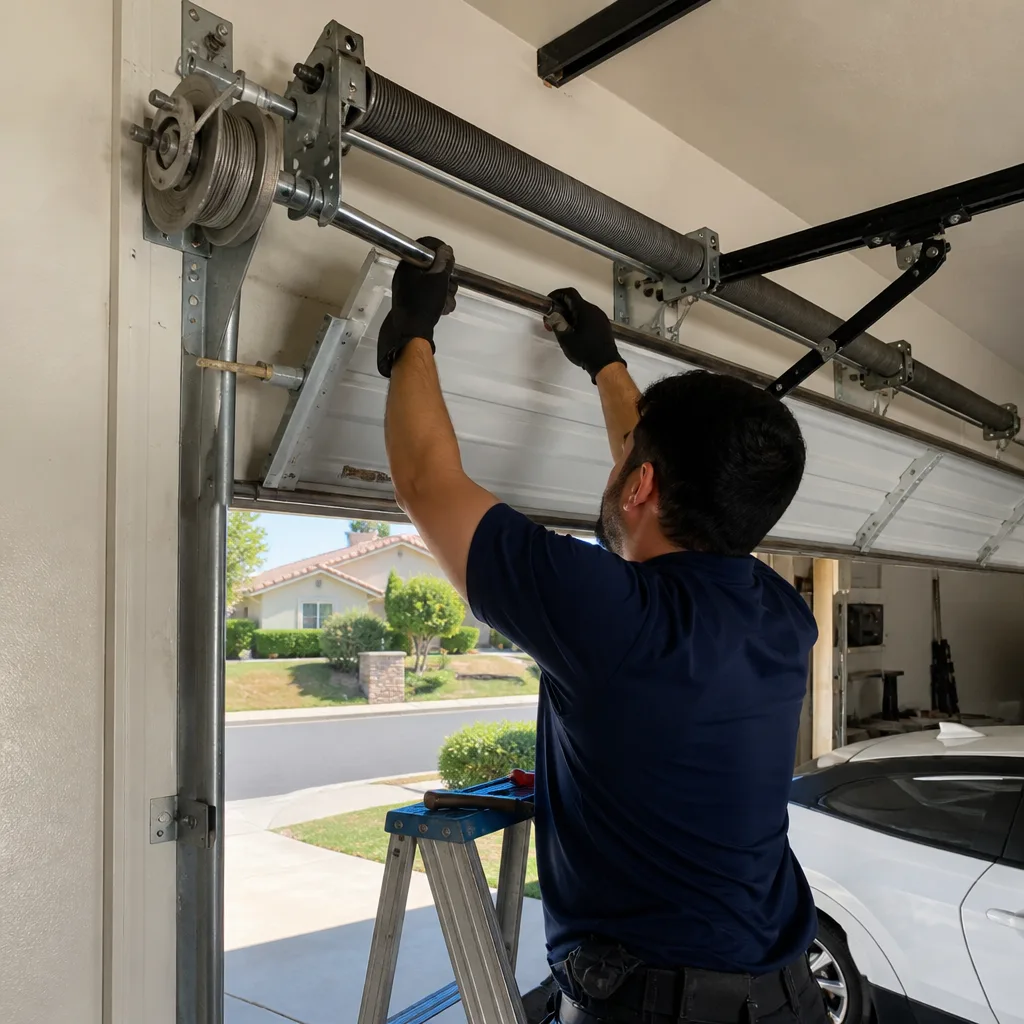
Most garage door guides are written for places with snow. Santa Clarita doesn’t have that problem, which is exactly why the generic advice fails here. Our thermal reality is a long, dry heat season punctuated by sudden temperature plunges and months of Santa Ana wind loading, and each one of those stress periods attacks different hardware. This guide maps those specific stress windows onto a maintenance calendar you can actually use, because the contraction that cracks a garage door panel in Santa Clarita doesn’t happen in January. For a deeper look at local conditions, see The Complete Guide to Garage Door in Santa Clarita. It happens in the forty-eight hours after the first October cold front drops the overnight temperature thirty degrees from summer’s baseline, and most homeowners aren’t watching for it then.
Quick Answer
Seasonal garage door maintenance in Santa Clarita means inspecting and lubricating rollers, hinges, and springs every three months; checking weather seal compression before the June heat arrives; inspecting track alignment and hinge torque after the first Santa Ana wind event of fall; and cleaning photo-eye sensors during wildfire smoke months. A homeowner can handle visual checks and lubrication in about twenty minutes per quarter. Torsion spring inspection, cable wear assessment, and track realignment should be done by a trained technician, because the stored energy in a wound spring is genuinely dangerous. Not sure whether to DIY or call a pro? Read our DIY vs Professional Garage Door: The Santa Clarita Homeowner’s Decision Guide.
Table of Contents
- Santa Clarita’s Real Thermal Calendar: Four Stress Periods, Not Four Seasons
- Santa Ana Wind Season: What It Does to Tracks, Hinges, and Door Panels
- Summer Heat: Weather Seal Compression, Spring Tension, and Lubricant Breakdown
- Wildfire Smoke Season: Sensor Fouling and Track Debris No One Mentions
- A Month-by-Month Maintenance Calendar Tied to Local Markers
- What a Homeowner Can Do vs. What Needs a Technician
- What Seasonal Maintenance Costs in Santa Clarita
- Common Mistakes to Avoid
- When to Call a Professional
- Frequently Asked Questions
- The Bottom Line
BeforeAfterSanta Clarita’s Real Thermal Calendar: Four Stress Periods, Not Four Seasons
Santa Clarita sits in a high-desert valley where the temperature swing between a July afternoon and a January pre-dawn can exceed sixty degrees. That range is what wears garage door hardware, not the calendar. In our experience across thousands of doors in Valencia, Saugus, Canyon Country, and Newhall, the failures cluster around four specific transition windows each year, and they don’t align with what a generic seasonal guide written for Chicago or Atlanta would tell you.
Here’s the actual stress calendar for Santa Clarita garage doors, mapped to what’s happening to the metal:
- Mid-June to late September – sustained heat loading. Daily highs above 95°F for weeks at a time. Steel door panels expand measurably. Lubricant in the roller bearings thins and migrates out. Weather seal rubber at the bottom of the door compresses and takes a set. Springs lose a small amount of tension from thermal cycling. This is the season of slow, cumulative degradation.
- October – the first cold front. This is the highest-stress moment of the entire year for door panels. After four months of heat expansion, an overnight temperature drop of twenty-five to thirty-five degrees causes rapid contraction. Any panel with a micro-fracture from a past impact, a stress riser at a hinge mounting point, or a weakened weld will crack in this window. We schedule more panel replacements in the two weeks after the first October cold front than in the previous three months combined.
- October through March – Santa Ana wind loading. Sustained winds of thirty to fifty miles per hour with gusts to seventy. A closed sectional door is a large, flexible sail. The wind applies cyclic lateral pressure to the tracks, hinges, and panels. Hardware that was marginally loose all summer gets worked loose in wind season. This is the season of mechanical fatigue and accelerated wear on moving parts.
- January through February – overnight lows near or below freezing. Short, sharp cold snaps. The steel components contract. Grease in the operator rail thickens. A door that operated fine in September may open noticeably slower on a February morning. This is also when the first signs of spring fatigue from the previous year become audible as a louder-than-normal creak or pop.
The takeaway: don’t think “spring maintenance” and “fall maintenance.” Think pre-heat inspection in May, post-cold-front inspection in late October, and wind-season spot checks every four to six weeks. That matches how the hardware actually fails here.
We’ve built our service schedule around this calendar at Servo Garage Doors Santa Clarita home, because it lets us catch problems in the inspection phase rather than the failure phase, and that’s cheaper for the homeowner every time.
Santa Ana Wind Season: What It Does to Tracks, Hinges, and Door Panels
Still air doesn’t load a garage door the way wind does. A sectional door hanging on horizontal tracks is designed primarily to move up and down under its own weight plus spring assistance. When a sustained Santa Ana wind hits the face of a closed door, it applies a lateral force that the track system absorbs, and cyclically, with every gust, which is worse than a steady push.
Here’s what actually happens during Santa Ana season, October through March, and what to look for:
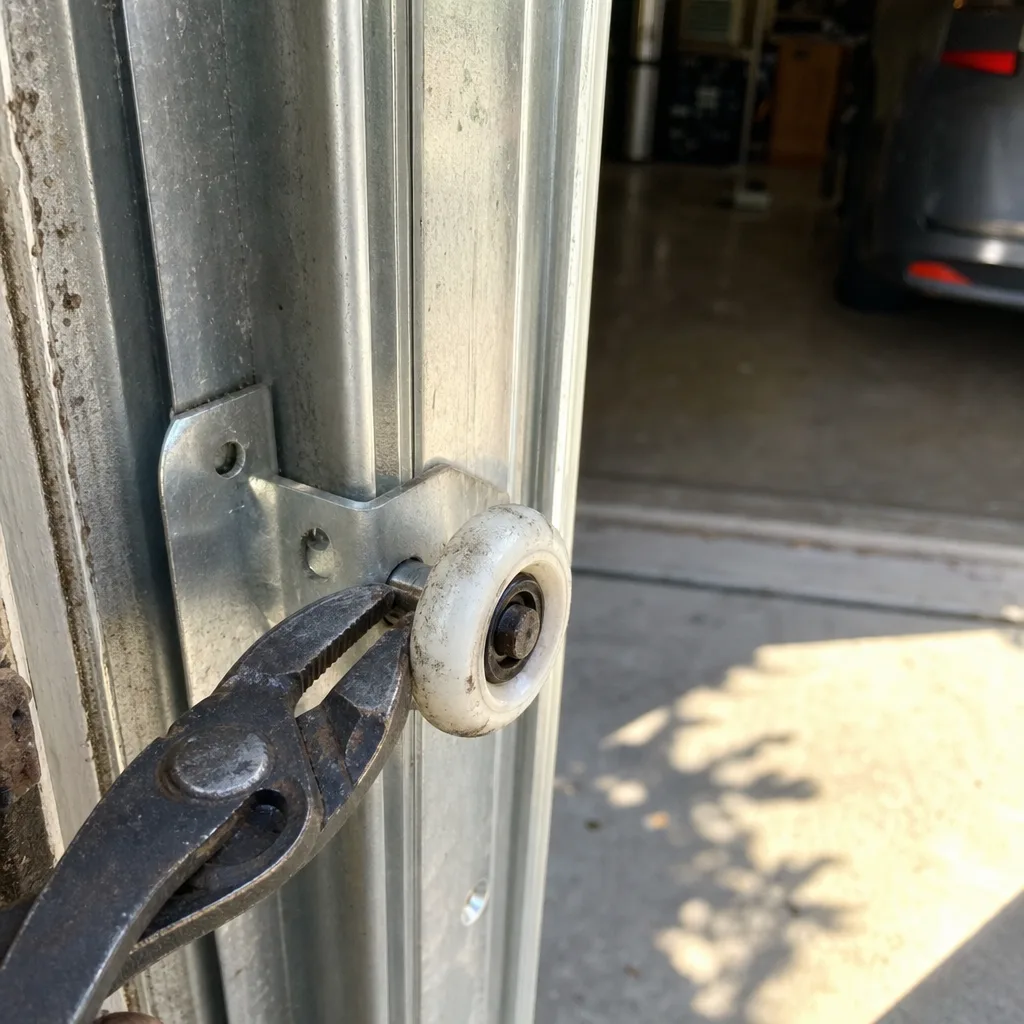
- Track brackets loosen first. The L-shaped brackets that anchor the vertical tracks to the door jamb are the failure point we see most often after the first serious wind event of fall. The wind cycles against the door, which pushes the track, which works the lag screws loose over repeated gusts. A loose bracket changes the track spacing, which changes how the rollers sit in the track, which accelerates wear on every moving part above it.
- Hinge bolts back out. Sectional doors are held together at each seam by stamped steel hinges bolted to the panel stiles. Wind-induced panel flex works those bolts loose, especially on doors wider than sixteen feet or taller than eight feet. Once a hinge starts backing out, the panel seam opens slightly, and the door starts binding on the way up.
- Roller wear accelerates. In still-air conditions, garage door rollers wear primarily from the up-down cycle. Under wind load, they also wear from lateral scrubbing against the inside of the track. We’ve pulled rollers from wind-exposed homes in Canyon Country that show flat spots on the wheel after a single hard wind season.
- Panel-to-frame contact damage occurs on side-hinged doors. Less common in Santa Clarita, but present in older homes. Wind slams the door against the frame or the door stop, denting the panel edge and shearing hinge screws.
What to do during wind season:
- Stand inside the garage with the door closed during a moderate wind event. Watch the door face. If you see visible panel flex or hear the door creaking rhythmically with the gusts, schedule a track and hinge inspection.
- Check the track-to-jamb brackets with a wrench. If any of them move by hand, they’re loose enough to matter.
- Listen for a change in the sound of the door during normal operation. Wind-season wear often shows up first as a scraping or grinding sound from the roller area.
- After a wind event with gusts over fifty miles per hour, do a visual check of all hinge bolts on both sides of the door. A flashlight helps; the top hinges are hard to see.
One thing worth stating plainly: wind damage to a garage door is rarely sudden. It’s a ratchet effect. Each gust loosens something by a fraction of a millimeter, and six weeks of gusts later, the problem becomes visible. That’s why the wind-season check schedule matters more than a single post-windstorm inspection.
Summer Heat: Weather Seal Compression, Spring Tension, and Lubricant Breakdown
Santa Clarita summers are hard on garage doors in ways that cold-climate guides never mention. The heat isn’t a dramatic single-event stressor the way an ice storm is. It’s a continuous, daily-cycle fatigue load that runs for four months or more.
Three specific issues matter here, and they all trace back to sustained temperatures above 95°F:
1. Weather seal compression becomes permanent. The rubber or vinyl weather strip along the bottom of the door, and the perimeter weather seals on the sides and top, are designed to compress against the floor and frame to create a barrier against dust, insects, and wind. In sustained heat, that strip material reaches the low end of its working durometer range and takes a “set” – it stops springing back to its original shape. A weather seal that’s been compressed flat by a Santa Clarita summer no longer seals in the winter. This is a critical point because our winter wind season immediately follows our hottest months. The seal that failed in September is the reason the Santa Ana wind whistles through the garage in November. Check the bottom seal in late May, before the worst heat arrives. For more installation-related context on new doors in our climate, see Garage Door Installation in Santa Clarita.
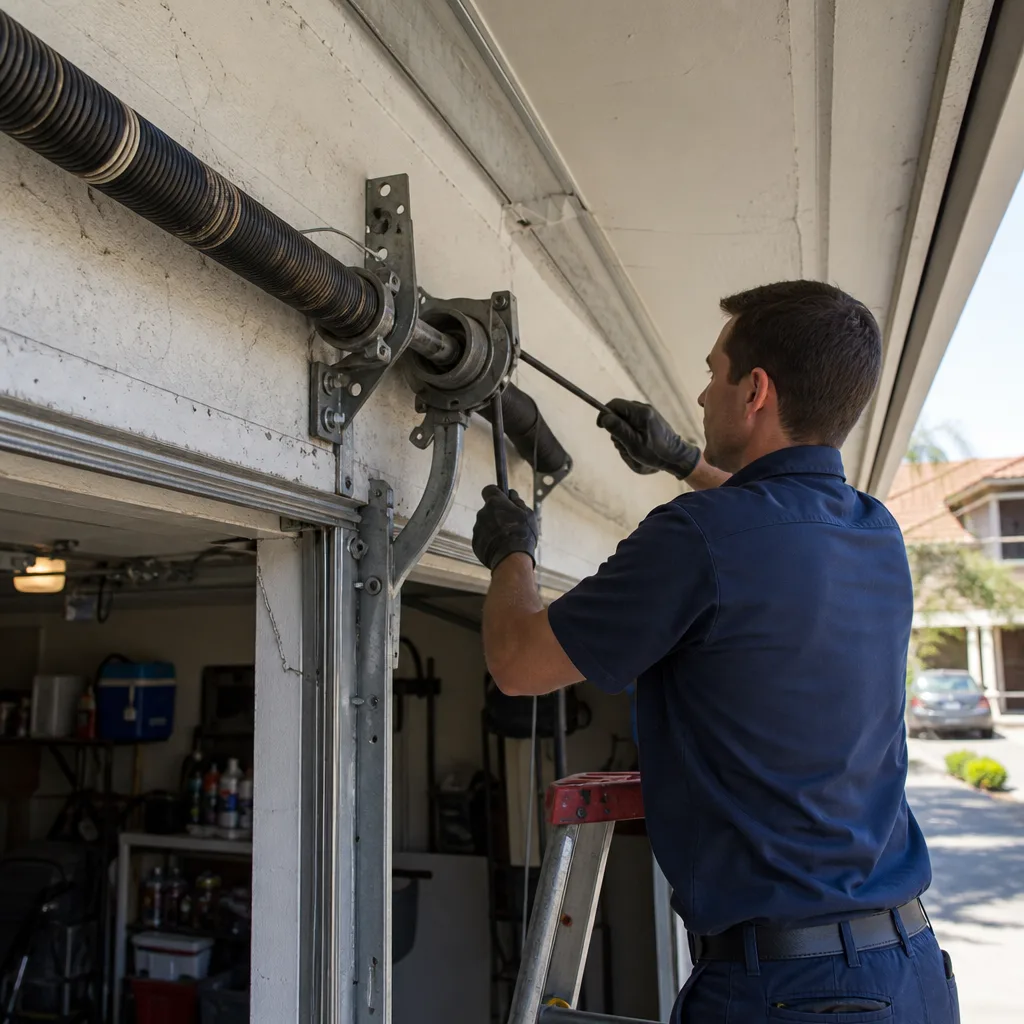
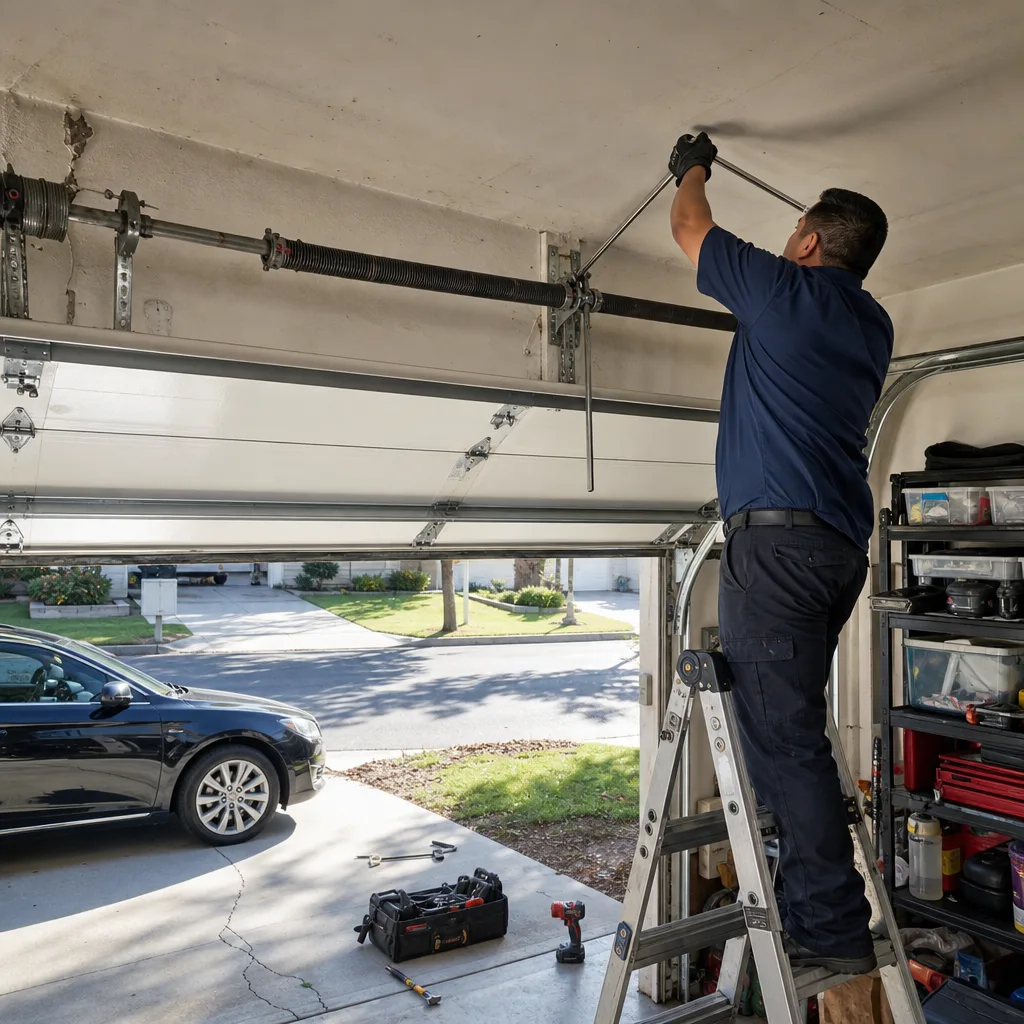
2. Spring tension drifts subtly. Torsion springs are steel coil springs mounted on a shaft above the door opening. They’re wound to balance the door’s weight precisely. Sustained heat doesn’t break springs directly, but it does drive two effects. First, the door panels expand slightly in the heat, changing their effective weight and the load on the springs. Second, the steel in the spring itself undergoes thermal fatigue from the daily expansion-contraction cycle. A spring that was perfectly balanced in April may be delivering slightly less lift by September. The symptom is a door that feels heavier to lift manually or an opener motor that sounds strained. A technician can measure spring torque and re-balance the door in under an hour, and this is not a DIY task – torsion springs store enough energy to cause serious injury if mishandled.
3. Lubricant migrates and degrades. The lithium grease or synthetic garage-door lubricant applied to rollers, hinges, and the operator rail thins out in sustained heat. It runs off the contact surfaces and pools in low spots, leaving the bearing surfaces effectively dry. A garage door that squeaks in August isn’t asking for more lubricant; it’s telling you the lubricant that was there has already failed. Re-lubricating in June, before the peak heat, and again in September, after the peak, is a reasonable schedule for Santa Clarita. A dry roller or hinge wears fast, and a worn roller takes the track with it.
If your door started the summer fine and ends it noisy, slow, or binding, the heat has almost certainly degraded the lubrication and the spring balance. Both are addressable in a single service visit.
Wildfire Smoke Season: Sensor Fouling and Track Debris No One Mentions
Santa Clarita sits in a wildfire-prone corridor, and from August through November, persistent smoke and ash are a routine part of the air quality picture. A garage door opener doesn’t care about air quality, but it cares a great deal about particulates, and smoke season delivers fine particulate matter that accumulates in the worst possible places.
Here’s what smoke and ash season does to a garage door system, and why it’s a distinct maintenance window in Santa Clarita that most national guides don’t address:
Photo-eye sensor fouling. The safety sensors near the bottom of the door opening, sometimes called photo-eyes, are the two small units that project an invisible infrared beam across the door opening. When something breaks the beam, the opener refuses to close the door. That’s a safety requirement, not a defect. But smoke-season ash settles on the sensor lenses and diffuses the beam. The opener then behaves erratically – it starts to close, then reverses; it refuses to close at all; the diagnostic light blinks in a pattern you don’t recognize. The fix is a dry cloth wipe of both lenses. This is a ten-second fix and the single most common smoke-season no-close call we field in September and October.
Track debris accumulation. Garage door tracks in Santa Clarita collect dust in normal conditions. Add four weeks of wildfire smoke and the dust becomes a fine, slightly tacky coating that holds onto anything passing through the track. Debris that would normally fall out of the track base now clings. The result is a roller that skips or drags, and a door that judders on the way down. Clean the track with a dry rag and re-lubricate the roller bearings monthly during smoke season.
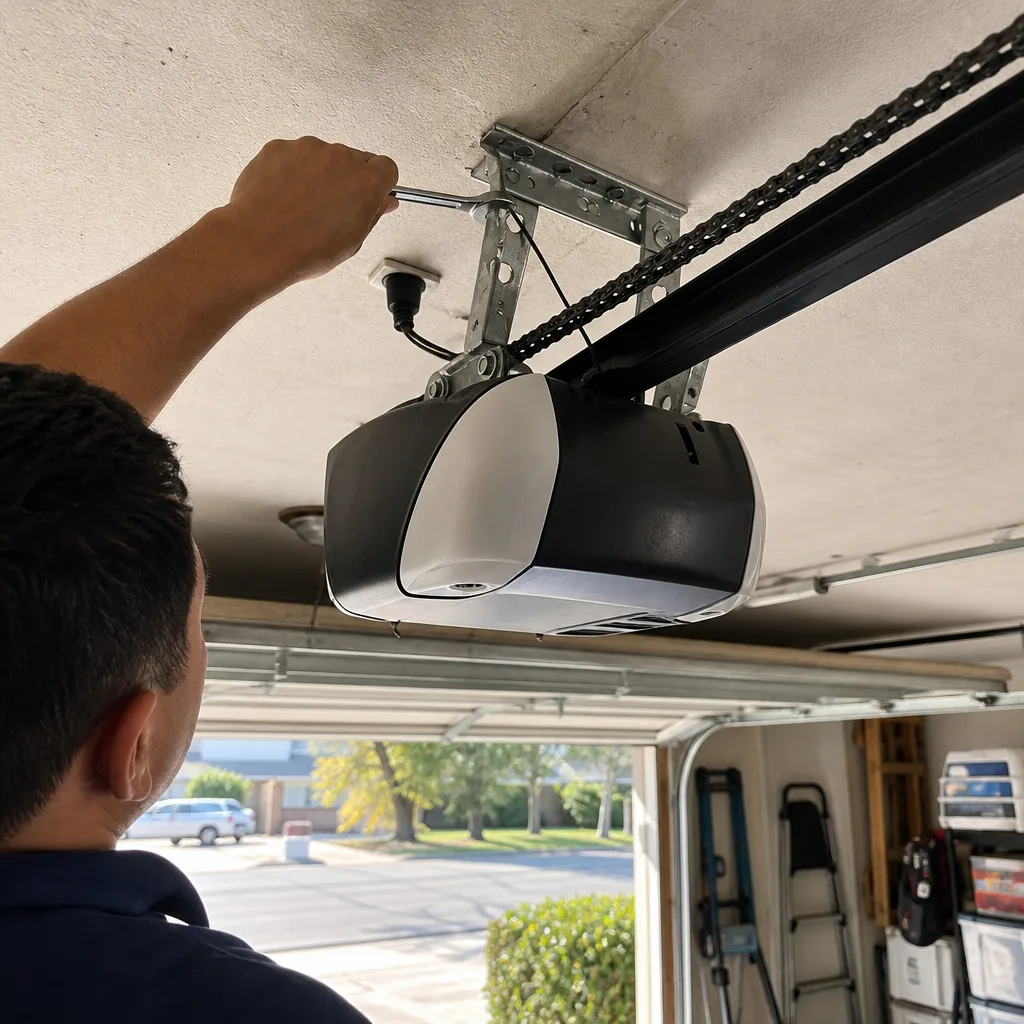
Opener logic board heat-and-dust stress. The control board inside the opener motor unit is cooled passively. In a hot garage – and Santa Clarita garages routinely reach 110°F in summer – the board runs near the top of its thermal tolerance. Add a coating of fine smoke-season dust on the board’s surface, and you reduce its ability to shed heat. The symptom is an opener that functions normally in the morning and erratically in the late afternoon after the garage has been baking all day. This is also the failure profile we associate most strongly with intermittent opener problems that owners report as “the door sometimes doesn’t respond.” Opener repair and replacement specifics live on our Garage Door Opener Repair & Installation in Santa Clarita page.
Smoke-season maintenance is simple: wipe the photo-eye lenses once a week during active smoke, clean the track interior monthly, and don’t store solvents or paints near the opener motor unit, because the fumes accelerate control board corrosion in a hot garage.
A Month-by-Month Maintenance Calendar Tied to Local Markers
Maintenance calendars work best when the trigger is something you’ll actually notice, not an abstract date that passes without awareness. Here’s a Santa Clarita-specific annual calendar tied to local seasonal markers. Print this and tape it inside the garage door jamb.
January: Post-freeze check
- Trigger: the first morning you see frost on the car windshield.
- Open and close the door twice, listening for new creaks or pops from the spring area.
- Watch the door as it raises. It should move smoothly without jerking or wobbling at any point.
- If it moves noticeably slower than it did in October, the operator or springs are working harder than they should be. Note it.
February: Roller and hinge lubrication
- Trigger: the first week after Super Bowl Sunday.
- Apply garage-door-specific lubricant to each roller bearing, all hinge pivot points, and the opener rail.
- Do not use WD-40. It’s a solvent, not a lubricant, and it strips the existing grease.
- Wipe off excess. A lubricant drip on the car roof is a sign of over-application.
March: Pre-wind-season track check
- Trigger: the first week of March, before the Santa Ana winds typically peak.
- Inspect every track bracket on both sides of the door. Look for visible gaps between bracket and jamb.
- Check hinge bolts with a socket wrench. Any bolt that turns with light force should be snugged down.
- Look for shiny wear marks on the inside of the track, which indicate roller contact that’s off-center.
April: Photo-eye alignment and cleaning
- Trigger: the first 90-degree day.
- Wipe both photo-eye lenses with a dry cloth.
- Check that the small indicator lights on both sensor units are solid, not blinking. A blinking light means misalignment.
- Test the safety reversal: place a 2×4 block flat under the door path and close the door. It should reverse on contact. If it doesn’t, call a technician.
May: Pre-heat weather seal inspection
- Trigger: the first forecast with five consecutive days above 95°F.
- Close the door and inspect the bottom seal from inside. If you can see daylight anywhere along the seal line, the seal is not compressing fully.
- Check the side and top perimeter seals the same way.
- Replacement seals are inexpensive relative to the cooling loss and dust intrusion a failed seal allows all summer.
June: Lubricant re-application before peak heat
- Trigger: the first week of June.
- Re-apply garage-door lubricant to rollers, hinges, and opener rail. The early-June application replaces what will degrade through July and August.
- Test the door balance manually: with the opener disconnected (pull the red release handle), the door should stay put mid-travel. If it drops or climbs on its own, spring tension needs correction.
July: Do nothing except observe
- Trigger: the dog days. There’s no scheduled work this month.
- Just pay attention. A door that becomes noisy or slow during the hottest stretch is giving you the earliest possible warning of a fall failure. Note what you observe.
August: Smoke-season sensor and track prep
- Trigger: the first wildfire smoke advisory for the Santa Clarita Valley.
- Begin weekly photo-eye lens wipes. Ash builds fast during active smoke.
- Clean the track interior with a dry rag and re-lubricate the roller bearings.
- If the garage smells smoky, consider running a box fan or opening the pedestrian door periodically to reduce particulate buildup on the opener control board.
September: Post-heat hardware check
- Trigger: Labor Day weekend.
- Inspect all hinge bolts and track brackets again. The heat cycle has done four months of thermal flexing since the March check.
- Listen for any change in door noise during operation. A new creak from the spring area is meaningful.
- Check the weather seal again. Summer compression is done; this is what the seal looks like before wind season starts.
October: Post-cold-front panel inspection
- Trigger: the first morning when the overnight low drops below 55°F after a stretch of warm nights.
- Examine each door panel edge-on for hairline cracks, especially near hinge mounting points and along the top and bottom rails.
- Run the door up and down once while standing inside, watching the panel joints for any separation or flex.
- This is the window when panel cracks appear. Catch them early and a panel replacement is a few hundred dollars. Wait until the crack propagates and you’re replacing multiple panels or the entire door.
November: Wind-season functional test
- Trigger: the first Santa Ana wind event after Thanksgiving.
- Open and close the door during the wind event, if safe to do so. The door should behave normally under lateral load.
- Check track brackets one more time after the event. This is when wind-loosened hardware shows itself.
- If the door shudders, rattles, or scrapes during windy operation, the track or roller system needs professional attention.
December: Safety system and opener check
- Trigger: the week before Christmas, or anytime in December.
- Re-test the auto-reverse function with a 2×4 block.
- Test the manual release: pull the red cord with the door closed. The door should lift manually with reasonable effort. If it’s very heavy, spring balance is off.
- Verify the opener’s force settings haven’t been changed by a power surge. If the door reverses for no reason in December, the force sensitivity may need recalibration.
What a Homeowner Can Do vs. What Needs a Technician
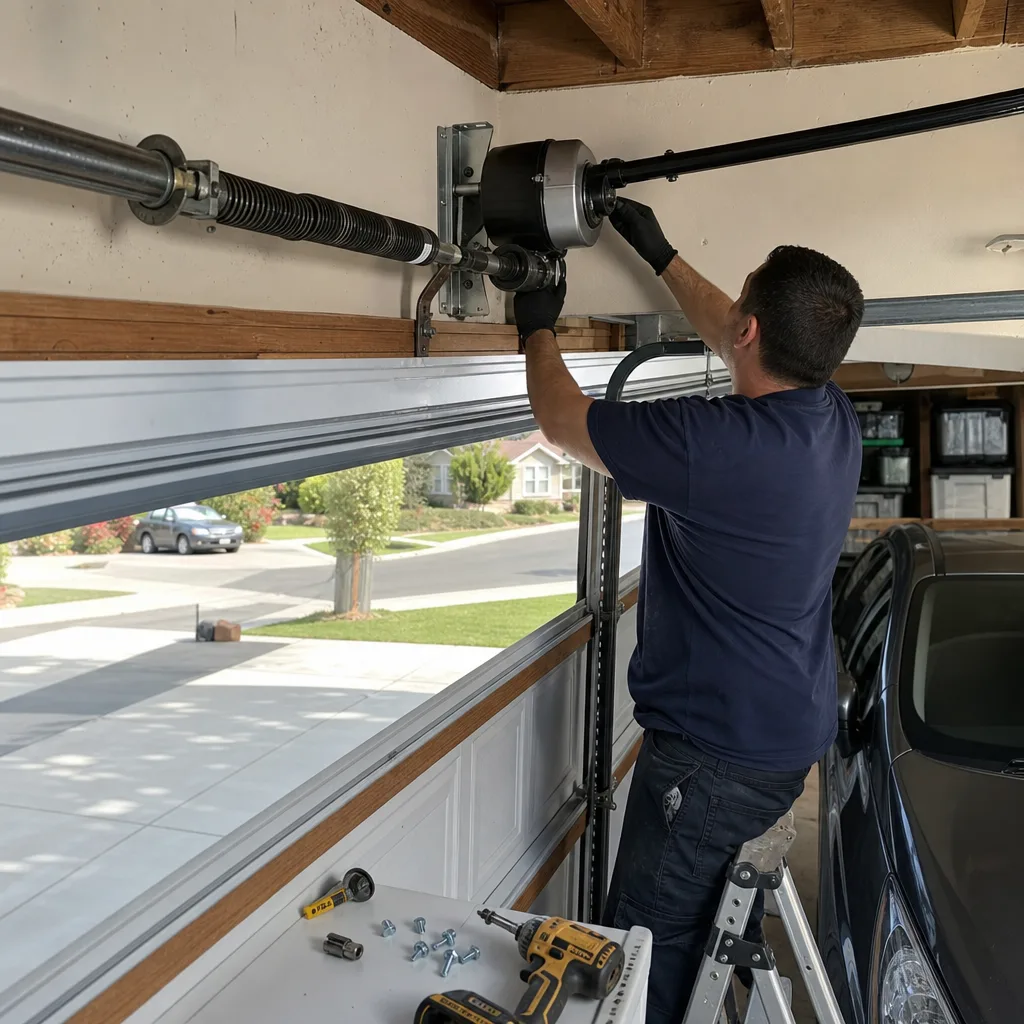
There’s a clear line between maintenance and repair, and the line is drawn around stored mechanical energy. Here’s the practical split for Santa Clarita homeowners.
Safe for a homeowner:
- Visual inspection of rollers, hinges, tracks, brackets, and seals.
- Lubricating rollers, hinges, and the opener rail with garage-door lubricant.
- Wiping photo-eye lenses.
- Testing the auto-reverse safety function with a 2×4 block.
- Tightening visible hinge and bracket bolts with a socket wrench, as long as the door stays closed and the opener is disconnected.
- Measuring the weather seal for obvious gaps and cracking.
Leave to a trained technician:
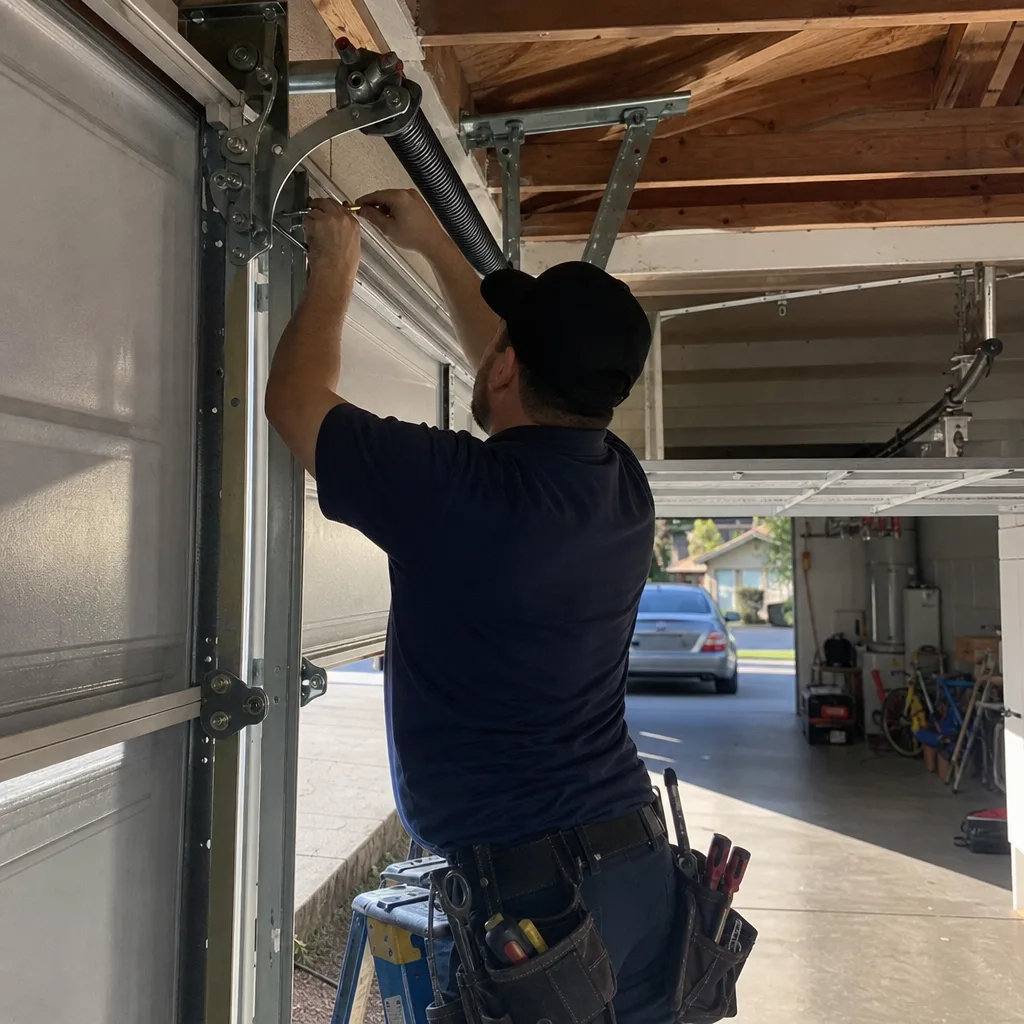
- Torsion spring inspection, adjustment, or replacement. A torsion spring under tension stores enough energy to break bones or worse if it releases suddenly. Never attempt to wind, unwind, or adjust a spring yourself. A technician measures spring torque with the door in place and knows what the reading means. This is the most dangerous component on the door, and the one with the least tolerance for error.
- Cable inspection and replacement. The lift cables that run from the bottom brackets to the spring shaft are under constant tension. When they fray, they fail suddenly and violently. If you see visible fraying on a cable, do not operate the door and call a technician later that same day.
- Track realignment. A track that’s out of true creates uneven roller loading and accelerated wear. Fixing it requires loosening mounting brackets, checking alignment with a level, and re-torquing in sequence. It’s not instinctive.
- Opener logic board diagnosis. Intermittent opener behavior often points to a failing control board. That’s a component-level diagnosis, not a guess.
- Any repair involving the spring shaft assembly. The shaft, spring cones, bearing brackets, and drums are all part of a system that works together when properly balanced and fails dangerously when compromised.
The rule we tell every homeowner: if the part you’re about to touch is under tension – springs and cables – it’s not a DIY job. The Garage Door Repair in Santa Clarita page covers what professional repair involves in more detail.
What Seasonal Maintenance Costs in Santa Clarita
Preventive maintenance is the cheapest garage door work there is, and the price in Santa Clarita reflects the market’s competitive landscape. For detailed pricing, see our Garage Door Cost Breakdown: The Santa Clarita Homeowner’s Reference for 2026. Here are realistic ranges for the seasonal tasks described in this guide:
- Full seasonal inspection and lubrication (30 to 45 minutes): $75 to $150. A technician inspects all hardware, lubricates moving parts, checks spring balance, verifies safety systems, and walks you through findings.
- Bottom weather seal replacement: $85 to $175 installed, depending on door width and seal type. The part itself is inexpensive; the labor is in cutting, fitting, and aligning the new seal along a sixteen-foot door.
- Roller replacement (set of 10 to 12): $75 to $150 for nylon rollers, including installation. Rollers are the wear item that most benefits from regular replacement in Santa Clarita’s gritty, windy environment.
- Hinge replacement (single hinge): $25 to $50 installed. A single failed hinge is often the first casualty of an unaddressed wind-season alignment problem.
- Track bracket re-securing (per bracket): $25 to $60. Re-anchoring a loose track bracket is quick, but multiple loose brackets usually means the track alignment has already shifted and needs full correction, which runs higher.
- Complete seasonal service with all minor corrections: $250 to $400 for a comprehensive visit that includes inspection, lubrication, bracket tightening, sensor cleaning, seal assessment, and spring tension measurement.
Every one of these prices is quoted in writing before any work begins, with the scope described in the same document. That’s not a courtesy; it’s how we’ve operated since 2015 under The Haven Standard, and it’s the only way we do business.
Common Mistakes to Avoid
- Using WD-40 on rollers and hinges. It’s a solvent that strips the existing lubricant and leaves the bearing surfaces drier than they were before. Use garage-door-specific lubricant, which has the right viscosity and adherence for this application. In Santa Clarita’s heat, the wrong lubricant fails in weeks.
- Ignoring a slow-operating door in July. A door that moves slower as summer progresses is telling you something specific about spring balance or opener strain. Waiting until it fails in the October cold front turns a $150 spring adjustment into a $400 emergency repair.
- Skipping photo-eye cleaning during smoke season. The ash that settles on sensor lenses is fine enough to diffuse the infrared beam without leaving an obvious visible coating. A door that “sometimes refuses to close” in September is almost always a dirty sensor, and the fix is free.
- Greasing the track itself. The track doesn’t need lubricant. Rollers ride on the track face; lubricating the track just creates a paste that holds dust and accelerates roller wear. Clean the track with a dry rag and leave it dry.
- Tightening spring hardware yourself. If a bolt on the spring assembly looks loose, leave it alone. The energy in a wound spring doesn’t announce itself before it releases. A technician does this in minutes with the right tools and the right caution.
- Replacing the opener before checking the door balance. An opener that struggles might just be working against a door that’s out of balance. If the door is heavy to lift manually with the opener disconnected, the problem is the springs, not the opener. Replacing the opener won’t fix it.
- Treating the garage door as isolated from the rest of the house. A failed bottom seal in August means hot, dusty air infiltrating the garage all summer, which stresses everything stored there and raises the ambient temperature of any room above the garage. In Santa Clarita’s climate, a five-dollar seal has real consequences.
When to Call a Professional
Some situations require a trained eye, and the cost of guessing wrong on a garage door is high. Call a technician when: the door makes a sharp popping sound during operation, which often signals a cable or spring issue; the door is visibly crooked when partially open; you see frayed or kinked lift cables; the opener reverses for no reason and photo-eye cleaning doesn’t fix it; the door is noticeably heavier to lift manually than it was a month ago; or any component on the spring assembly shows visible rust, wear, or movement. These are not maintenance tasks. They’re diagnostic situations. Servo Garage Doors Santa Clarita offers free estimates in Santa Clarita, and every estimate includes a documented photo record of what was found. Call (661) 542-4007 to schedule.
Frequently Asked Questions
Every three months is the right interval in Santa Clarita, specifically February, June, and September, because the extreme heat from June through September degrades lubricant faster than moderate climates. If your garage door is exposed to direct afternoon sun, which many in Valencia and Canyon Country are, you may need to re-lubricate monthly during peak heat. Stick with a garage-door-specific lubricant, not WD-40, and apply it to roller bearings, hinge pivots, and the opener rail only.
A basic seasonal inspection and lubrication visit typically runs $75 to $150, while a comprehensive service that includes weather seal replacement, bracket tightening, and spring tension measurement falls in the $250 to $400 range depending on what’s found and corrected. Servo provides a flat written price with a written scope before any work starts, so the number you’re quoted is the number on the invoice. Call (661) 542-4007 for an exact quote on your door.
The fall is when the thermal shock happens. After four months of heat expansion, steel door panels contract rapidly when the first October cold front drops overnight temperatures thirty degrees or more from summer’s baseline. That rapid contraction is what propagates micro-fractures into visible cracks. In Santa Clarita, panel failures peak in the two to three weeks after the first significant fall temperature drop, not in January.
It does, but the damage is cumulative rather than sudden. Sustained wind against a closed sectional door applies cyclic lateral pressure to the tracks, hinges, and panels, which loosens track brackets and hinge bolts over repeated gust events. A door that’s properly maintained and inspected monthly during wind season handles Santa Ana conditions fine, but hardware that starts loose gets worked looser with every event. Check track brackets and hinge bolts before and after the wind season.
Yes, in two ways that matter in Santa Clarita. Fine ash settles on the photo-eye safety sensors and diffuses the infrared beam, causing the door to reverse or refuse to close, and the fix is a weekly dry-cloth wipe during smoke season. The control board inside the opener motor unit also sheds heat less effectively when coated with fine particulate, which can cause intermittent operation on hot afternoons. Cleaning the sensor lenses and keeping the motor unit free of dust reduces both problems.
You can look at them, but you should not touch them. A visual check for rust, gaps in the coil, or visible separation is fine and worthwhile every few months. But torsion springs under tension store a dangerous amount of energy, and any adjustment, repair, or replacement work should always be done by a trained technician with the proper tools. If you see a gap in a spring coil or a visibly separated spring, stop operating the door and call a professional at (661) 542-4007. Genie, Clopay, Amarr, and Wayne Dalton doors sold in the Santa Clarita market all use similar torsion spring systems, and the same caution applies across brands.
The Bottom Line
Santa Clarita’s garage doors fail on a schedule set by the wind and the heat, not by the calendar. The maintenance tasks that matter most are the May pre-heat seal check, the weekly photo-eye wipes during smoke season, the October post-cold-front panel inspection, and the monthly track and hinge checks through wind season. A homeowner who follows this guide spends about an hour and a half per year on maintenance and catches most problems in the inexpensive phase rather than the emergency phase. For everything the guide says to leave to a professional, get a written quote first, and expect documentation when the work is done. That’s how it should work, and that’s how it does work at Servo Garage Doors Santa Clarita. For more guides & resources, visit our blog. Call (661) 542-4007 to schedule a free estimate, and we’ll show you our findings before we quote a single dollar.
Written by Marcus Deller, Owner at Servo Garage Doors Santa Clarita, serving Santa Clarita since 2015.