
Last updated September 19, 2026
Full 25-point door and opener safety check with every visit - springs, cables, rollers, tracks, and your LiftMaster or Chamberlain opener included
You get a price before we start. It does not change when the truck arrives.
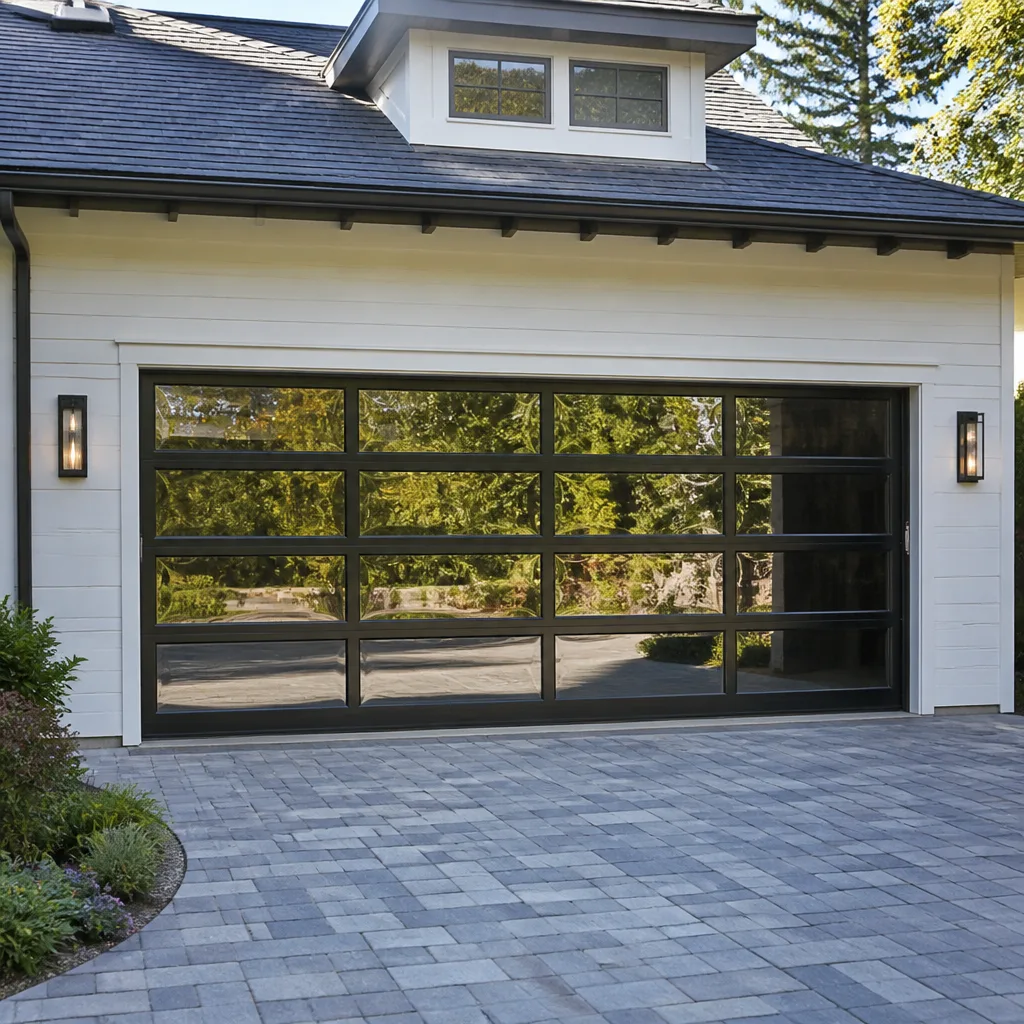
Modern flush
LiftMaster openers
 Before
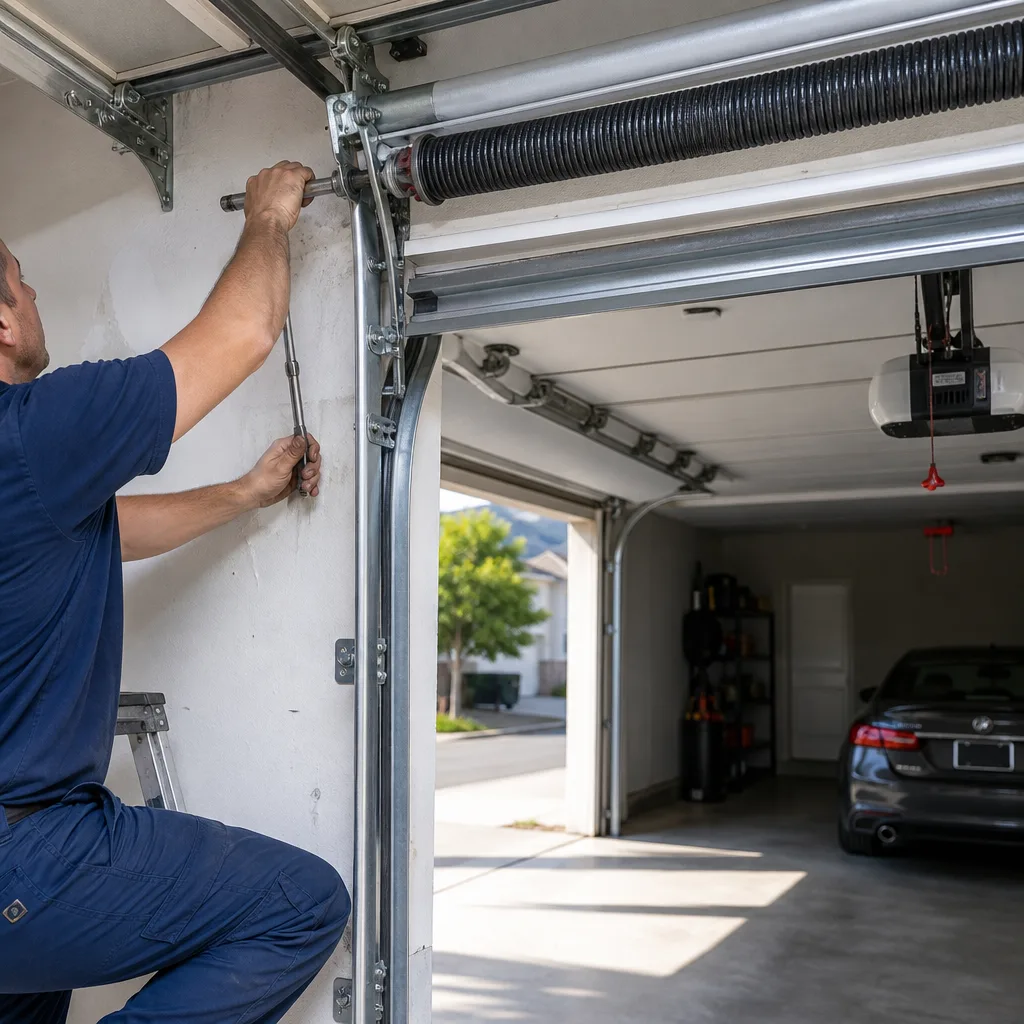 After
After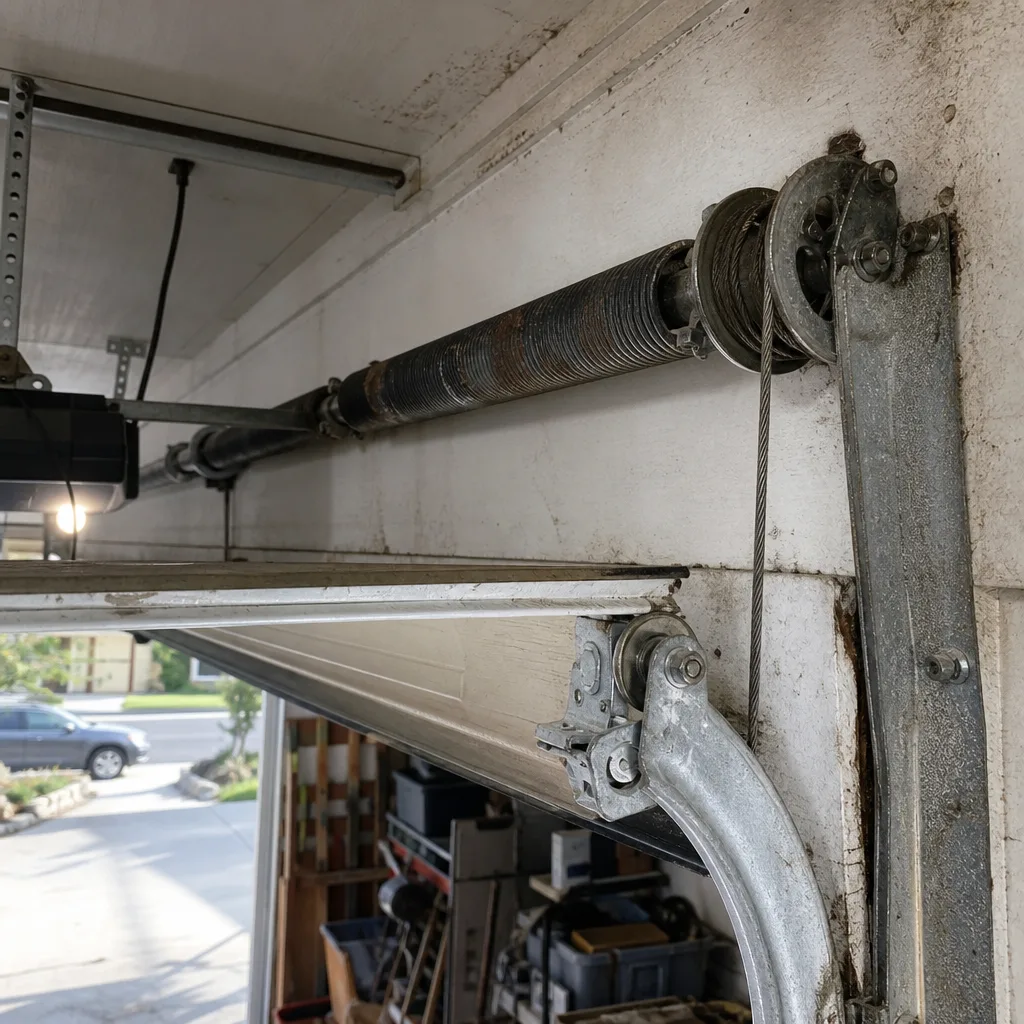 Before
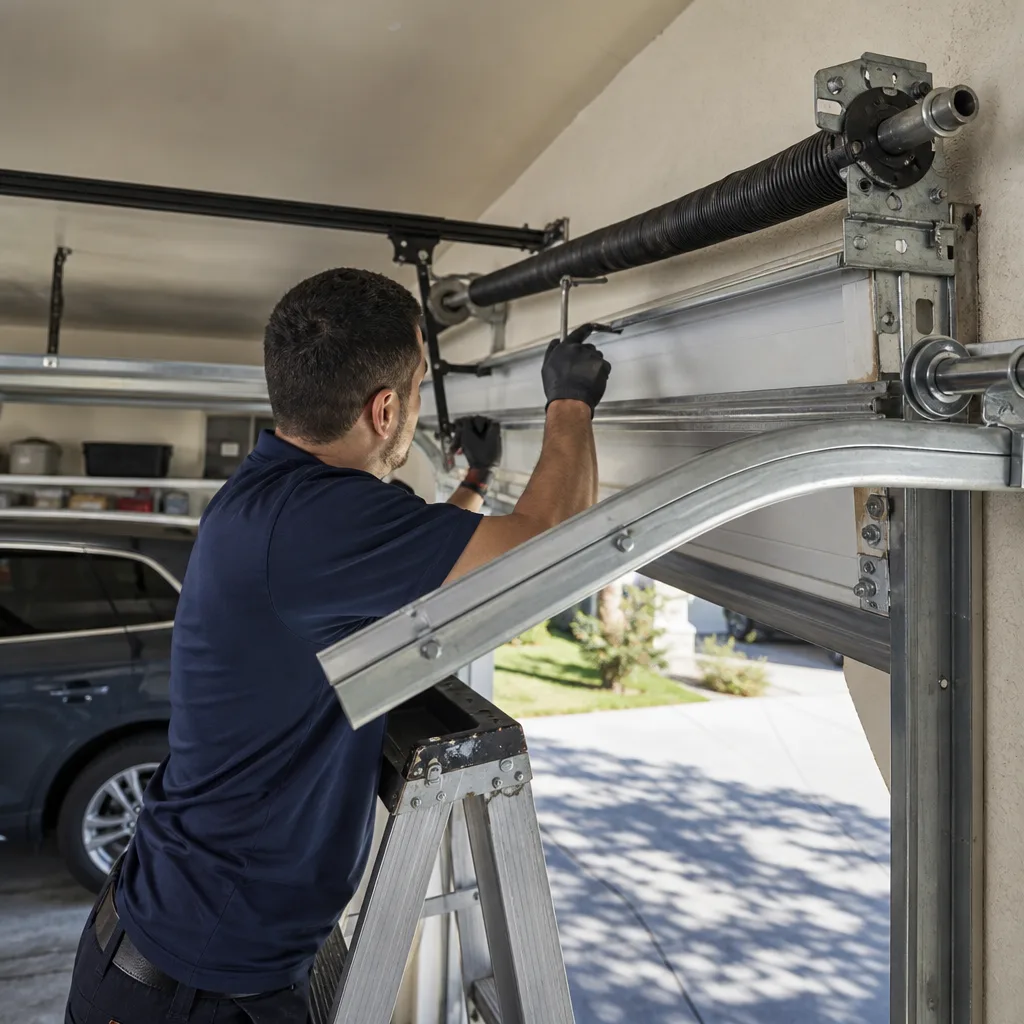 After
After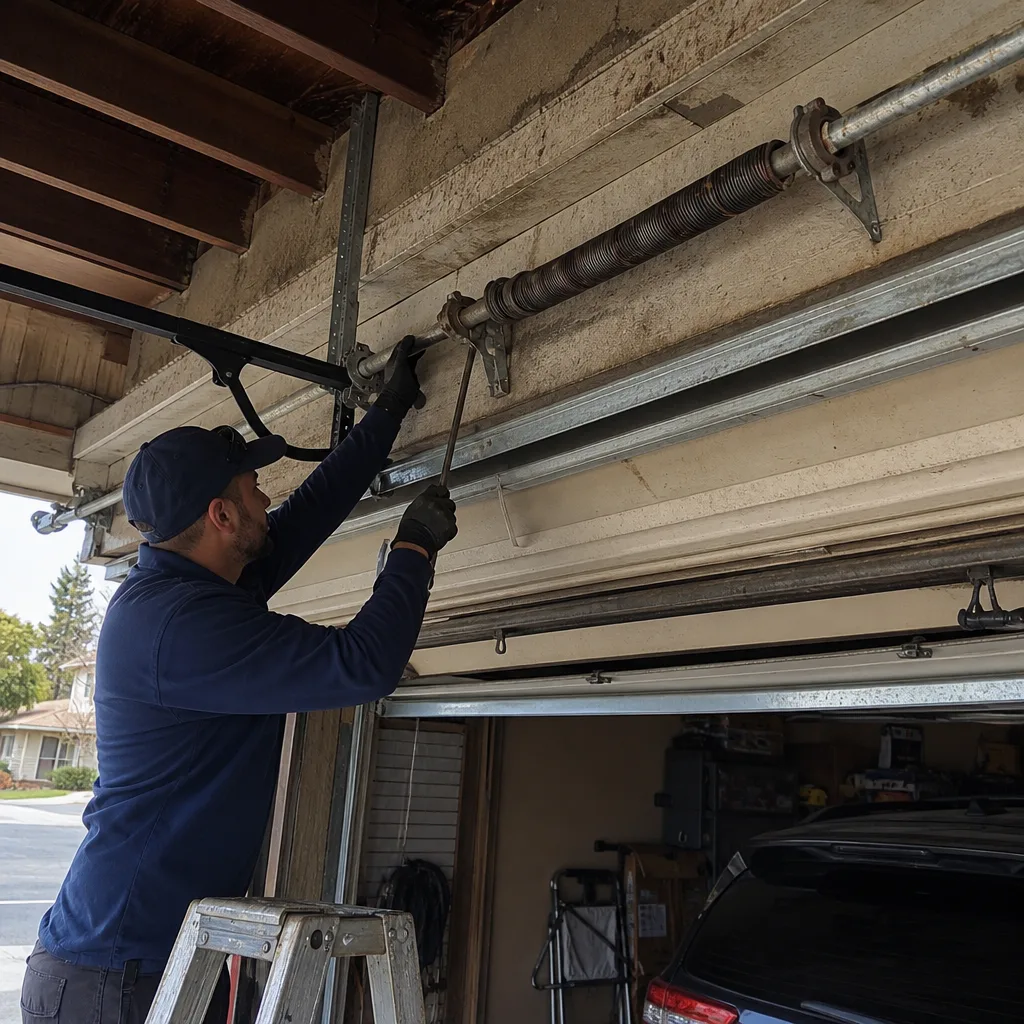 Before
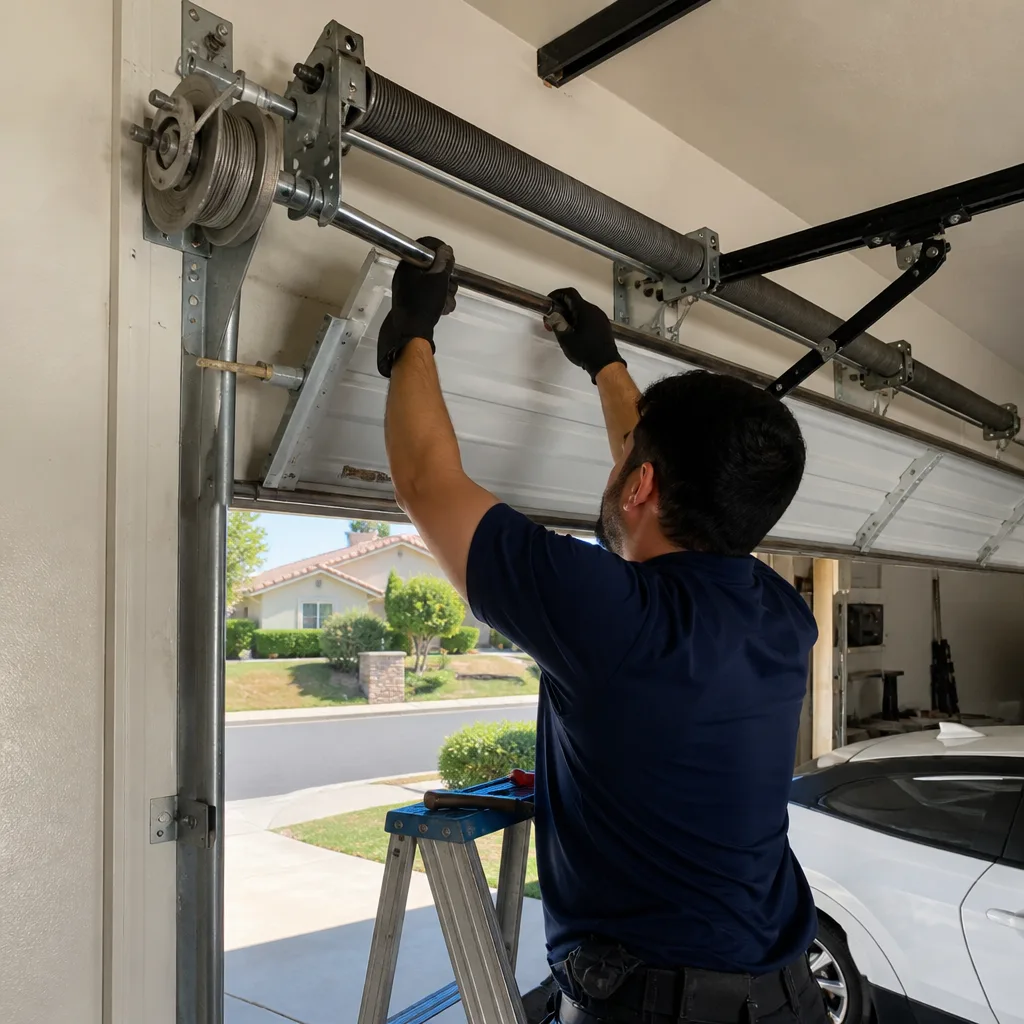 After
AfterDIY vs Professional Garage Door: The Santa Clarita Homeowner’s Decision Guide
National injury data tells a strange story about garage doors. The majority of serious garage door injuries don’t happen to technicians. They happen to homeowners, in their own garages, usually on a Saturday afternoon, usually involving a torsion spring. The mechanism looks simple from the outside. It is not. This guide walks through every common garage door job a Santa Clarita homeowner might face, separates the tasks that are genuinely safe to do yourself from the ones that aren’t, and puts real dollar figures on both paths, including our Garage Door Cost Breakdown: The Santa Clarita Homeowner’s Reference for 2026. We’ll cover the task matrix, the honest tool costs most online comparisons leave out, California’s permit and resale disclosure rules, and the partial-DIY middle path that saves money without putting you in the ER.
Quick Answer
For most Santa Clarita homeowners, the DIY-versus-professional decision comes down to one thing: stored energy. Tasks like lubrication, sensor alignment, weatherstripping, and remote reprogramming are genuinely owner-appropriate and take under an hour. Tasks involving torsion springs, lift cables, or full door replacement are professional-only, not because of skill level, but because the energy stored in those components can cause life-altering injury before you realize something went wrong. The honest math, including tool costs, shows that for about half of common repairs, hiring a professional costs within $80 of doing it yourself, without the risk.
Table of Contents
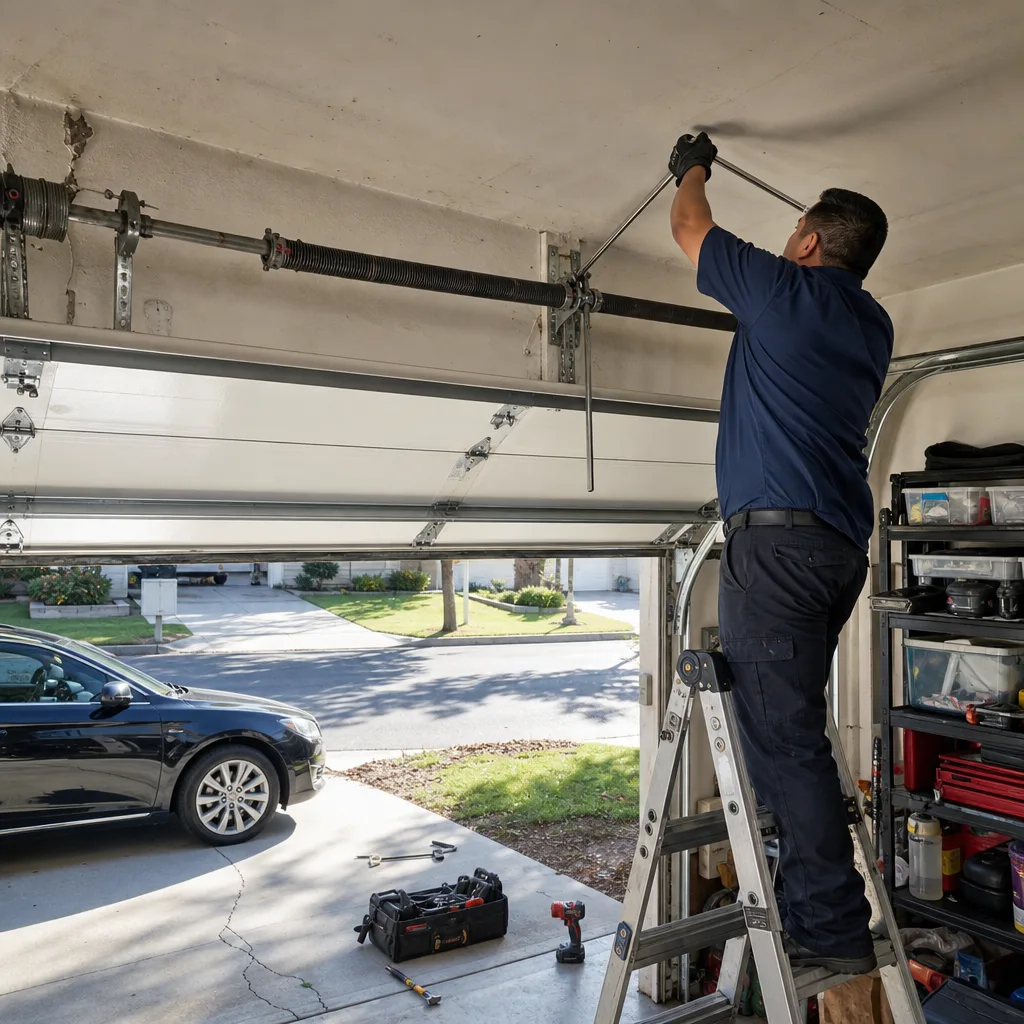
- The Task Matrix: What You Can Do, What You Shouldn’t
- Torsion Springs: The Physics Problem Nobody Intuits
- The Honest Cost Comparison: Five Jobs, Real Numbers
- Santa Clarita Permits, Codes, and Resale Disclosure
- The Partial-DIY Path: Diagnose It Yourself, Document It, Then Call
- What a Professional Job Should Produce: The Paper Trail Standard
- Santa Clarita Climate and Your Garage Door
BeforeAfterThe Task Matrix: What You Can Do, What You Shouldn’t
Not every garage door job is a gamble. Some are genuinely simple, and paying a technician for them is optional, not necessary. The problem is that online advice rarely distinguishes between the two categories clearly. Here is the matrix we use when a Santa Clarita homeowner asks us whether they should attempt a repair themselves. It sorts every common job into three columns: owner-appropriate, owner-possible with caveats, and professional-only.
Owner-Appropriate (Safe, Under an Hour, No Special Tools)
- Lubricating rollers, hinges, and tracks: White lithium grease on the moving metal parts. It takes 20 minutes and a $9 can. Do this twice a year in Santa Clarita’s dry climate, where metal-on-metal wear accelerates.
- Photo-eye sensor realignment: If the door reverses immediately or blinks, the sensors at the base of the tracks are out of line. Loosen the wing nut, adjust until the light is steady, retighten. No tools beyond a screwdriver.
- Weatherstripping replacement: The rubber strip along the bottom and sides degrades in heat. Replacement costs $40 to $80 at any hardware store in the Santa Clarita Valley and installs with a flathead screwdriver.
- Remote and keypad reprogramming: Every opener brand has a Learn button and a 30-second pairing sequence. The manual is online if you don’t have it. This is the most overpriced service call in the industry.
Owner-Possible (Doable, But Read the Caveats First)
- Roller replacement: The rollers that carry the door along the track wear out every 7 to 10 years. Replacing them is straightforward on side rollers. But the bottom roller brackets on many doors are attached to the lift cable under tension. In the wrong position, that cable becomes a missile. If you’re uncertain, stop.
- Track cleaning and tightening: Clean tracks with a rag, never grease them. Grease attracts Santa Clarita’s fine dust and creates a paste that binds the rollers. Tightening track bolts is fine. Straightening a bent track is not: it changes the door’s travel geometry and the opener’s force settings.
- Hinge replacement: Door panel hinges are bolted and straightforward, if you support the panel weight and never touch the bottom bracket. The bottom bracket is a professional-only component on any door with a torsion spring system.
Professional-Only (Stored Energy, Structural Weight, or Code Requirements)
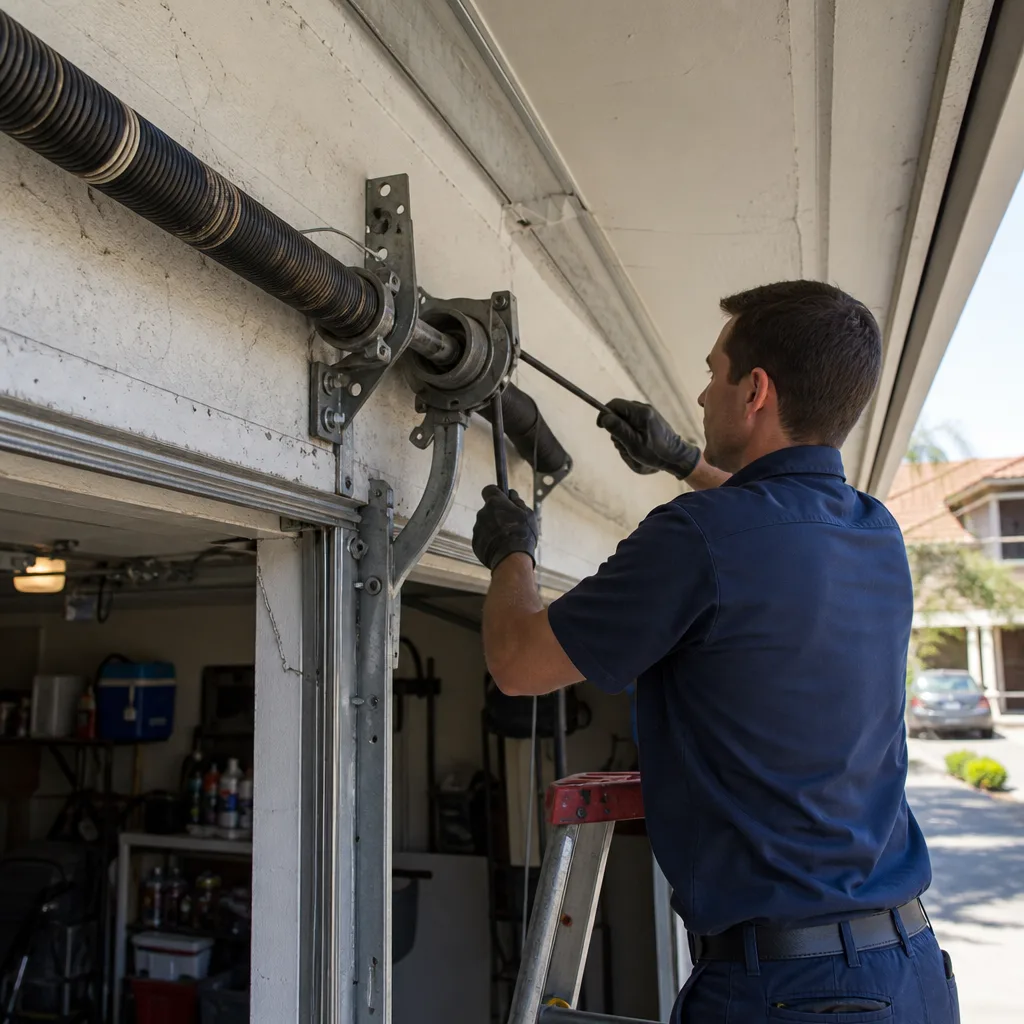
- Torsion spring replacement: The spring above the door stores enough energy to lift the door’s full weight, typically 150 to 300 pounds. When it breaks, it releases that energy in milliseconds. When it’s being wound or unwound, a slipping winding bar becomes a projectile. In a national injury study, torsion springs were implicated in a majority of the most severe garage-door-related injuries.
- Extension spring replacement: Older Santa Clarita homes in Canyon Country and Newhall sometimes have extension springs, the long springs along the horizontal tracks. They stretch under load and require a safety cable running through the center. Without that cable, a broken spring can travel the length of the garage. Installation requires knowing the door’s exact weight and spring rate.
- Lift cable replacement: The cables that carry door weight work as a pair. Replacing one without understanding the load balance can drop the door suddenly. This is the second most common source of serious DIY injury after springs.
- Full door or opener replacement: Structural, electrical, and code work. California requires permit review for structural changes, and opener safety standards (photo-eye placement, force settings, auto-reverse) must be set and verified.
- Panel replacement: A single panel weighs 40 to 80 pounds and removing it changes the door’s balance. A door that’s out of balance wears out the opener prematurely and is a safety hazard.
Torsion Springs: The Physics Problem Nobody Intuits
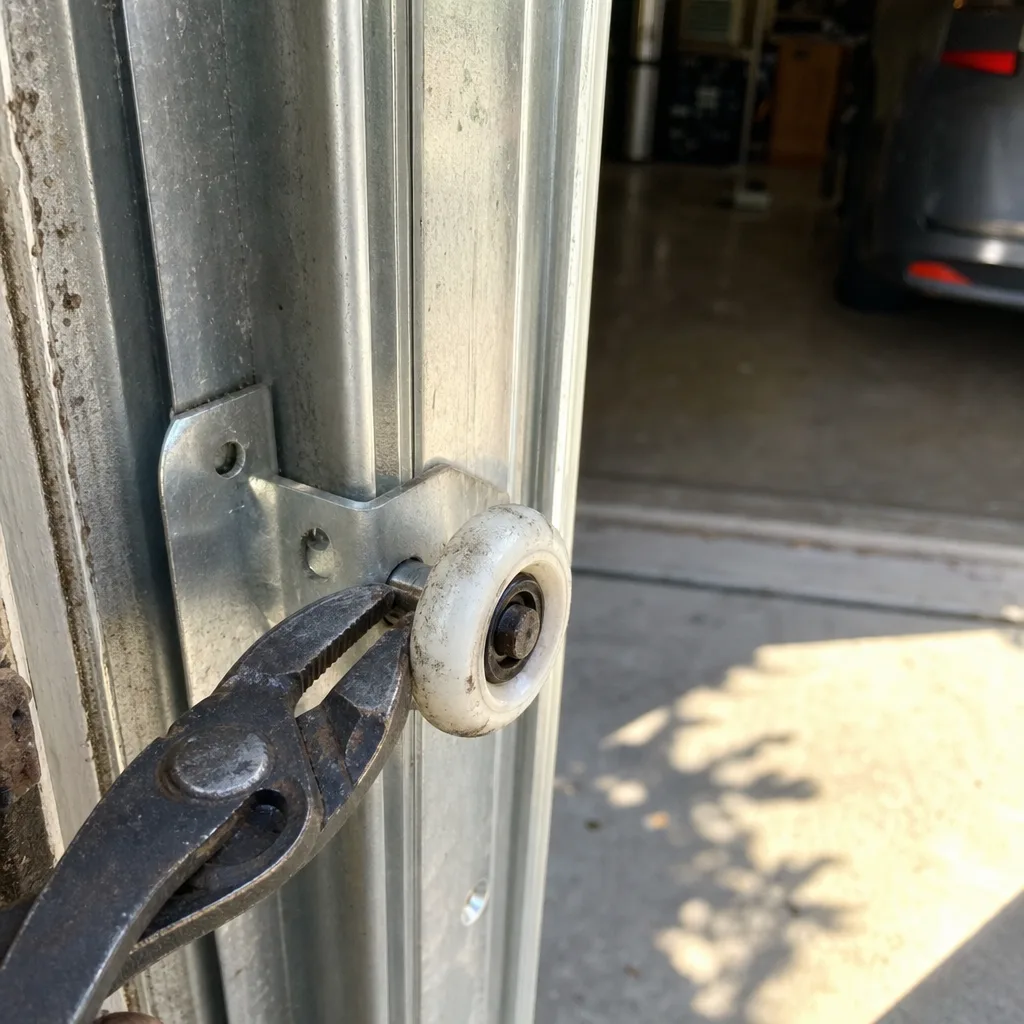
We’re going to be direct about this section because it’s the one that matters. A torsion spring is a coil of hardened steel mounted on a shaft above the garage door. It works by twisting, not stretching. When a technician winds the spring, they’re storing rotational energy in the steel. That energy is what lifts the door, not the opener motor. The opener is just guiding the door; the spring is doing the heavy lifting.
Now consider what happens when that spring breaks. The stored energy releases at once. If the break happens while you’re winding it, the winding bar – a 18-inch steel rod – becomes a projectile moving at roughly 100 miles per hour. If your hand is in the way, the bones in your hand and wrist lose. Every time. We’ve been called to Santa Clarita homes where the homeowner got lucky and only damaged the drywall. We’ve heard the stories from colleagues about the ones who didn’t get lucky. The national numbers bear it out: torsion spring injuries account for a disproportionate share of hospitalizations from home improvement projects, and a majority of those injured report that they didn’t understand how much force was involved until it was too late.
The danger isn’t incompetence. It’s the gap between what the spring looks like – a coil of metal, sitting still – and what it actually contains. Nothing in everyday life prepares you for a component that holds hundreds of pounds of force while appearing completely dormant. This is why the owner-appropriate path never includes winding or unwinding a torsion spring, even if the YouTube video makes it look quick. The video host has done it hundreds of times. You haven’t. The cost of a professional spring replacement in Santa Clarita ranges from $280 to $420 for a typical single spring, installed, with a written price and warranty. The emergency room deductible starts higher than that. That’s the entire decision in one sentence.
The Honest Cost Comparison: Five Jobs, Real Numbers
Most online “DIY vs professional” comparisons quietly omit the cost of tools. They’ll quote a $25 spring as if it installs itself. That’s not honest. Here’s the real math for the five most commonly DIY-attempted garage door jobs, with Santa Clarita market pricing and actual tool requirements included. The professional column reflects the flat, written pricing you should expect from a reputable Santa Clarita shop – not a vague estimate, but a hard number before work starts.
Job 1: Lubrication and Maintenance
- DIY cost: $9 to $30 for white lithium grease, silicone spray, and a rag. Time: 20 to 30 minutes. No special tools.
- Professional cost: $100 to $180 for a full tune-up including balance check, safety reverse test, and hardware tightening.
- Honest verdict: DIY. This is the easiest thing on the list to do right, and the professional version is mostly valuable for the inspection, not the lubrication. Do this yourself twice a year. If you notice unusual wear or noise, that’s when you schedule the professional inspection.
Job 2: Photo-Eye Sensor Realignment
- DIY cost: $0. A screwdriver. Time: 15 minutes.
- Professional cost: $75 to $125 service call minimum.
- Honest verdict: DIY. This is a light adjustment, not a repair. If the sensors are actually broken (not misaligned), replacement is $30 to $60 per sensor and straightforward if you’re comfortable with wire nuts.
Job 3: Weatherstripping Replacement
- DIY cost: $40 to $80 for the seal, plus a flathead screwdriver. Time: 45 minutes.
- Professional cost: $150 to $220 including the material.
- Honest verdict: DIY if you have a standard door. The one caveat: Santa Clarita’s summer heat degrades rubber quickly, so you’ll be doing this every 2 to 3 years. The cost savings add up.
Job 4: Roller Replacement
- DIY cost: $30 to $50 for a set of nylon rollers. But here’s the tool honesty: if the bottom brackets are involved, you need a proper garage door repair tool set, not a screwdriver. That’s $120 to $250 for the winding bars, clamp, and bracket tools – and you still shouldn’t use them if you don’t know how to release spring tension safely. If only the top rollers are being replaced: DIY. If any bottom roller is involved: the risk math changes.
- Professional cost: $130 to $220 for a full roller replacement, including all rollers.
- Honest verdict: Split. Top rollers are DIY. Anything touching the bottom bracket is professional-only because of the cable tension. And when you factor in the tool cost for a single bottom roller replacement, the professional is actually cheaper.
Job 5: Torsion Spring Replacement
- DIY cost: $80 to $150 for the spring itself. Plus $50 to $150 for winding bars, a clamp, and safety equipment. Time: 2 to 4 hours for a first-timer. Risk: serious injury or death if the bar slips or the cone breaks.
- Professional cost: $280 to $420 for a single spring installed in Santa Clarita, including the written quote, the spring spec, and a warranty.
- Honest verdict: Professional. When you subtract the tool cost, the labor premium is under $150. For that $150, you’re buying three things: the experience of someone who has done this hundreds of times, the warranty on the part and workmanship, and the absence of a catastrophic injury risk. It’s not a close call.
Santa Clarita Permits, Codes, and Resale Disclosure
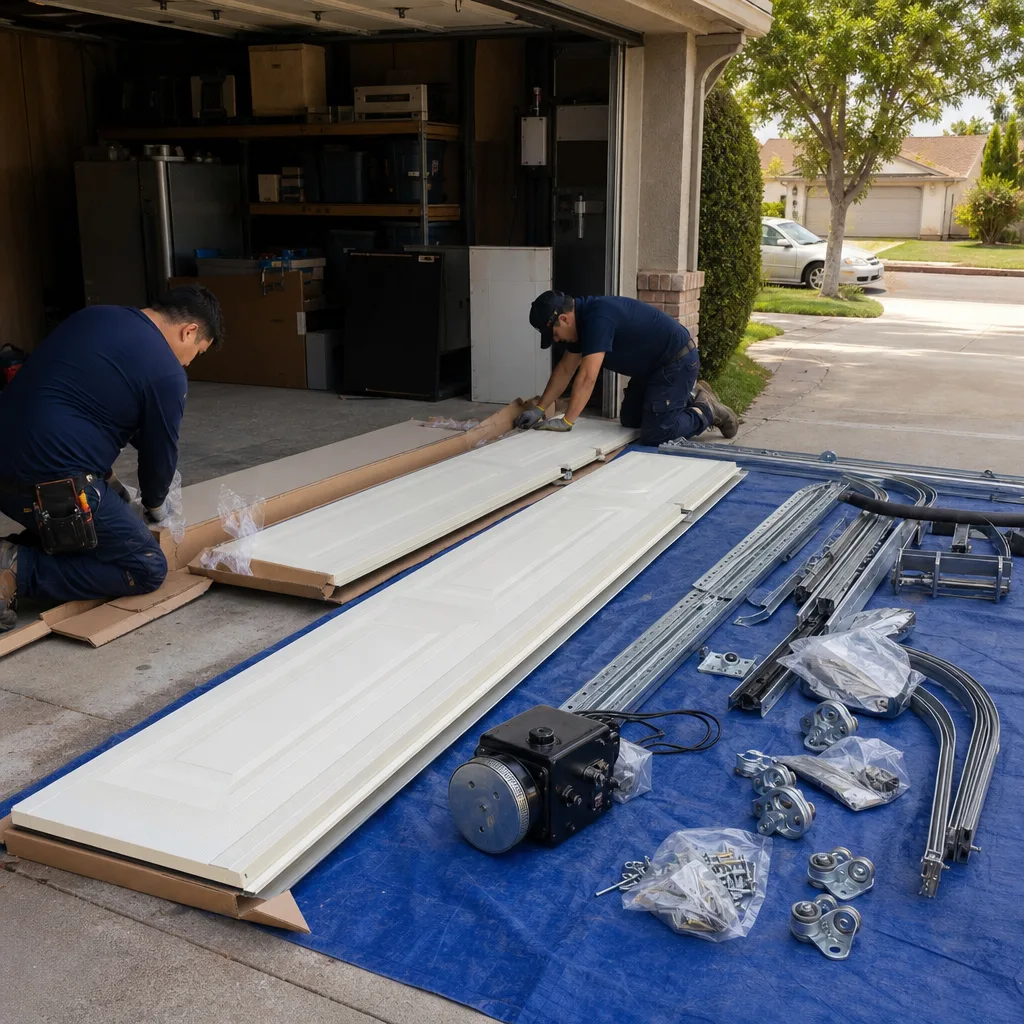
California takes garage doors seriously because they’re the largest moving object in a home. Here’s what Santa Clarita homeowners need to know before taking on any structural or electrical work, including Garage Door Permits, Codes & Inspections in CA: What You Need to Know.
Permit Requirements
The City of Santa Clarita, through its building division, generally requires a permit for the replacement of a garage door when the opening size changes or when structural framing is modified. A like-for-like replacement – same opening, same door weight – typically doesn’t require a permit. An opener replacement doesn’t require a permit, but it does require compliance with the California Residential Code (CRC) safety standards, specifically the auto-reverse function and photo-eye sensor placement. If you install an opener yourself and it doesn’t meet those standards, you’ve created a code violation that’s discoverable at inspection.
Electrical Work
Wiring a new opener to an existing outlet is within homeowner scope in California. Running new circuits or adding an outlet in the garage is not. That work requires a licensed electrician and a permit. Many Santa Clarita homes built in the 1980s and 1990s have garages with only one outlet, and the DIY temptation is to daisy-chain an extension. Don’t. It’s a fire hazard, and unpermitted electrical work is one of the most common disclosure obligations at resale.
Resale Disclosure
Here’s the part most DIY guides never mention: California’s seller disclosure laws are unusually strict. When you sell your home, the Transfer Disclosure Statement (TDS) and the Seller Property Questionnaire include specific questions about unpermitted work, electrical modifications, and structural changes. A garage door you installed yourself without a permit, or an opener you wired into a non-compliant circuit, becomes a disclosure obligation. Failing to disclose it exposes you to liability after closing. The buyer’s home inspector will find it anyway, which means you’ll pay to fix it at the most expensive possible moment – during escrow, under time pressure. A professional installation with a written record and permit compliance means you never have to think about it again.
The Partial-DIY Path: Diagnose It Yourself, Document It, Then Call
There’s a middle path between full DIY and just calling someone. We respect it because it produces a smarter customer and a faster repair. The principle is simple: you do the observation and documentation; the technician does the physical repair. Here’s how it works.
- Listen and record. When the door makes a noise, record it on your phone. Is it a grinding sound? A squeal? A pop? A grinding sound usually means worn rollers or a failing bearing. A pop is almost always a spring. Play the recording for the technician when they arrive. It saves diagnostic time.
- Check the balance. Pull the emergency release handle while the door is closed. Lift the door manually to about waist height and let go. If it stays in place, the springs are balanced. If it drops, the springs are failing. If it shoots up, the springs are oversprung. This test takes 30 seconds and tells us more than a phone description ever could.
- Photograph the problem. If you see a visible issue – a cracked spring, a frayed cable, a dented track – photograph it. Send the photos when you schedule service. At Servo Garage Doors Santa Clarita home, we document this because Clause 4 of The Haven Standard requires the technician to photograph the failed component before quoting a replacement, and a customer’s photo helps us understand the scope before we arrive.
- Write down the model numbers. The opener brand and model are on a label on the motor housing. The spring has color-coded cones. The door manufacturer is often printed on the inside of the bottom panel. That information lets us arrive with the right parts on the truck.
- Report the full history. When did the problem start? Has it happened before? Did anyone else work on the door recently? A complete history shortens the diagnostic path and reduces billable time.
The financial benefit of partial-DIY is real. Diagnosis is a billable line item. If you’ve already done it and documented it, the technician can quote the repair immediately rather than spending 20 minutes investigating. At Servo’s flat written pricing, that means the quote is faster, and the work starts sooner. You haven’t touched anything dangerous. You’ve just prepared.
What a Professional Job Should Produce: The Paper Trail Standard
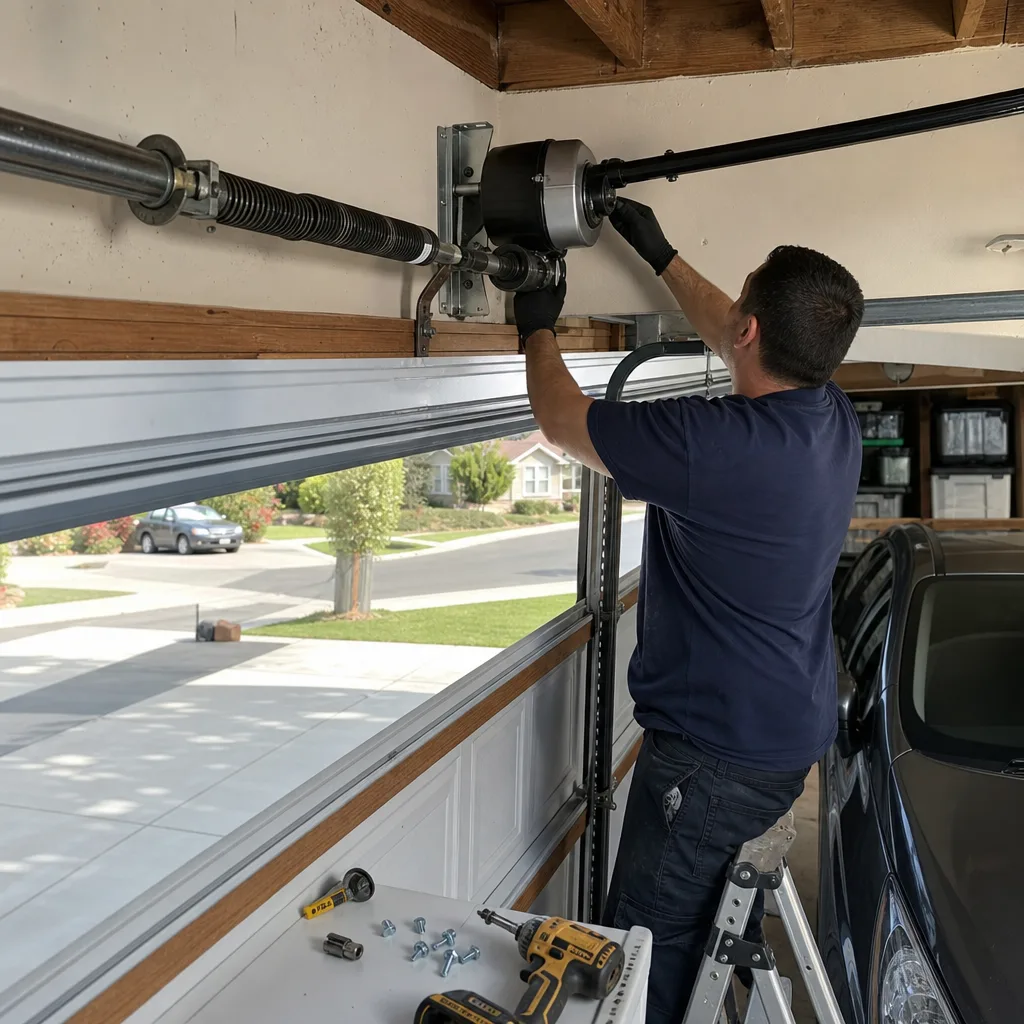
Most homeowners judge a garage door repair by whether the door opens afterward. That’s the minimum. What separates a professional operation from a guy in a truck is the documentation trail that’s produced after the work. If a company can’t or won’t produce this paperwork, you should assume the work wasn’t done to a verifiable standard. Here’s what to expect from a professional Santa Clarita garage door company, and specifically what we do at Servo because The Haven Standard requires it.
The Written Price, Before Work Starts
Clause 1 of The Haven Standard is non-negotiable: a flat, written price and a written scope of work are delivered before any work begins. Not an estimate. Not a range. A number. If a technician starts giving verbal numbers or says the price depends on what they find, that’s not a system. That’s a negotiation. A real professional quotes the job up front, and the price doesn’t change because the work took longer than expected. The risk of the job is on the contractor, not the homeowner.
The Photographic Record
This is the part that surprises most Santa Clarita homeowners. A professional job should include photos. Photos of the failed component before replacement. Photos of the new component after installation. Photos of the completed work. At Servo, every visit produces a documented photo record – that’s Clause 4 of The Haven Standard, and it traces back to the founding rule that the customer sees the failed part before anyone quotes a replacement. You should never be asked to trust that “the spring was broken.” You should see the broken spring.
The Part Specification
When a professional replaces a torsion spring, the invoice should specify the spring: wire diameter, coil length, inside diameter, and cycle rating. A spring rated for 10,000 cycles is a higher-grade part than one rated for 8,000 cycles. A company that doesn’t write down the spec either doesn’t know it or doesn’t want you to know it. This matters because a cheap spring installed at premium prices is one of the most common upsells in the industry, and the only defense is a written specification.
The Warranty
Professional work should carry a written warranty, not a verbal promise. At Servo, the 365-Day Done Right Promise means that if a repair isn’t right, we make it right – and that promise is backed by The Haven Standard and a terms page, not a handshake. The warranty should be in writing and should specify what’s covered: parts, labor, or both, and for how long.
Santa Clarita Climate and Your Garage Door
Santa Clarita’s climate does specific things to garage door components, and understanding them helps you make smarter maintenance decisions. The city sits in the Santa Clarita Valley, where summer temperatures regularly exceed 95°F and winter nights can drop into the 30s. The temperature swings mean metal components expand and contract daily during certain seasons, and the dry air means lubrication degrades faster than in coastal climates, which is why we publish a Garage Door Repair Maintenance Checklist for Santa Clarita Homeowners.
Heat Effects on Springs
Torsion springs fail from fatigue, not age, and heat accelerates fatigue. A spring rated for 10,000 cycles in a moderate climate may fail earlier in Santa Clarita’s sustained summer heat. This is why we recommend having your spring inspected annually, particularly after a stretch of 100°F days. A spring that’s losing tension shows visual signs – gaps between coils, a slight opening at the cone – before it breaks. Inspection catches that.
Dust and Lubrication
The Santa Ana winds and the general dryness of the valley produce fine dust that gets into roller bearings and track assemblies. The advice to “grease the tracks” is wrong everywhere, but it’s disastrous here. Grease plus Santa Clarita dust creates an abrasive paste that wears out rollers prematurely. Use only dry lubricants or white lithium grease on the moving pivot points: hinges, rollers, and the spring. Leave the tracks clean and dry.
Wooden Doors in the Valley
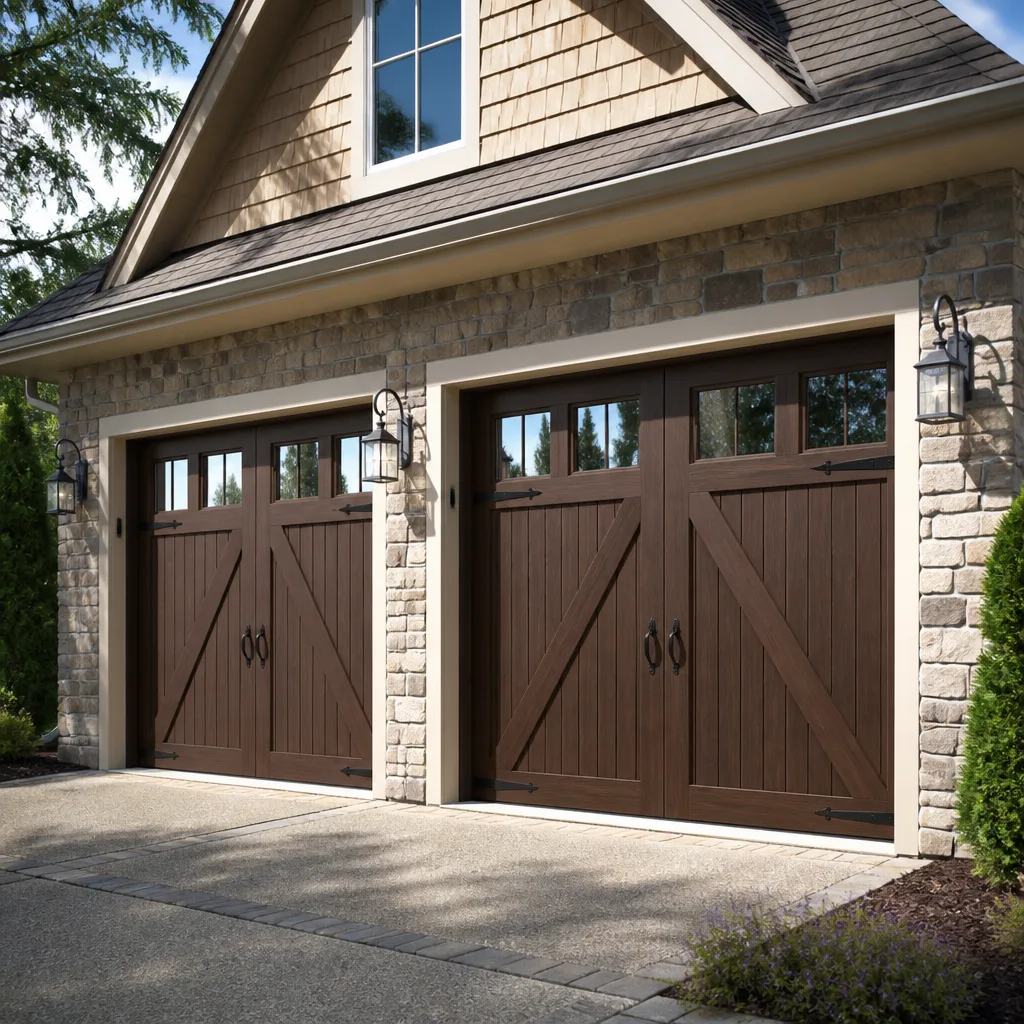
Some older neighborhoods in Valencia and Newhall have wooden garage doors that date from the 1990s or earlier. Wood expands and contracts with humidity, and Santa Clarita’s dry air causes warping over decades. A warped panel binds in the track and wears out the opener motor. If you have a wooden door that’s over 20 years old, have the panel alignment checked before it damages the opener. Replacement panels for older doors are often unavailable, which means a full door replacement – and that’s the moment when Garage Door Installation in Santa Clarita becomes relevant.
Common Mistakes to Avoid
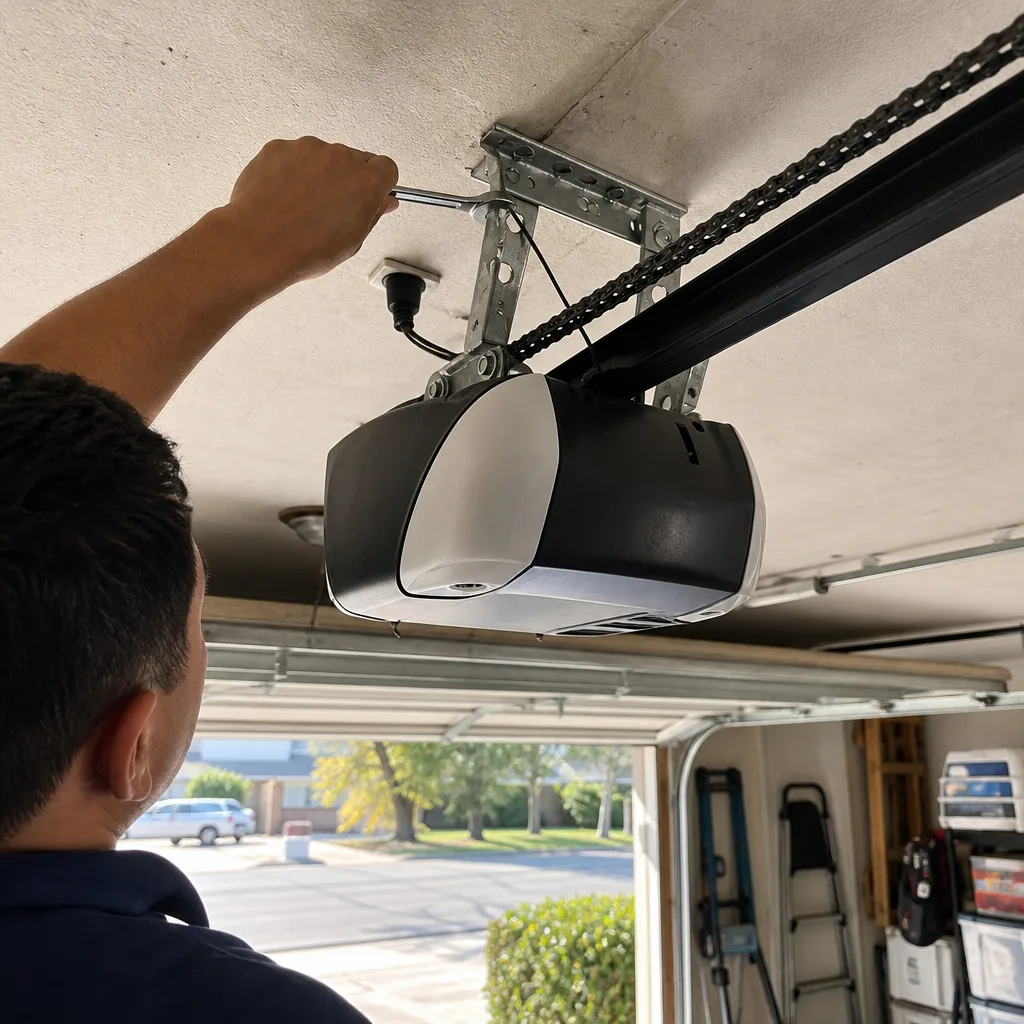
- Using WD-40 on everything. WD-40 is a solvent, not a lubricant. It breaks down the grease that’s already there. On garage door rollers and springs, you want lithium grease or silicone. In Santa Clarita’s dust, the wrong product accelerates wear.
- Attempting a spring replacement with screwdrivers instead of winding bars. Using anything other than properly sized, heat-treated winding bars is how people lose eyes and hands. This is not a place for improvisation.
- Disconnecting the opener without managing the door weight. Pulling the emergency release while the door is open or while the springs are broken drops the door’s full weight onto whatever is beneath it. Always close the door first.
- Ignoring a noisy door. A door that’s getting louder is telling you something. Grinding means worn rollers. Popping means a spring is about to fail. The repair is always cheaper before the component breaks completely.
- Replacing one spring on a two-spring system. If your door has two springs and one breaks, replace both. Unless the other spring is brand new, it has the same age and cycle count and is statistically likely to fail within months. Replacing one is a false economy.
- Skipping the safety reverse test. The auto-reverse function exists because garage doors have killed children and pets. Test it monthly by placing a roll of paper towels under the closing door. If the door doesn’t reverse, the opener is non-compliant and unsafe, regardless of who installed it.
- Hiring a company that won’t name the price up front. If a Santa Clarita garage door company can’t give you a written price before work starts, you’re not buying a repair. You’re buying a negotiation. Walk away. Clause 1 of The Haven Standard exists because set pricing is enforceable; verbal pricing is not.
When to Call a Professional
Call a professional when the job involves stored energy, structural weight, or electrical work. That’s torsion springs, extension springs, lift cables, bottom brackets, full door replacement, and opener installation. Call a professional when the door is visibly out of balance, when it falls when manually lifted, or when you see a cracked coil or frayed cable. Call a professional when you’ve already attempted a fix and the door is worse. And call a professional when you want documentation – a written scope, a part specification, and a photo record – because that paperwork matters at resale and at warranty time. Garage Door Repair in Santa Clarita is what we do every day, and Garage Door Opener Repair & Installation in Santa Clarita covers the electrical side. Servo Garage Doors Santa Clarita offers free estimates in Santa Clarita – call (661) 542-4007 and you’ll get a written price, not a sales pitch.
Frequently Asked Questions
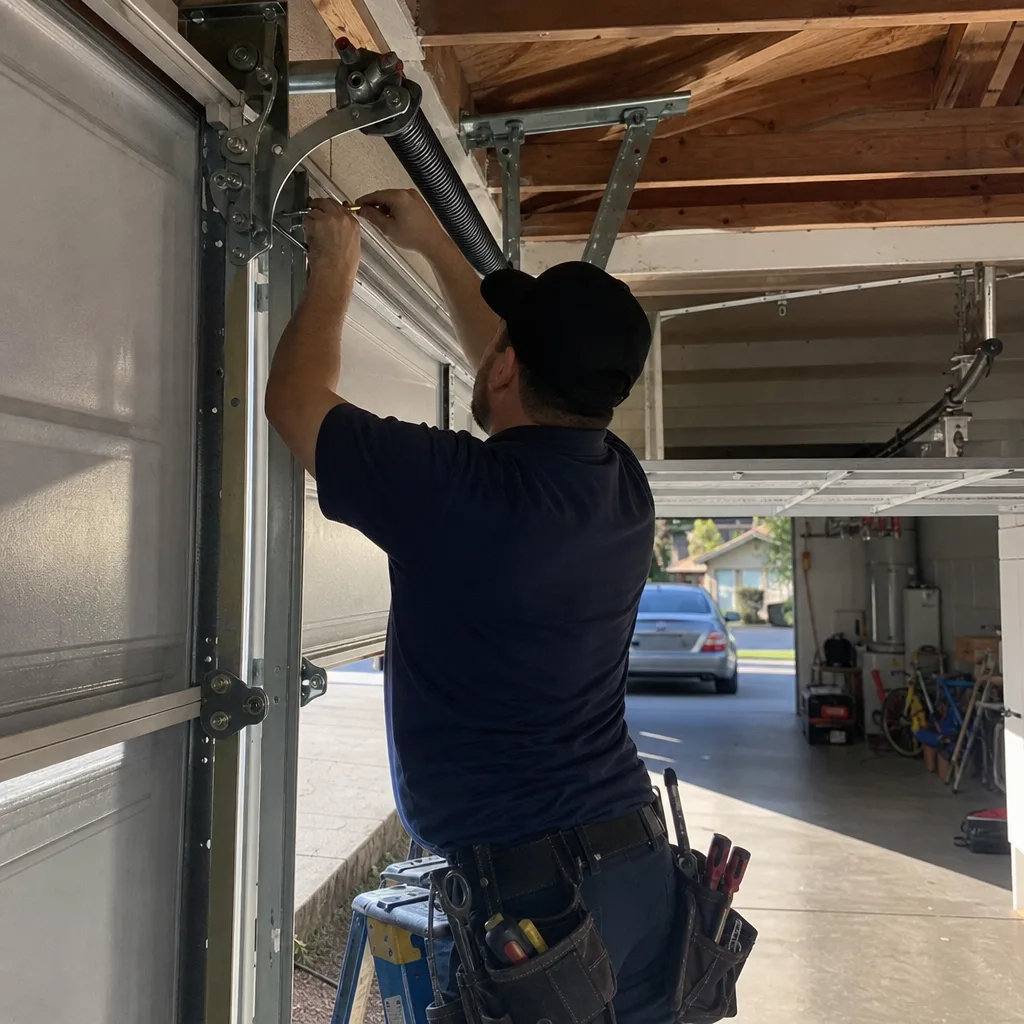
No. Torsion springs store enough energy to lift 150 to 300 pounds, and when that energy releases unexpectedly, the winding bar becomes a deadly projectile. This is the single most dangerous DIY task in residential home maintenance. Call a professional. In Santa Clarita, spring replacement with written pricing typically runs $280 to $420, and that price includes the warranty and the absence of risk. Call (661) 542-4007 for an exact quote – estimates are free.
Most common repairs in Santa Clarita fall into clear ranges: photo-eye realignment is a $75 to $125 service call, roller replacement runs $130 to $220, weatherstripping is $150 to $220 installed, spring replacement is $280 to $420 per spring, and opener replacement typically runs $350 to $600 including labor. The exact price depends on the door type, part specification, and access, but a reputable company will give you a written number before work starts – no surprises. Call (661) 542-4007 for a written price on your specific repair.
At Servo, no. Clause 1 of The Haven Standard means a flat, written price and written scope are delivered before any work begins. The only exception is if the customer asks for additional work beyond the original scope, in which case that new work gets its own written price before it’s started. The risk of an underestimation is ours, not yours. That’s the entire point of a pricing system: it removes the guesswork and the negotiation.
Most of them. Servo’s trucks stock all eight major brands – LiftMaster, Chamberlain, Genie, Clopay, Amarr, Wayne Dalton, Craftsman, and Raynor – along with common spring sizes, cables, rollers, and sensors. If a specialized or uncommon part is required, we’ll tell you during the quote process, not after work has started. In Santa Clarita, same-day service on common repairs is standard, and emergency calls are answered by a real person 24/7, including holidays.
You can, if you’re replacing a like-for-like opener on an existing circuit. The California Residential Code doesn’t require a permit for an opener replacement, but it does require compliance with safety standards: the auto-reverse function, the photo-eye placement, and the force settings. If you’re comfortable setting those correctly and testing them, it’s a legitimate DIY job. Just know that if you get the force settings wrong, the door can close on a child or pet and not reverse. That’s not a mistake you want to discover by accident.
It depends on the job. For lubrication, sensor alignment, and weatherstripping, DIY is genuinely cheaper – you’ll save $75 to $150 per job and the tools are basic. For roller replacement, the math starts to flip once you account for tool costs. For spring replacement, the honest math shows a professional costs about $150 more than a properly equipped DIY attempt, and that $150 buys you the warranty, the experience, and the elimination of a serious injury risk. In most cases, the right answer isn’t “which is cheaper” but “which is cheaper after you account for risk.” Call (661) 542-4007 for a free estimate on any repair.
The Bottom Line
The DIY-versus-professional question for Santa Clarita garage doors isn’t about competence. It’s about stored energy and paperwork. The jobs that are safe to do yourself – lubrication, sensors, weatherstripping, remotes – are genuinely safe, and doing them saves real money. The jobs that aren’t – springs, cables, bottom brackets – carry a physical risk that makes the professional premium the cheapest insurance you’ll ever buy. And when you do hire a professional, demand the full documentation trail: a written price before work starts, a photo record of what was found and what was done, a part specification, and a written warranty. If a company can’t produce that, they can’t produce accountability. For more guides & resources, visit our blog. Servo Garage Doors has operated in Santa Clarita under The Haven Standard since 2015. The standard exists because documentation is stronger than trust.
Written by Marcus Deller, Owner at Servo Garage Doors Santa Clarita, serving Santa Clarita since 2015.