
Last updated September 19, 2026
Full 25-point door and opener safety check with every visit - springs, cables, rollers, tracks, and your LiftMaster or Chamberlain opener included
You get a price before we start. It does not change when the truck arrives.
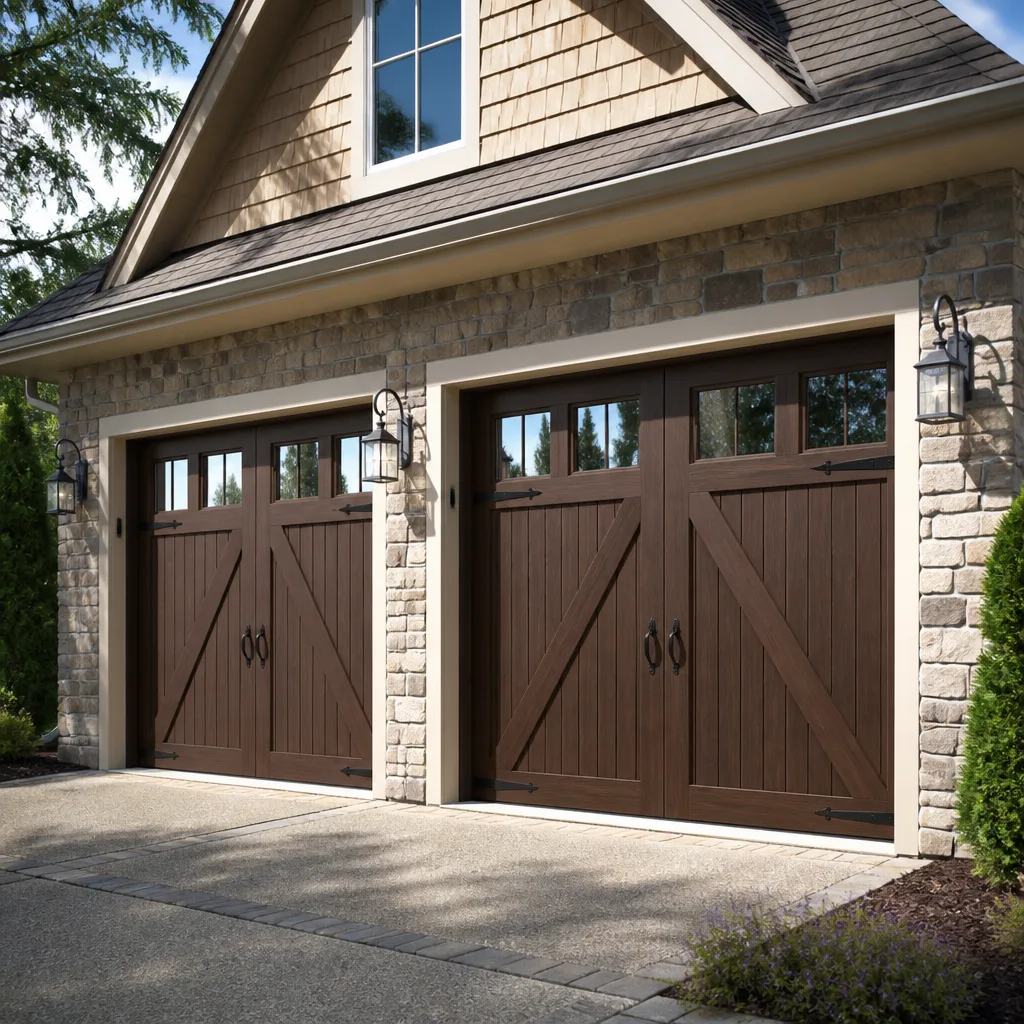
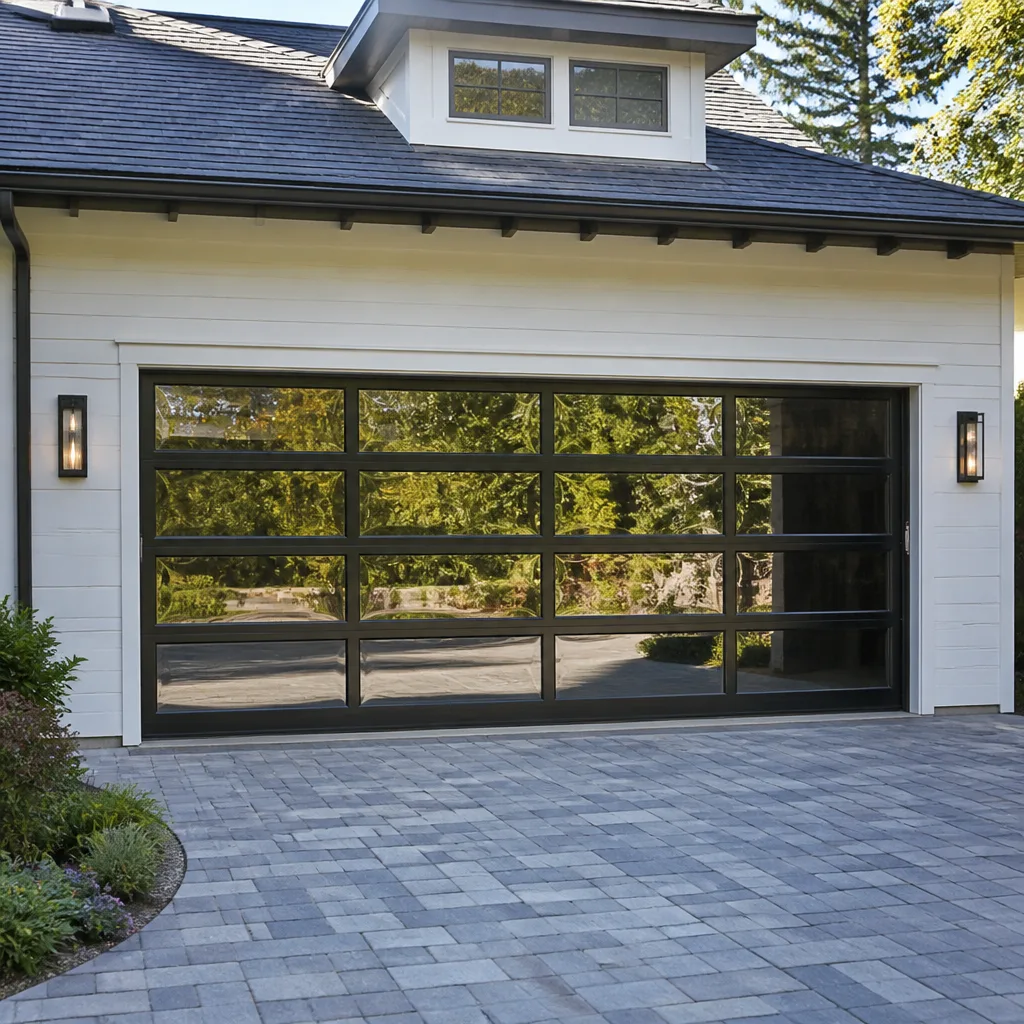
Modern flush
LiftMaster openers
 Before
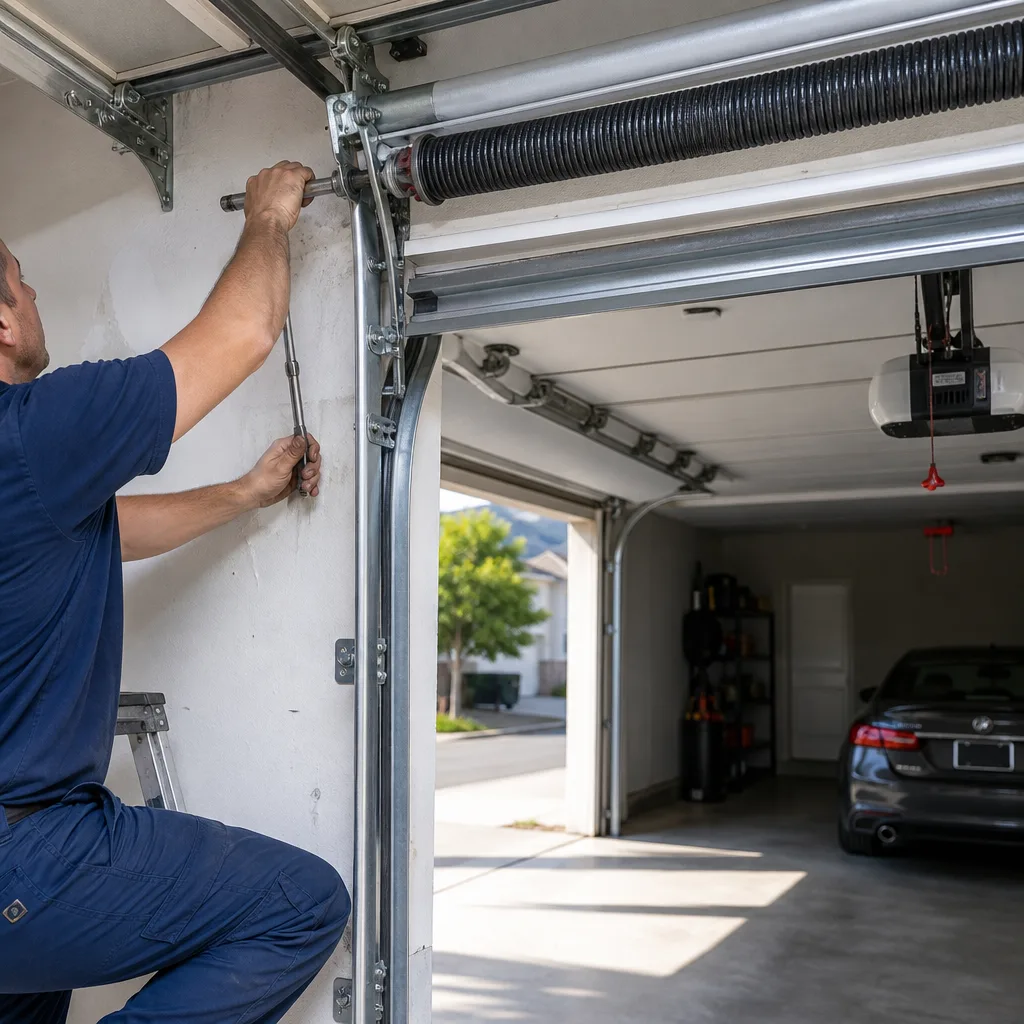 After
After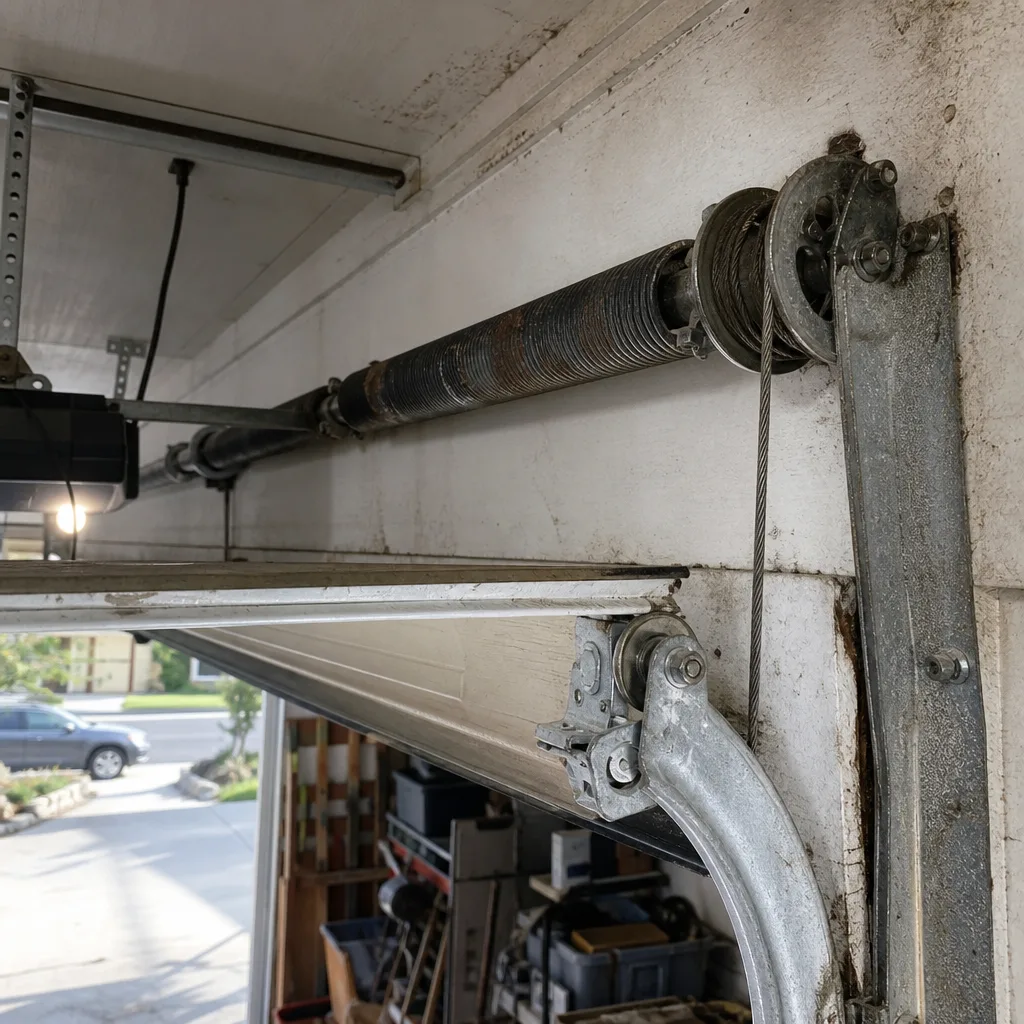 Before
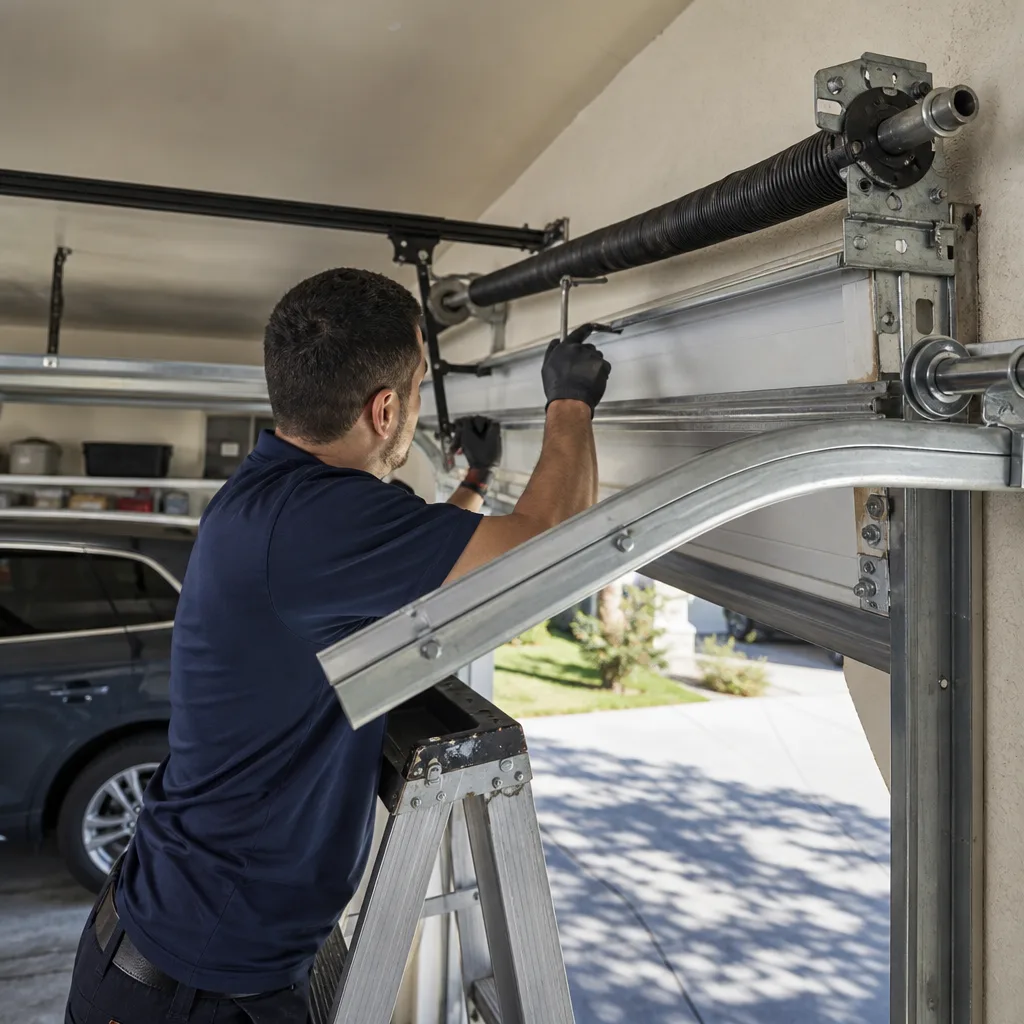 After
After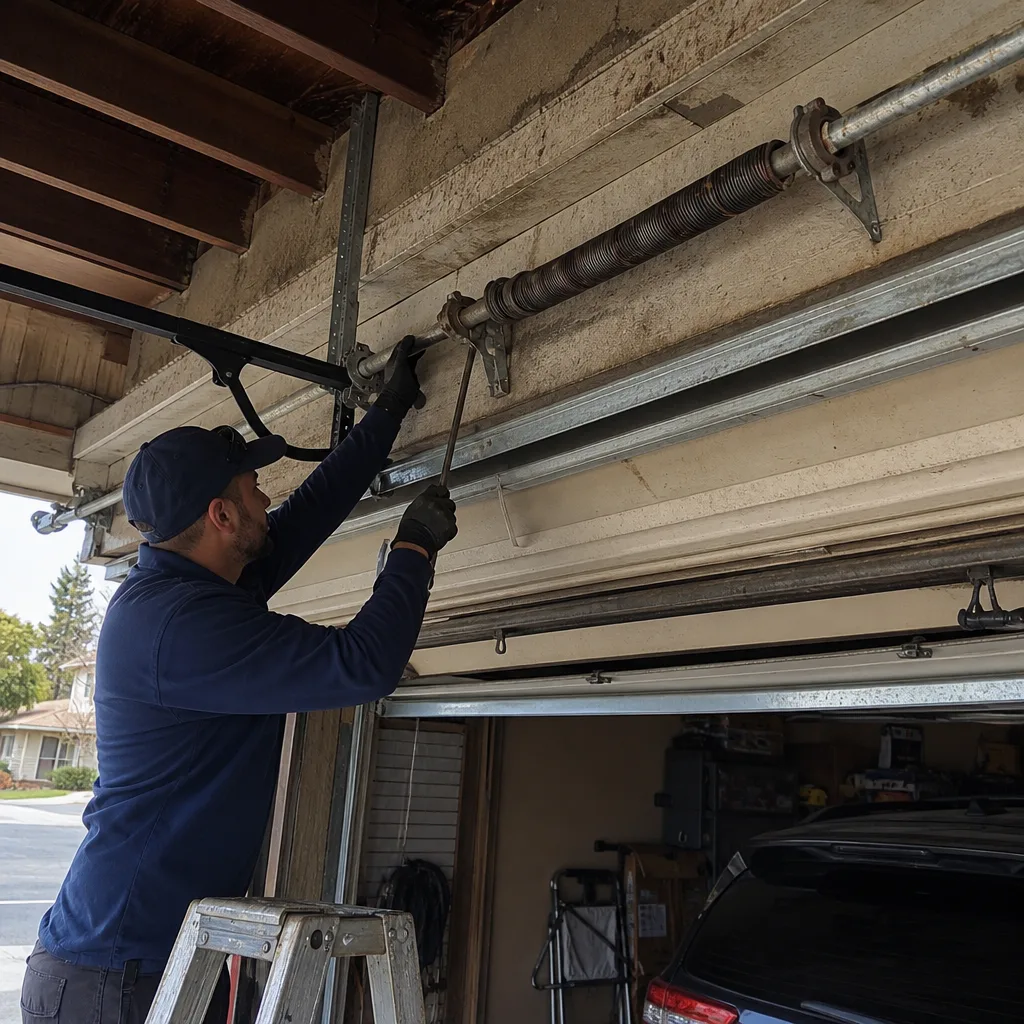 Before
 After
AfterThe Complete Guide to Garage Door in Santa Clarita
Here’s the number most Santa Clarita homeowners never hear until it’s too late: more than half of all garage door service calls dispatched as “broken door” are really just a single failed spring. The door itself is fine. The opener is fine. The track is fine. But the diagnosis got skipped because nobody looked past the symptom, so the invoice ends up with three line items instead of one. This guide is built to stop that from happening to you, by teaching you the four-subsystem architecture of your garage door, how Santa Clarita’s specific climate attacks each subsystem differently, the real 2026 cost ranges you should expect per repair in this market, and what documented evidence a legitimate technician should hand you before anything gets quoted.
Quick Answer
Garage door systems in Santa Clarita are composed of four interdependent subsystems: the spring (stores and releases lifting energy), the cables (transfer that energy and hold the door when the spring fails), the track and rollers (guide the door’s path), and the opener (provides motorized movement). Most failures begin in one subsystem, usually the spring or cable, and then damage the others if ignored. This guide explains each subsystem, what it costs to repair in Santa Clarita in 2026, and how to verify any quote you receive by asking for the documentation before you pay.
Table of Contents
- The Four Subsystems of a Garage Door System
- How Santa Clarita Climate Accelerates Component Wear
- 2026 Santa Clarita Cost Ranges by Subsystem
- Repair Visit vs. Replacement Evaluation: The Difference Matters
- HOA Door Styles in Valencia, Stevenson Ranch, and Saugus
- What Documentation a Legitimate Technician Should Produce
- Common Mistakes to Avoid
- When to Call a Professional
BeforeAfterThe Four Subsystems of a Garage Door System
Every garage door, whether it’s a Clopay steel panel door in Valencia or an Amarr wood-look door in Stevenson Ranch, operates through four subsystems that divide the work of lifting a 150 to 200 pound panel. When one fails, it shifts load onto the others. The failure chain is predictable once you understand which component carries what.
1. The Spring Subsystem
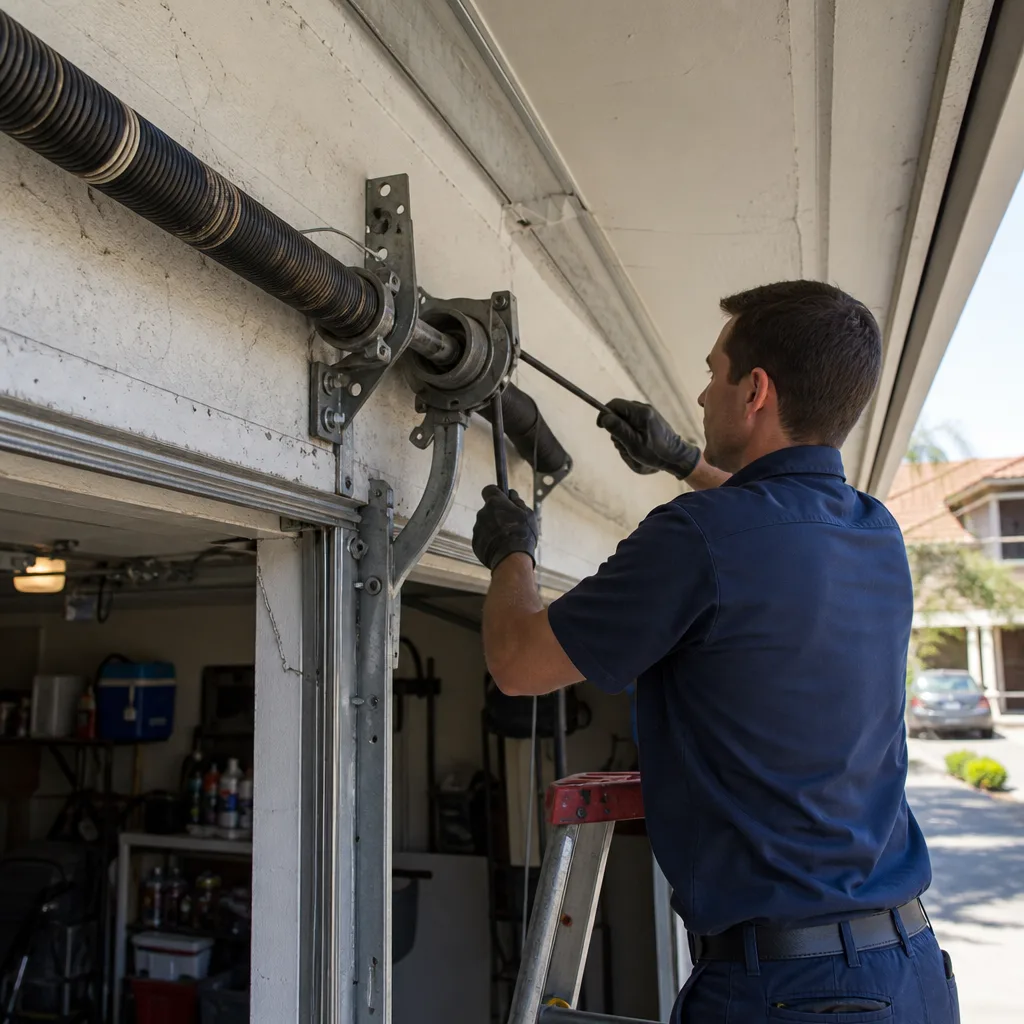
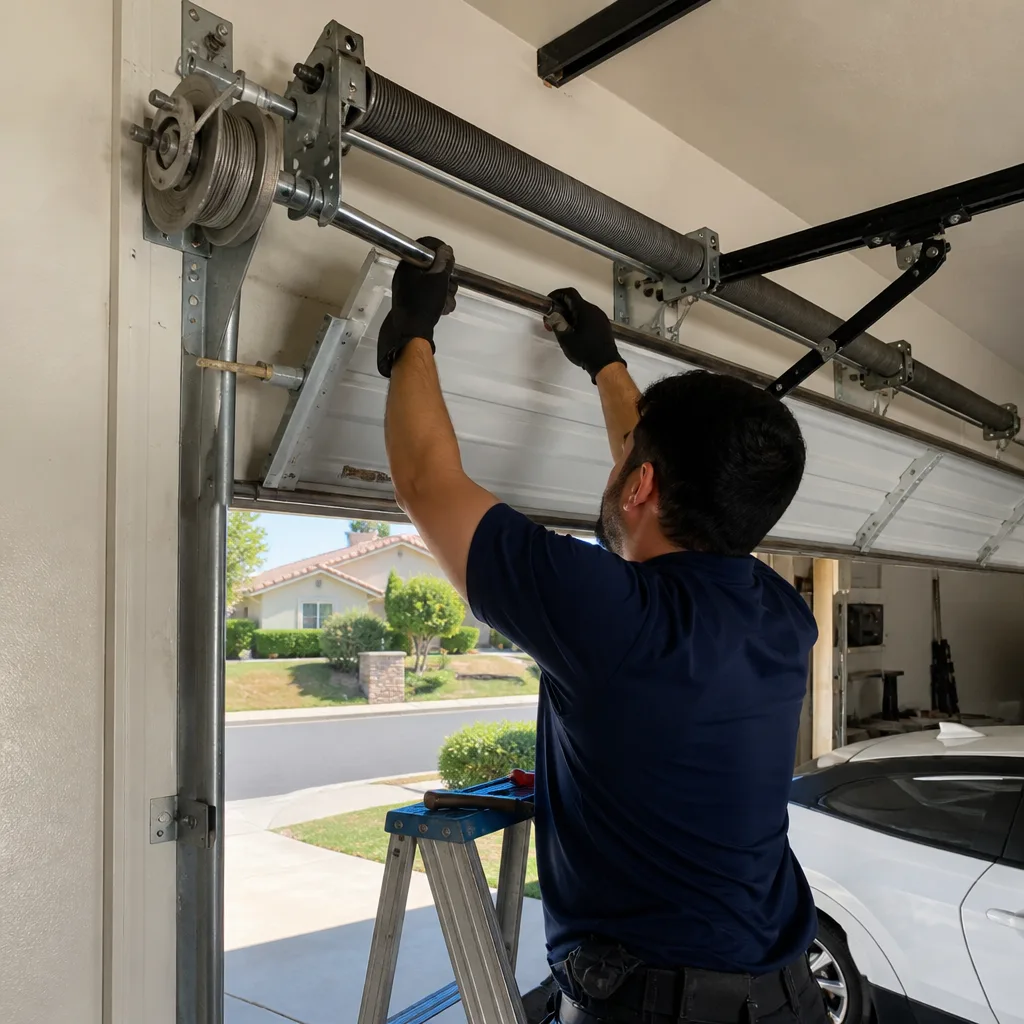
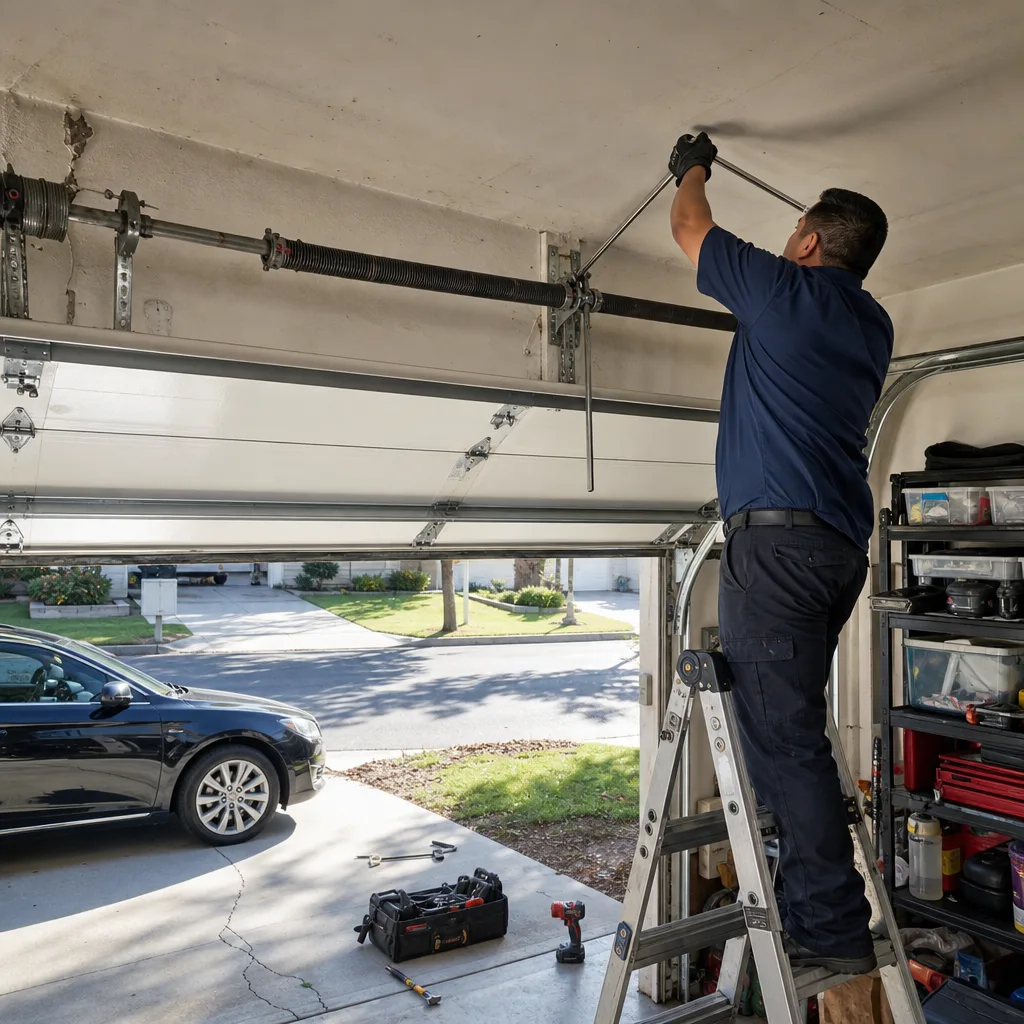
The torsion spring is the coiled steel component mounted above the door on a horizontal shaft. It stores the energy needed to lift the door, counterbalancing most of the weight so a modest opener motor can handle the rest. A torsion spring is rated for a cycle life, typically 10,000 cycles on standard springs and 25,000 to 40,000 on high-cycle springs used in warmer climates. A cycle is one full open and close. In a two-car household in Santa Clarita, where both drivers commute daily, a standard spring lasts roughly seven years.
When a torsion spring breaks, it releases the stored energy with a loud bang that many homeowners describe as sounding like a firecracker. The door becomes extremely heavy because the spring is no longer counterbalancing it. This is the moment the cable subsystem takes over, and that’s where additional damage often occurs.
2. The Cable Subsystem
The lift cables are the galvanized steel wires that run vertically along each side of the door, connecting the bottom bracket to the drum on the torsion shaft. Their job is twofold: they transfer spring energy to the door during operation, and they act as a safety arrestor if the spring breaks mid-cycle.
When a spring fails while the door is partially open, the full weight slams onto the cables. A cable that has worn strands from years of temperature fluctuation will snap under that instant shock. We regularly see double failures in Santa Clarita where a spring and a cable fail within seconds of each other because the cable was never inspected after the spring reached end-of-life. This is why any spring replacement should include a cable inspection, and why the cost table below lists them as related line items.
3. The Track and Roller Subsystem
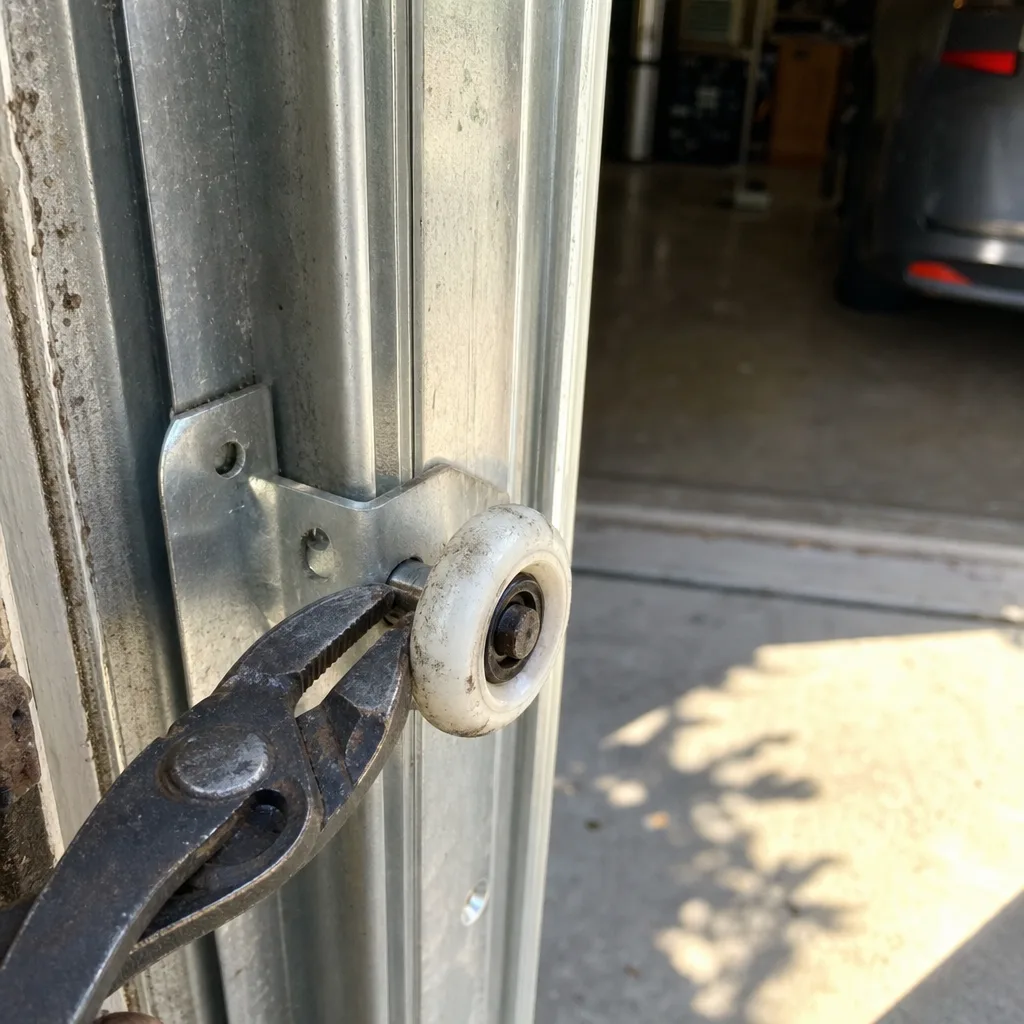
The track is the curved steel rail system that guides the door from vertical (closed) to horizontal (open). Rollers are the wheels that ride inside the track, either steel, nylon, or a steel bearing with nylon coating. This subsystem does not carry heavy load under normal operation; it carries alignment and friction.
When a spring or cable issue causes the door to operate unevenly, the track takes side-load it was never designed for. Rollers flatten on one side. Track brackets loosen. The door begins to bind. The sound changes from a smooth rumble to a scraping or grinding noise. Left unrepaired, a binding door eventually bends a track section or pulls a bracket out of the wall framing in the garage interior.
4. The Opener Subsystem
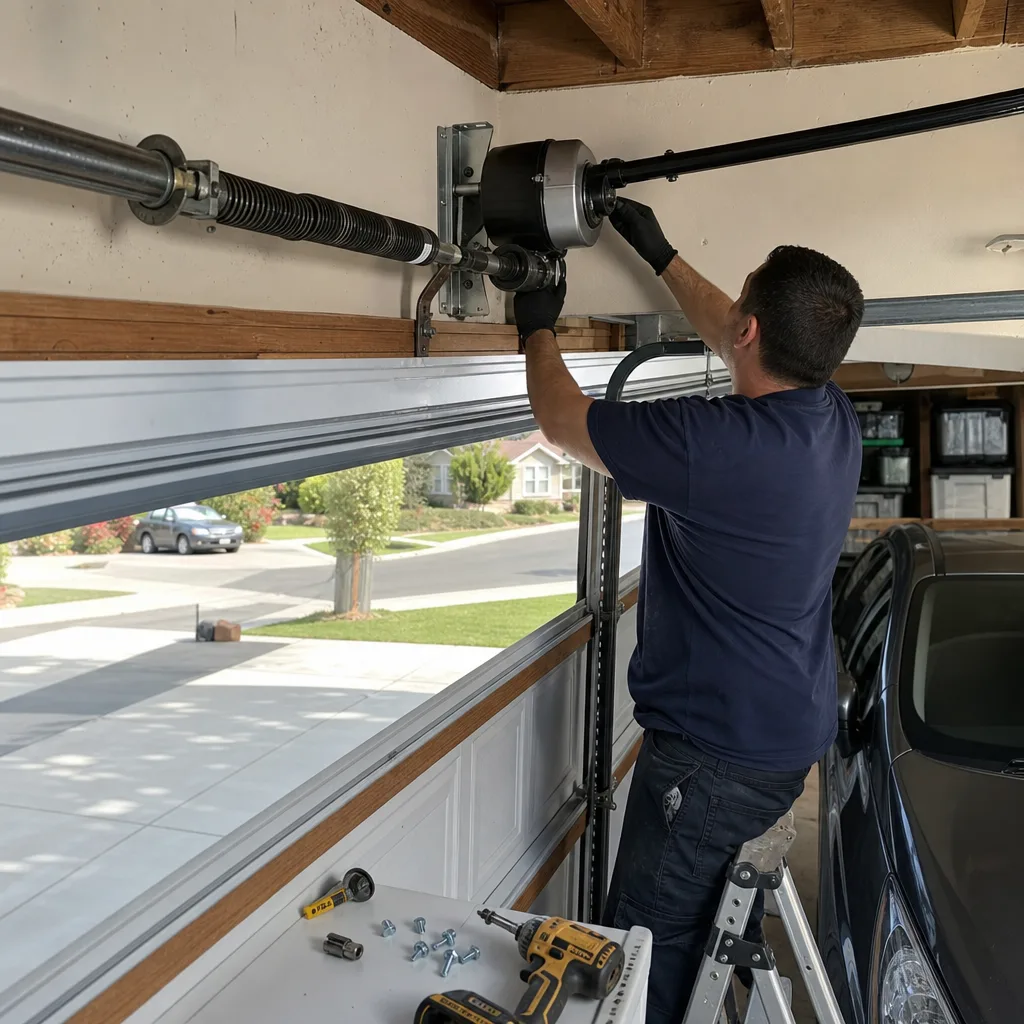
The opener is the motorized unit, usually a belt-drive or chain-drive unit from LiftMaster, Chamberlain, or Genie, mounted to the ceiling. It has four core components: the logic board (the printed circuit board that interprets signals from remotes and safety sensors), the trolley carriage (the sliding mechanism that connects the motor to the door arm), the limit switches (which tell the motor when the door is fully open or closed), and the safety sensors (the photoelectric eyes near the floor on each side of the door opening).
The opener is the subsystem that fails from overwork. When a spring weakens, the opener motor compensates by working harder. In Santa Clarita, where summer garage temperatures exceed 110 degrees, the heat adds thermal stress to the logic board and the motor windings. A door that has been pushing a worn spring for a year often shows it in opener wear: stripped gears, a burned-out capacitor on the logic board, or a trolley carriage that has worn its teeth smooth.
The point: when you understand that a failing spring shifts load onto the cables, then the track, then the opener, you understand why a $300 spring replacement ignored today becomes a $1,100 multi-component repair eight months from now. For the full scope of what a repair includes, see our Garage Door Repair in Santa Clarita page.
How Santa Clarita Climate Accelerates Component Wear
Santa Clarita sits in a high-desert transition zone where triple-digit summer days are routine and winter nights can dip into the thirties. The diurnal temperature swing, sometimes 40 degrees in a single day, is the main environmental factor in garage door component wear. This is not a theoretical point; it changes which parts wear out first in Santa Clarita compared to coastal markets like Ventura or Huntington Beach.
Spring Fatigue and Thermal Cycling
Torsion springs are made of hardened steel wire. Every degree of temperature change causes the steel to expand or contract microscopically. Over thousands of thermal cycles per year, stress accumulates at the molecular level, particularly at the point where the spring cone grips the wire. In Santa Clarita, the August heat accelerates this process because a garage that reaches 120 degrees inside pushes the spring steel closer to its fatigue limit during the hottest hours of the day while cooling overnight. Standard springs in Santa Clarita typically fail between five and seven years, compared to eight to ten years in coastal climate zones.
Low Humidity and Roller Lubrication
Santa Clarita’s average relative humidity stays low most of the year, often in the 10 to 20 percent range during summer afternoons. Metal roller bearings rely on a thin film of lubricant to prevent metal-to-metal contact. Low humidity dries out that lubricant faster than a marine-layer climate. When lubricant degrades, steel rollers grind against steel bearing surfaces, producing the characteristic squeal. Nylon-coated rollers fare better, but their bearing still needs periodic white lithium grease. We recommend inspection every two years in this climate, twice as often as manufacturers suggest for temperate zones.
Direct Sun Exposure on Panel Surfaces
West-facing garage doors in Santa Clarita neighborhoods like Saugus and Castaic receive afternoon sun in July and August when surface temperatures on a dark-colored panel can exceed 150 degrees. Steel panel doors with dark finishes absorb that heat and transfer it to the door’s interior framing. Over five to ten years, this accelerates paint fade, particularly on Amarr and Wayne Dalton doors with factory finishes rated for moderate UV exposure. Lighter colors and insulated doors with a polyurethane core hold up better in this specific solar load.
Wind and Cable Chafing
Santa Clarita’s Santa Ana wind events, typically in fall and early winter, bring sustained gusts that hit broad garage door surfaces directly. A door that is slightly out of balance will vibrate in the wind, and that vibration transfers to the cables where they wrap around the drum. Over time, this creates chafe points, thin spots where individual strands begin to break. A cable that has chafed down to 50 percent of its strand count is a failure waiting for one hard close.
2026 Santa Clarita Cost Ranges by Subsystem
These ranges reflect what we see on documented work orders throughout Santa Clarita in the current year. They are not a menu; they are a benchmark. Use them to evaluate any written estimate you receive, and treat any number significantly below or above these ranges as a reason to ask questions.
| Repair Item | Typical Santa Clarita Range | What Affects the Price |
|---|---|---|
| Single torsion spring replacement | $220 - $340 | Wire size, cycle rating, labor included |
| Pair of torsion springs | $380 - $560 | Both springs replaced for even wear |
| Lift cable replacement (both sides) | $180 - $280 | Cable length, drum condition |
| Spring and cable replacement together | $450 - $680 | Common after a spring break damages cables |
| Track realignment | $150 - $250 | Labor-intensive, usually no parts |
| Roller replacement (full set) | $120 - $200 | Nylon vs. steel, bearing quality |
| Logic board replacement | $180 - $320 | Opener brand, board revision |
| Trolley carriage replacement | $140 - $260 | Belt-drive vs. chain-drive |
| Safety sensor replacement | $110 - $180 | Includes alignment and testing |
| Full opener unit replacement (installed) | $450 - $750 | Belt-drive, battery backup, smart features |
On a repair visit, the price you are quoted is the price you pay, in writing, before the technician touches a single component. Clause 1 of The Haven Standard requires a flat written price and written scope delivered before any work begins. If any company asks you to “call for a quote” on a repair, that is a red flag. For installation and new door work, the equivalent is a free measure and a written fixed price before you commit. See our Garage Door Installation in Santa Clarita page for what that process looks like on project work.
A note on parts sourcing: Santa Clarita is far enough from major distribution hubs that parts availability for older opener models can extend lead times. We carry common springs, cables, rollers, trolley carriages, and logic boards for LiftMaster, Chamberlain, Genie, and Craftsman on our trucks, but a discontinued Wayne Dalton torque-master spring tube conversion or a Clopay specialty panel usually requires a factory order, which adds time, not cost, to the repair.
Repair Visit vs. Replacement Evaluation: The Difference Matters
This distinction may be the single most useful piece of information in this guide for homeowners deciding between DIY and professional garage door service. A repair visit and a replacement evaluation are two different jobs with two different documentation standards, and a homeowner who confuses the two is vulnerable to either an undersold repair or an upsold replacement.
A Repair Visit
A repair visit is a diagnostic call followed by component replacement. The failure is specific and isolatable. The technician identifies the failed component, photographs it, presents a written price for the fix, and completes the repair. A repair visit should end with a documented photo record showing the failed part before removal and the installed part after completion. The customer should receive the warranty information in writing, including the warranty period on parts and labor.
In Santa Clarita, the most common repair visit we run is a torsion spring or lift cable failure. Both are same-day fixes with parts we carry on the truck. The entire visit typically runs 60 to 90 minutes from arrival to a functioning door.
A Replacement Evaluation
A replacement evaluation starts from the assumption that the door has reached end-of-life and considers the whole system, not just one component. This is the right call when a panel is rusted through, when the door is 20-plus years old and carries multiple patch repairs, or when the homeowner wants to change the door’s insulation value, wind rating, or appearance. A replacement evaluation produces a written measure, a written scope-of-work specifying door model, insulation R-value, panel design, hardware, and labor, and a flat written price for the complete job.
The two most reliable questions to ask if you are unsure which one you need: “Can you show me the failed component before I decide?” and “Is the rest of the system in condition to support this repair, or am I buying a new spring for a door that needs to be replaced?” A technician who photographs the failed component and shows it to you on the spot is doing the work correctly. Clause 4 of The Haven Standard exists for exactly this reason; the customer sees the failed part before anyone quotes a replacement.
For opener-specific diagnostics and what a full opener evaluation includes, our Garage Door Opener Repair & Installation in Santa Clarita guide covers it component-by-component.
HOA Door Styles in Valencia, Stevenson Ranch, and Saugus
Santa Clarita’s garage door permits and HOA codes make it one of the most regulated communities in Los Angeles County. That matters when you are selecting a replacement door because three specific door styles appear repeatedly across Valencia, Stevenson Ranch, and Saugus. If you live in one of these communities, your HOA almost certainly has an architectural review requirement that specifies or restricts door materials and colors.
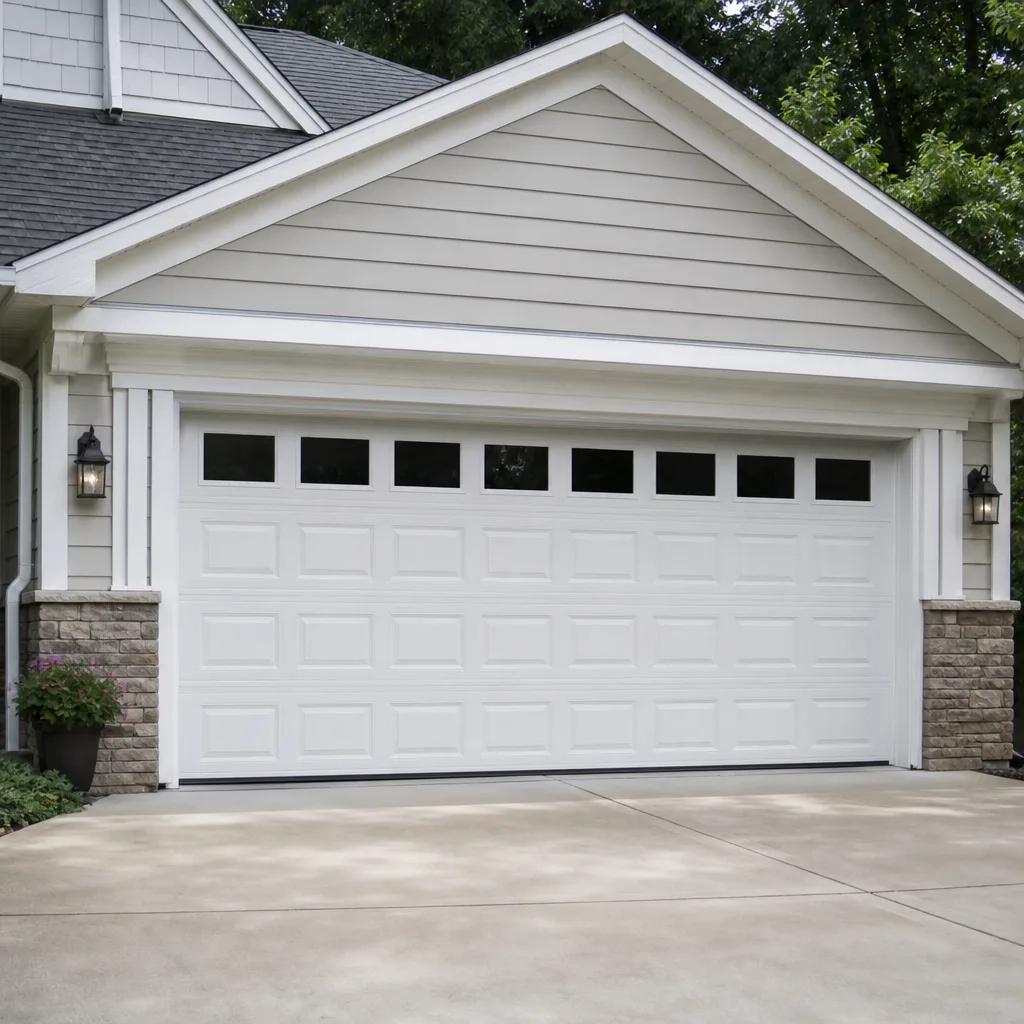
Style 1: Raised-Panel Steel, White or Sandstone
The most common door type in Valencia, particularly in the newer communities around McBean Parkway and Copper Hill. Usually a Clopay or Amarr raised-panel steel door in a factory white or light sandstone finish. HOAs in Valencia typically require that replacement doors match the original color schedule for the street, which constrains you to the same finish family but does not usually require an identical model. The key constraint here is insulation: many original Valencia doors are non-insulated, and an upgrade to a polyurethane insulated door is usually permitted because it does not change the exterior appearance.
Style 2: Carriage-House Overlay, Wood-Tone
Stevenson Ranch is filled with these. The carriage-house look is a steel door with an applied overlay that mimics wood crossbucks and horseshoe strap hinges. Wayne Dalton and Amarr both make versions widely installed in Stevenson Ranch. HOA approval in this neighborhood tends to be precise about color because the wood-tone palettes are street-matched. A replacement usually requires submitting the manufacturer’s product sheet and a color sample for architectural review. Expect the approvals process to take one to three weeks, longer if the HOA board meets monthly.
Style 3: Flush-Panel Modern, Medium Gray or Charcoal
Newer builds in Saugus and the communities off Golden Valley Road are trending toward flush-panel doors with no raised profile, finished in medium gray, graphite, or charcoal. This style reads as more architectural and less utilitarian. The constraint in Saugus is often the window option: many flush-panel doors from Clopay and Amarr offer a full-view window row, and HOAs here sometimes restrict window placement or require frosted or obscured glass for security review. Check the HOA’s window-and-door section before ordering any glass configuration.
One practical note on HOA-governed replacements in Santa Clarita: The cost of the door itself is usually not affected by HOA rules, but the timeline is. A door that would normally take three weeks from measure to install can stretch to six weeks if the architectural review committee meets monthly and you miss the submission deadline by a day. Build that lead time into your planning.
What Documentation a Legitimate Technician Should Produce
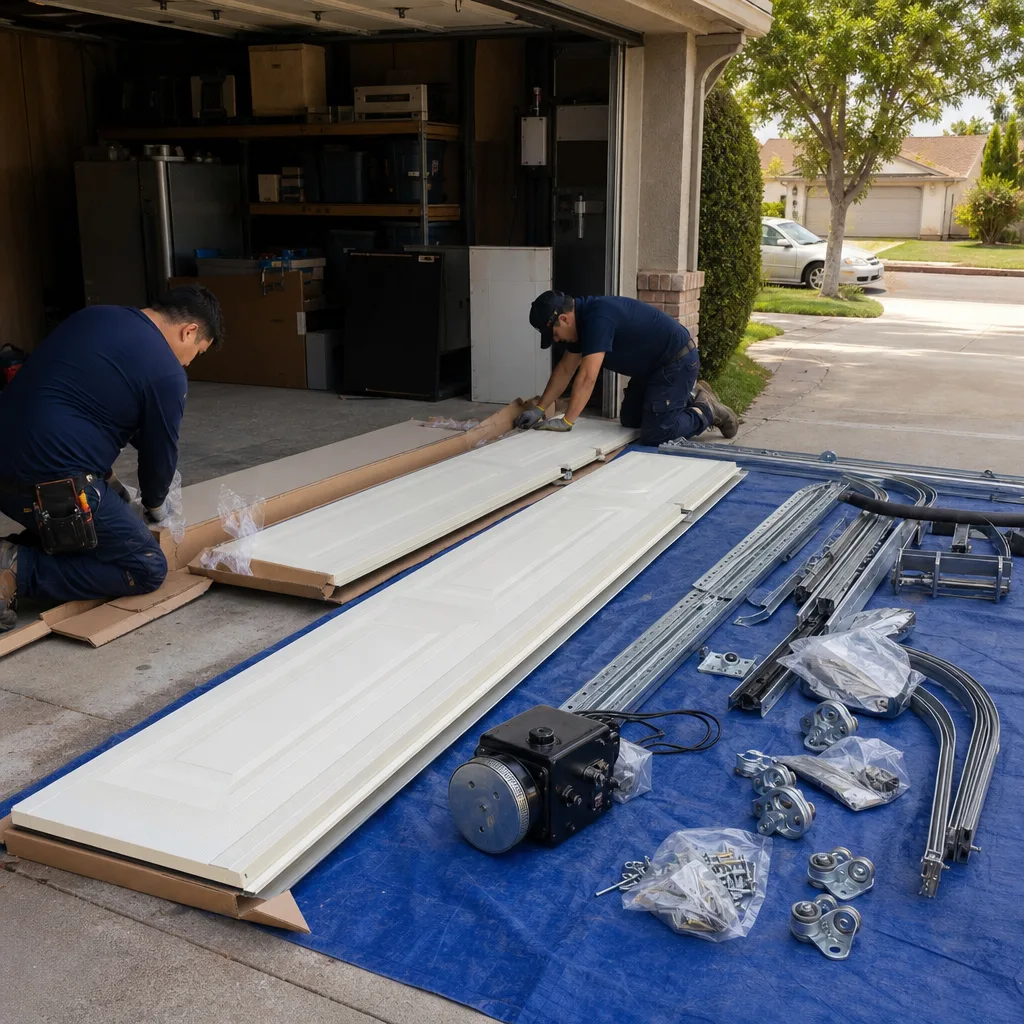
Documentation is the single clearest indicator of whether a garage door company is operating professionally or improvising. In Santa Clarita, a legitimate technician should produce documentation at every stage of the visit. If it is not produced, ask for it before you pay. A professional does not hesitate to produce paperwork.
Before Work Begins
- A written scope of work. A numbered list of exactly what will be done. If the job is “replace torsion spring pair,” that is specified with the spring wire size and cycle rating. Not “fix door.”
- A flat written price. A dollar figure, in writing, before any work starts. Not an estimate range. Not a verbal number. A fixed price. This is Clause 1 of The Haven Standard, and any company that refuses to put the number on paper before working is telling you something important about how they plan to bill.
- Proof of license and insurance. The company name, license number, and an insurance certificate if you ask for one. Independently owned and operated businesses hold their own license and insurance; no pushback, no fine print.
During the Work
- A photo of the failed component. Before removal. A torsion spring with a clean break at the coil, a cable with frayed strands, a logic board with a burned trace. You should see it on the technician’s phone or printed before the part comes out. Clause 4 of The Haven Standard makes this non-negotiable for a reason: seeing the evidence eliminates the upsell conversation entirely.
- A photo of the completed work. After installation. The new spring on the shaft, the new cables routing correctly through the pulleys, the new opener unit mounted.
After the Work
- A documented photo record. The consolidated set of images, delivered to you as a file or link, showing what was found and what was done. This is the traceability that makes “trust us” unnecessary.
- A written warranty statement. The warranty period on parts, the warranty period on labor, and what triggers a warranty call versus a chargeable service call. The 365-Day Done Right Promise should be stated on the invoice or warranty document, not just mentioned verbally.
If a technician completes a job and leaves behind only a credit card receipt, you did not receive the documentation you paid for. The paper trail is part of the service, not an add-on. At Servo Garage Doors Santa Clarita home, the photo record is included on every visit, from the founding rule that a customer sees the failed part before a replacement is quoted.
Common Mistakes to Avoid
- Ignoring a slowing door for months. A door that opens slower than it did a year ago is often a spring losing tension, which forces the opener to work harder. Every month of delay adds wear to the opener’s gears and logic board, converting a $280 spring job into a $700 combined repair.
- Replacing the opener when the spring is the problem. This is the most expensive misdiagnosis in the industry. If the door itself is heavy to lift manually, the spring is the issue, not the motor. Replacing the opener without fixing the spring means the new opener burns out prematurely on the old, tired spring.
- Lubricating the track with WD-40. The track does not need lubrication; it needs to be clean. WD-40 on the track attracts dust and creates a paste that binds the rollers. Lubricate rollers, hinges, and spring with white lithium or silicone, and wipe the track clean with a dry cloth.
- Running the door with a visibly frayed cable. Once you can see broken strands on a lift cable, the cable is near total failure. Operating the door in this condition risks a snapping cable and a door that crashes unevenly, usually bending a panel or pulling a bracket in the process.
- Assuming the HOA will approve any door. In Valencia, Stevenson Ranch, and Saugus, architectural review is a real constraint. Ordering a door before checking the HOA’s color schedule can leave you with a delivered door that cannot be installed. Check first, measure second, order third.
- Buying the cheapest spring available. Standard 10,000-cycle springs are cheaper up front and fail in roughly five to seven years in Santa Clarita’s heat. High-cycle springs rated for 25,000 cycles or more cost $30 to $60 more per spring and last two to three times as long in this climate. The math favors the upgrade.
- Skipping the documented photo record. When a repair fails prematurely, the photo record is your evidence. Without it, you are arguing from memory. With it, the conversation starts with documentation, which changes the speed and outcome of any warranty claim.
When to Call a Professional
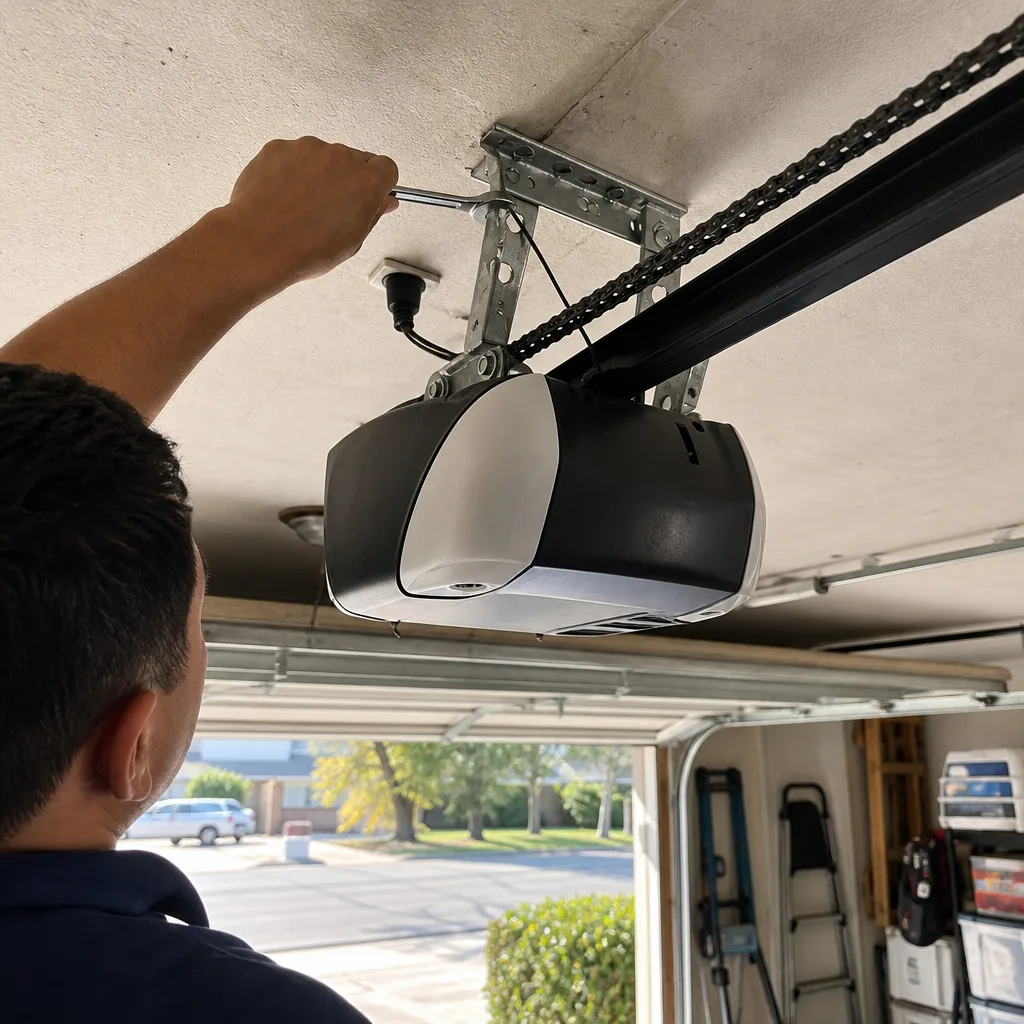
Some garage door issues are observable and safe to monitor; others require immediate professional attention. Call a professional in Santa Clarita when you hear a loud bang from the garage and the door will not lift (broken spring), when you see broken strands on a lift cable, when the door is hanging unevenly in the opening, or when an opener operates but the door does not move. These are not DIY situations. Torsion springs and lift cables are under high tension and can cause serious injury if handled incorrectly, and opener logic boards operate on household current.
Do not attempt to adjust, remove, or release a torsion spring yourself. The stored energy in a wound spring is enough to break bones, and a cable under load can sever a hand. If the door will not move or is moving dangerously, call a trained professional. Servo Garage Doors Santa Clarita offers free estimates in Santa Clarita, call (661) 542-4007. A real person answers, a named technician is dispatched, and you receive a written price before any work begins.
Frequently Asked Questions
A single torsion spring replacement in Santa Clarita typically costs between $220 and $340 including labor. A pair runs $380 to $560. The price varies based on spring wire diameter, cycle rating, and whether the technician must also replace worn cables. Call (661) 542-4007 for a flat written quote, and you will have the exact number before any work starts.
Standard torsion springs in Santa Clarita last between five and seven years because the high summer temperatures and wide daily temperature swings accelerate metal fatigue. High-cycle springs, rated for 25,000 cycles or more, typically last 12 to 15 years in this climate and cost only modestly more.
Spring, cable, roller, and most track repairs are same-day service when you call before early afternoon. We carry common springs, cables, rollers, and opener parts for LiftMaster, Chamberlain, Genie, and Craftsman on our trucks. Door replacement work involves measure, order, and install, typically running three to six weeks depending on HOA approval cycles in Valencia, Stevenson Ranch, or Saugus.
Repair is worth it when the failure is isolated to one component, like a spring or a cable, and the door panels and track are in serviceable condition. Replacement is the better call when the door is over 20 years old, shows rust through the panels, or carries multiple prior repairs across different subsystems. A documented photo record from a diagnostic visit helps you make this call from evidence, not from a sales pitch.
No. The price you are quoted in writing before any work starts is the price you pay. Clause 1 of The Haven Standard requires a flat written price and written scope delivered before work begins. If additional damage is discovered mid-repair, such as a cable that was fine on inspection failing during spring installation, the new scope is documented and priced in writing before that additional work proceeds. You are never invoiced for surprise line items.
Yes. Our technician trucks carry torsion springs in multiple wire diameters, lift cables in common lengths, roller sets, trolley carriages, safety sensors, and logic boards for the major opener brands. Specialized items like a Clopay factory-color panel or a Wayne Dalton torque-master conversion kit require a factory order, but the common failures that strand a door closed are on the truck and fixed same day.
The Bottom Line
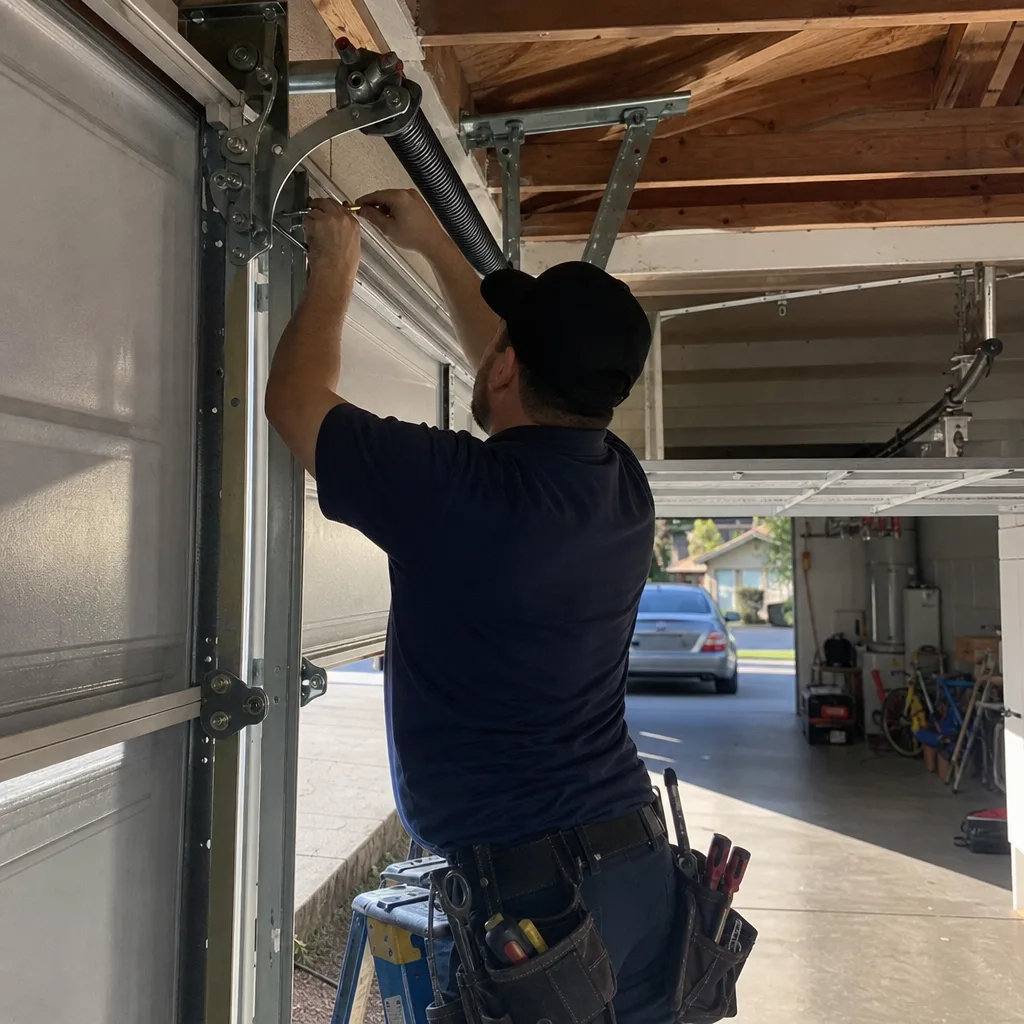
A garage door is not one machine; it is four systems that share the load, and Santa Clarita’s climate pushes each system toward failure in predictable ways. When you understand the spring, cable, track, and opener architecture, you can read a repair invoice and know exactly what you are paying for. When you know the 2026 cost ranges for this market, you can spot a padded quote before you sign it. And when you insist on documentation, a written price before work starts, and a photo record when it ends, you remove the guesswork entirely. The technicians who work this way have nothing to hide; the ones who don’t get weeded out by a homeowner who asks the right questions. For more guides & resources, visit our blog.
Written by Marcus Deller, Owner at Servo Garage Doors Santa Clarita, serving Santa Clarita since 2015.