
Last updated September 19, 2026
Full 25-point door and opener safety check with every visit - springs, cables, rollers, tracks, and your LiftMaster or Chamberlain opener included
You get a price before we start. It does not change when the truck arrives.
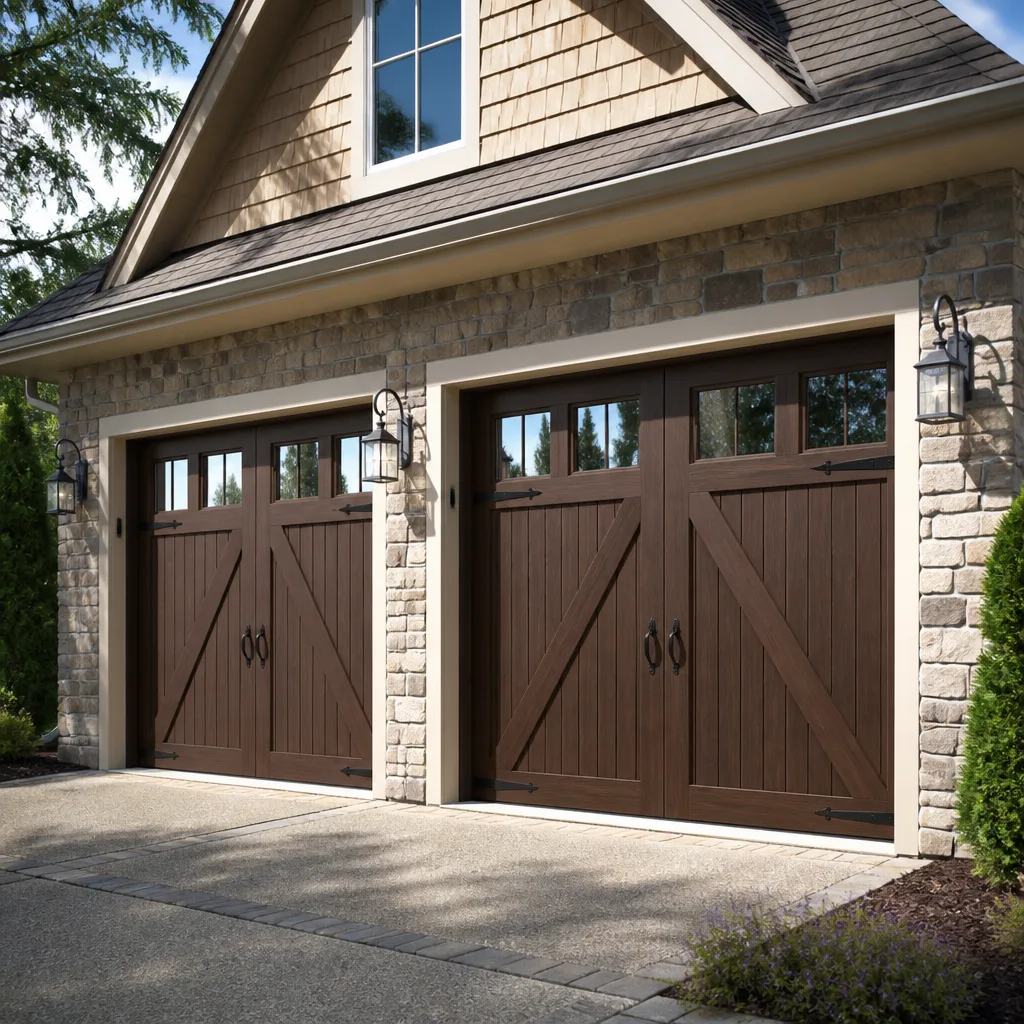
Modern flush
LiftMaster openers
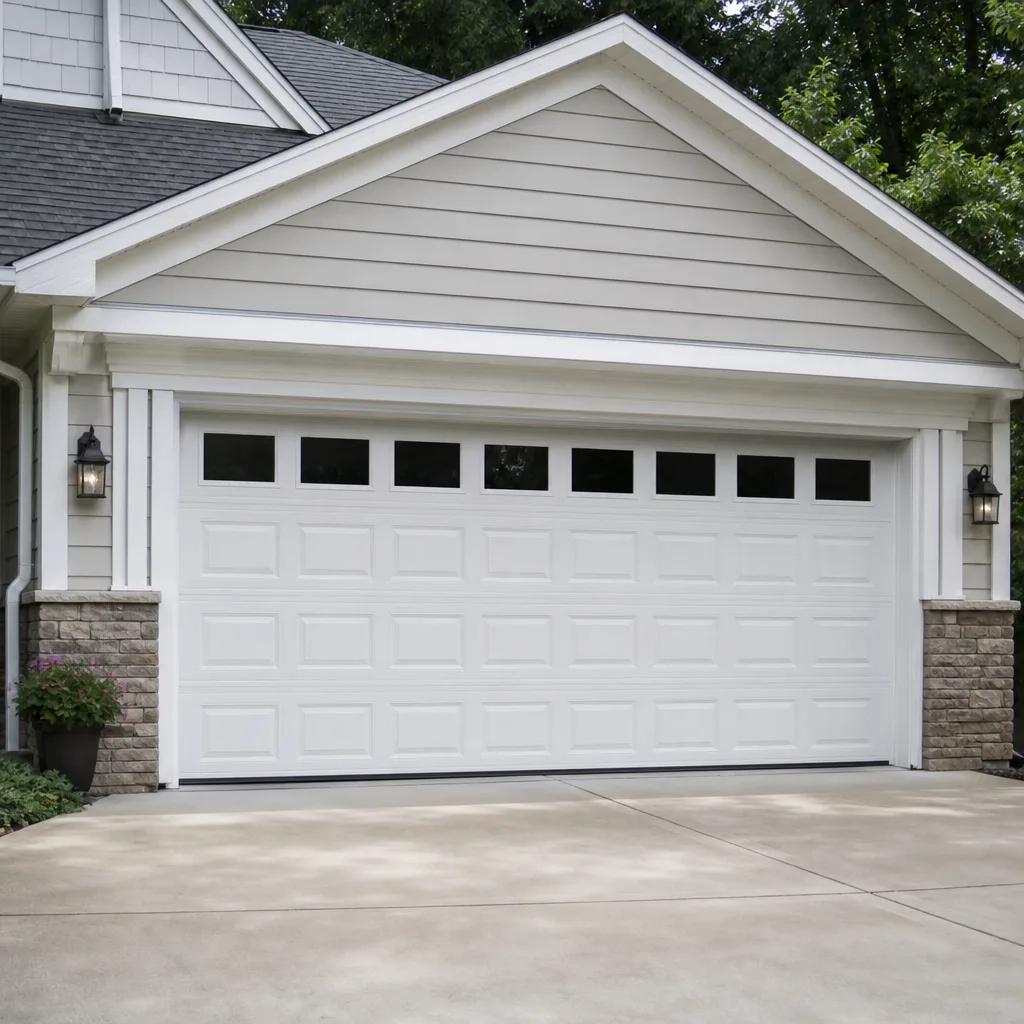
 Before
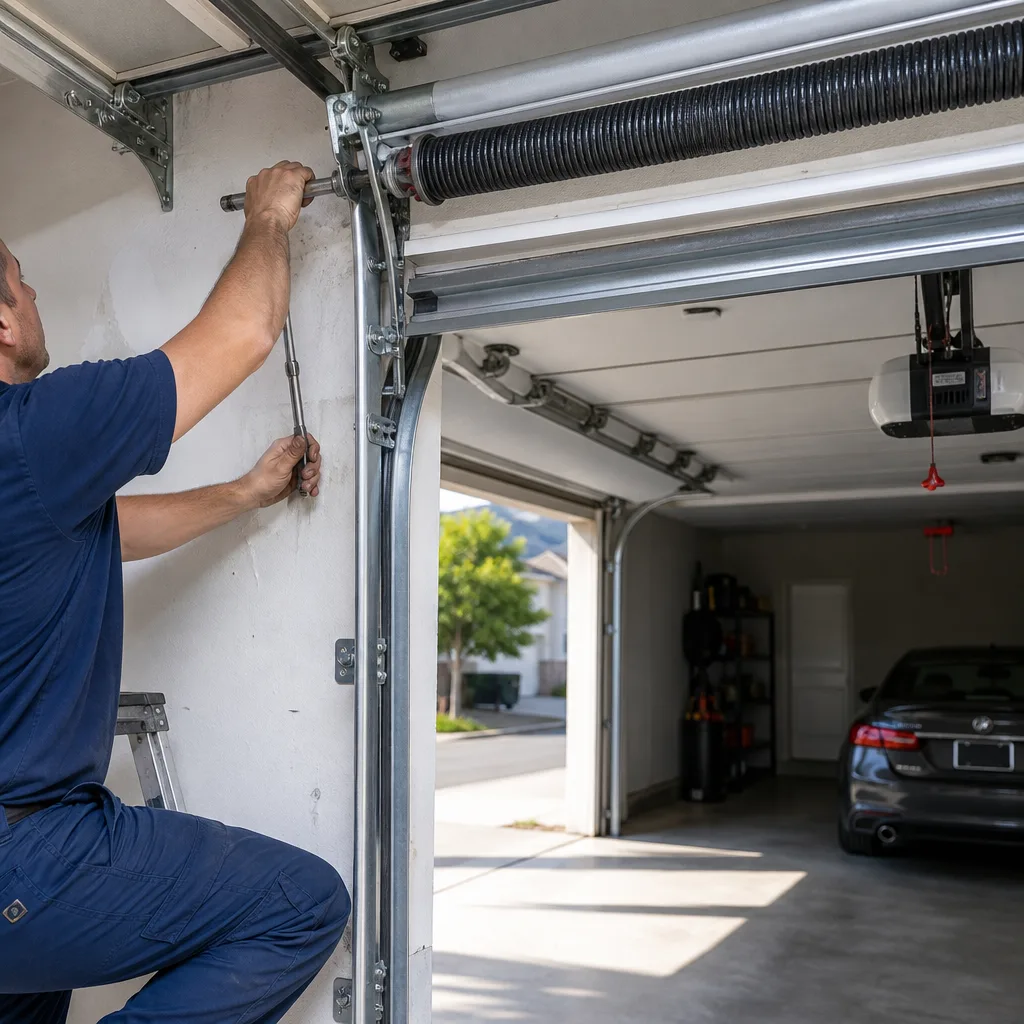 After
After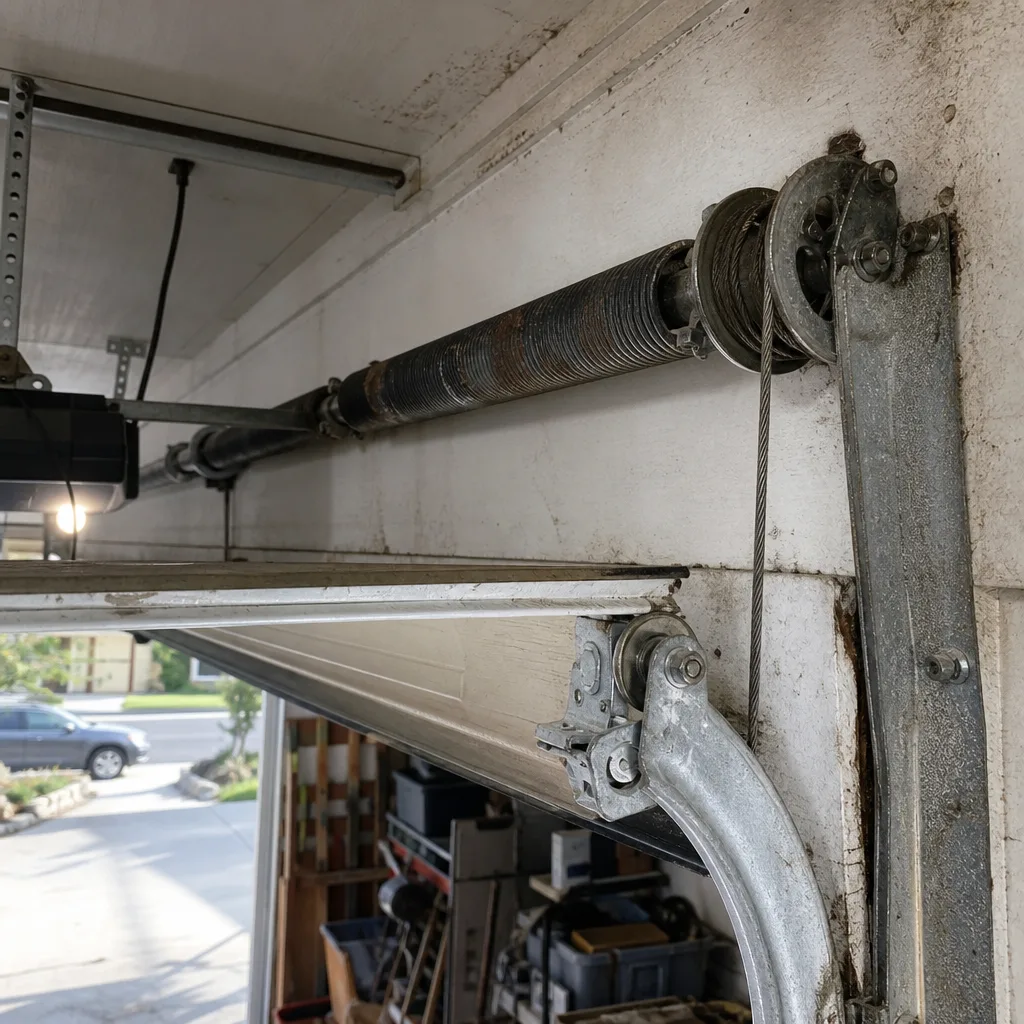 Before
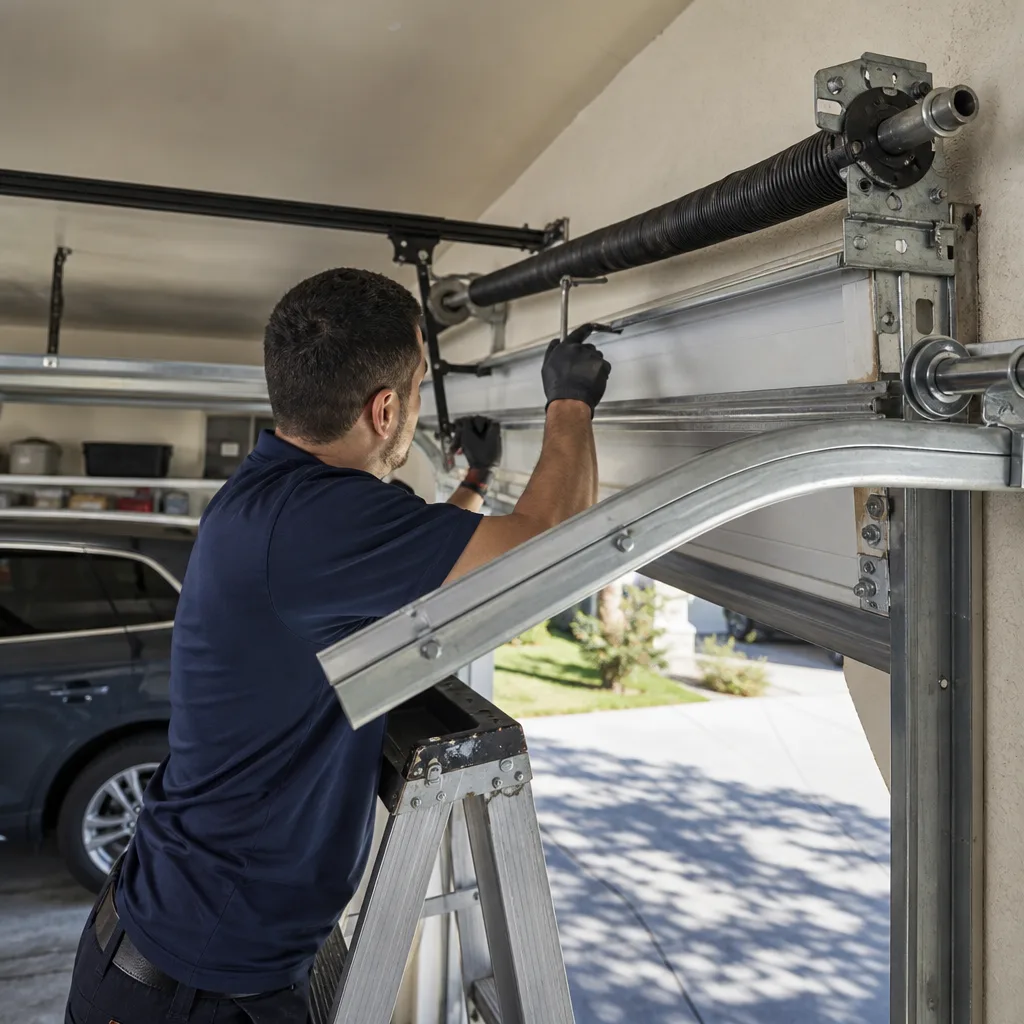 After
After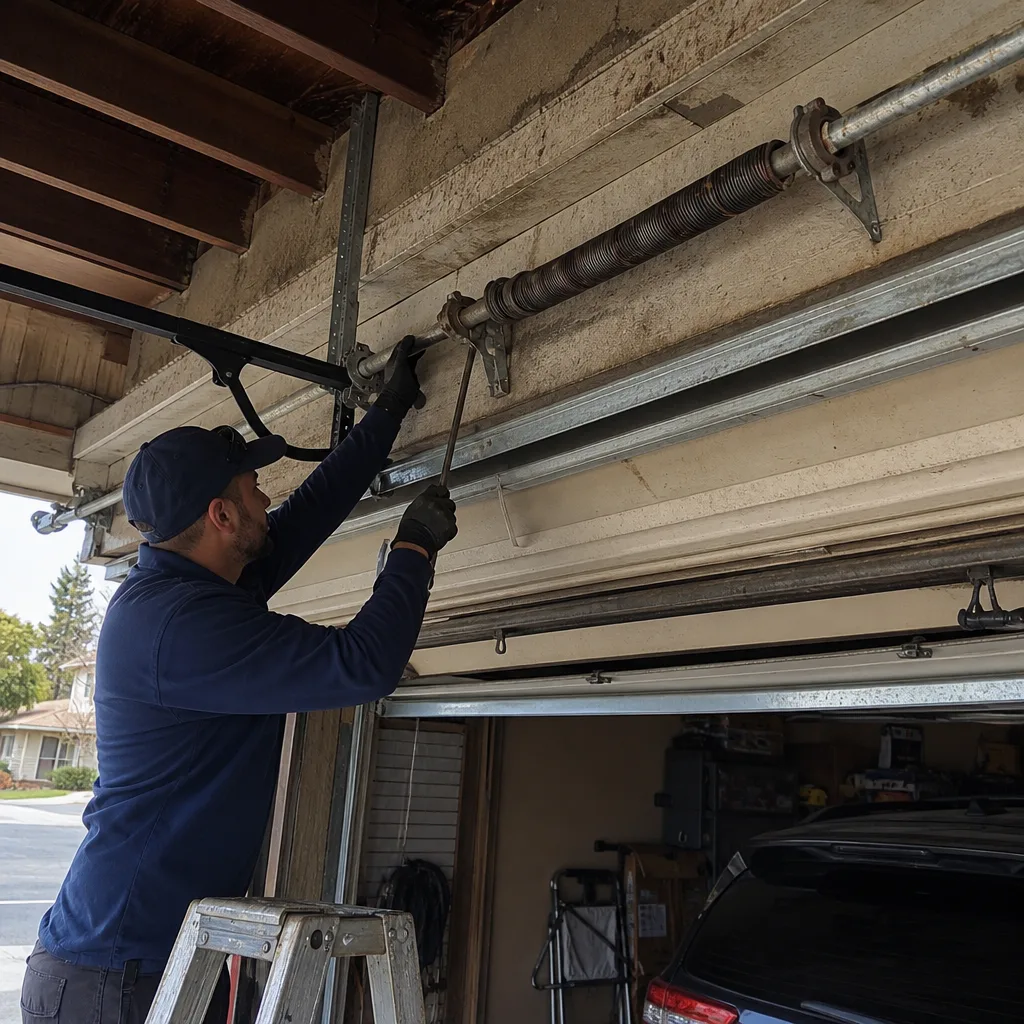 Before
 After
AfterHow to Hire a Garage Door Contractor in Santa Clarita: A Step-by-Step Guide
California’s CSLB license lookup takes forty seconds. Type in a name, read the screen, and you know whether the contractor is legal. But that screen tells you nothing about whether they’ll show you a photograph of the failed part before naming a price, or whether they’ll write the scope down before opening the truck, or whether the number quoted over the phone survives contact with the invoice. The hiring mistake most Santa Clarita homeowners make isn’t choosing an unlicensed contractor. It’s approving a verbal quote from a licensed one, then discovering a second line item on the final bill with nothing in writing to push back. This guide walks through the full hiring process, step by step, so the documentation does the deciding instead of the sales pitch. For more guides & resources, see our blog.
Quick Answer
To hire a garage door contractor in Santa Clarita, first verify the contractor’s CSLB license category is C-61/D28 (the only classification that authorizes garage door work), then require a written, flat-price quote with line items, part numbers, and labor scope before any work begins. See our Complete Guide to Garage Door in Santa Clarita for deeper coverage. A verbal quote is not a quote; it’s a conversation. Compare at least three bids using a documentation checklist, and remember that in Santa Clarita’s summer heat, a garage door spring failure is a same-day security issue, which means the contractor’s response time and written-price discipline matter as much as their hourly rate.
Table of Contents
- Step 1: Verify the CSLB License Category Is C-61/D28, Not Just Any Contractor’s License
- Step 2: Require the Written Price Before the Technician Opens the Toolkit
- Step 3: Ask the Five Questions That Separate a Documented Process from a Verbal One
- Step 4: Read the Upsell Scripts Before They’re Spoken
- Step 5: Compare Bids with a One-Page Contractor Comparison Worksheet
- Step 6: Know What Leaving Looks Like: The Photo Record, the Warranty, the Paper Trail
BeforeAfterStep 1: Verify the CSLB License Category Is C-61/D28, Not Just Any Contractor’s License
Most homeowners in Santa Clarita check that a contractor has a license. Few check that it’s the right license. The California Contractors State License Board issues dozens of classifications, and a general building contractor (Class B) can legally frame a house but cannot, by itself, authorize specialized garage door work. Garage door installation and repair falls under the C-61/D28 classification, also called the “Door and Gate” specialty. So the first check is not “are they licensed?” but “is the license category C-61/D28?” The CSLB’s online license lookup is free and takes about forty seconds on the CSLB website. Enter the contractor’s name or license number, and the screen shows the classification, the issue date, and any disciplinary actions.
But here’s the thing the license lookup doesn’t tell you: the classification only proves the contractor is permitted to do the work. It says nothing about whether the contractor will write the price down before touching the door. A contractor can hold a valid C-61/D28 license and still run a crew that quotes verbally, adds line items after disassembly, and hands over an invoice that looks nothing like the number mentioned on the phone. This is the gap most Santa Clarita homeowners fall into: they verify the license, which feels like due diligence, and then skip the part where the quote gets reduced to writing. The license is the floor, not the ceiling. It is the minimum standard, not the standard itself.
Ask for the license number up front. A legitimate contractor prints it on the estimate, the invoice, the website, and the side of the truck. If the number isn’t offered when you ask, that’s an answer in itself. Once you have it, run the lookup and confirm the classification is C-61/D28. Then move to the question that actually determines whether you’ll have recourse if something goes wrong: does the contractor write the price before the work begins?
Step 2: Require the Written Price Before the Technician Opens the Toolkit
The single most reliable indicator of a trustworthy garage door contractor in Santa Clarita is whether the price is written down before any work begins. Not roughly quoted. Not “around” a number. Written. On paper or in an email or on a tablet, with the scope and the price matched line by line. This is the standard against which our own shop operates, and it’s codified as Clause 1 of The Haven Standard: a flat, written price and written scope before any work starts. Not a verbal promise, not a handshake, not “trust me.” Words on a page or a screen.
The written quote must contain specific elements to be enforceable. A line that says “door repair, $400” is barely better than a verbal quote. A functional written quote contains:
- Line items. Each component or task listed separately with its own price. One line for the spring, one line for the labor, one line for the service call.
- Part numbers. For any part being replaced, the manufacturer’s part number or a specific description that ties the line item to a real component. “Torsion spring, 0.225″ wire, 2″ ID, 28″ length” is a part number in effect. “Spring” is a placeholder for whatever gets billed later.
- Labor scope. What the labor covers, in plain language. “Remove old spring, install new spring, balance door, cycle test 3x” is labor scope. “Install” is not.
- Total price. The sum of the line items, written in dollars. If the quote says one thing and the invoice says another, the written quote is the evidence you needed to know you were right to walk away.
An estimate is different from a quote. An estimate is an approximation, often derived without inspecting the door, and it’s legally understood to be flexible. A quote is a fixed promise, offered after the technician has seen the door, and it’s the document you hold the contractor to. Demand the quote, not the estimate. In Santa Clarita, where summer temperatures routinely exceed 100 degrees and a failed spring can leave your car trapped in the garage or your house exposed through an inoperable door, there’s a temptation to skip the paperwork and just get the door working. Our Seasonal Garage Door Care for Santa Clarita: Year-Round Homeowner’s Guide explains how heat affects components. Resist that temptation. The contractor who won’t write the price down before opening the toolkit is the contractor who will write a different number down after the door is in pieces. Our shop was built on the founding rule that the customer sees the failed part before anyone quotes a replacement, and the written quote is the document that makes that rule real.
The majority of garage door issues we see in Santa Clarita involve springs and openers, and the pricing for those is predictable enough that a contractor who does this work daily can quote a flat price after a thirty-second look. If a contractor won’t name the price on the page before starting, ask yourself what they’re protecting.
Step 3: Ask the Five Questions That Separate a Documented Process from a Verbal One
When a technician arrives in Santa Clarita, you’ll have about three minutes before they open the toolkit. That window is your opportunity to ask five questions whose answers reveal whether you’re dealing with a documented process or a verbal one. A verbal process is a sales call. A documented process is a repair with a paper trail. Here are the five questions and the answers that indicate a contractor worth keeping:
- “Will you write the price down before you start?” The correct answer is yes. Not “yes, but it depends on what I find” (which means the price is not written down before they start) and not “we’ll get you taken care of” (which means nothing). The answer is yes, with a number and a scope, in writing.
- “Will you photograph the failed part before you quote the replacement?” The correct answer is yes. A technician who photographs the failed component is creating evidence, and the photograph is your proof that the part actually failed and wasn’t upsold. In our shop, this is Clause 4 of The Haven Standard, and it traces back to the founding rule our business was built on in 2015: the customer sees the failed part before anyone quotes a replacement. If the technician won’t photograph it, ask yourself what the camera would show.
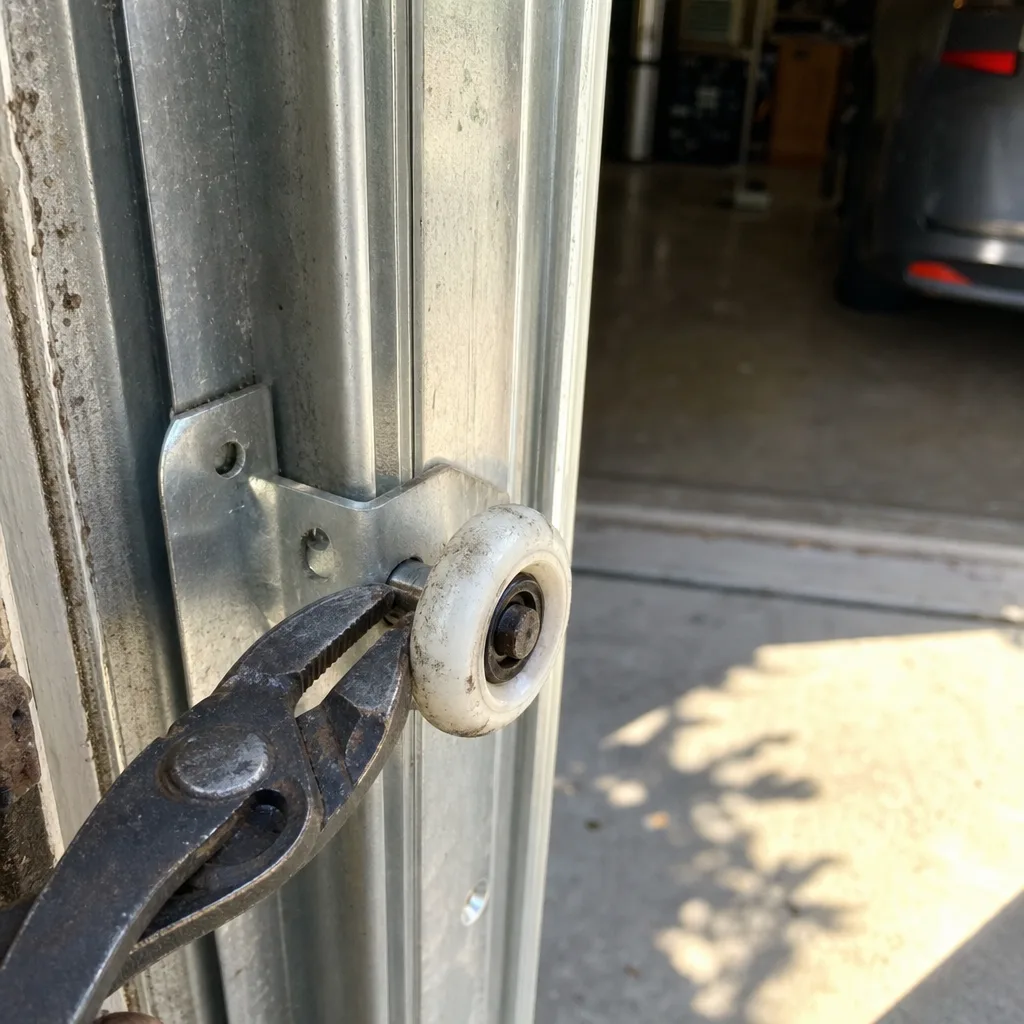
- “Do you carry the parts on the truck?” A stocked truck is the difference between a same-day repair and a second appointment. For common failures like torsion springs, cables, rollers, and opener logic boards, a contractor who does this work daily in Santa Clarita should have the parts on hand. If the answer is “no, we’ll need to order that,” you’re looking at a second visit and usually a second service fee.
- “What documentation will I receive when you leave?” The correct answer names the documents: the written quote, the written invoice showing line items and part numbers, a photo record of what was found and what was done, and the warranty terms in writing. If the answer is a vague “you’ll get a receipt,” the contractor is signaling that the paper trail ends at payment.
- “What’s your response time if the door won’t open at 6:00 a.m. and the car is stuck in the garage?” The answer matters for Santa Clarita homeowners specifically. Much of this city runs on early commutes down the 5 or the 14, and a door that won’t open at 6:00 a.m. is a missed workday. A contractor who answers with a real number (like “we dispatch within the hour, and we answer the phone with a live person 24/7”) is operating with the infrastructure to back it up. A contractor who answers “we’ll try to fit you in” is telling you what the emergency will actually look like.
We’ve seen the difference these questions make. In our experience, homeowners who ask them once tend to ask them every time, because the answers reveal the shape of the whole business. A contractor with a documented process answers all five without hesitation. A contractor with a verbal process hesitates on the first one and never recovers.
Step 4: Read the Upsell Scripts Before They’re Spoken
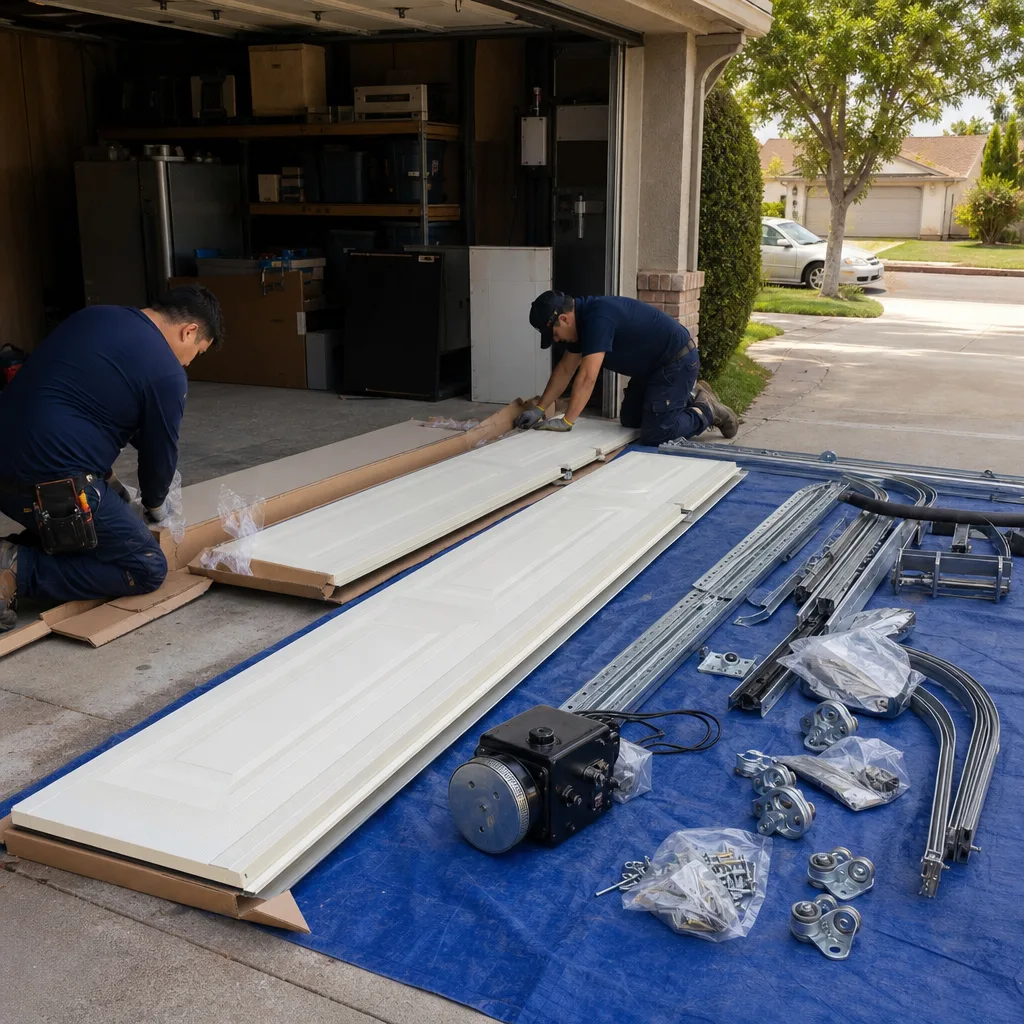
Garage door upsells follow scripts. The scripts are consistent, they’re effective, and once you know the wording, you can hear them coming. The most common one in Santa Clarita starts with the phrase “while we’re in there.” The technician has opened the door panel, found a genuine issue, and now suggests that while the panel is open, it would be wise to replace something adjacent: the rollers, the hinges, the cables, the opener. Sometimes the suggestion is legitimate. Often it’s padding.
The way to distinguish a legitimate recommendation from an upsell is to force it into the same documentation framework as the original repair. Ask: “Will you show me the wear on the rollers you’re recommending I replace?” A technician with a real recommendation will point to the worn nylon, show the play in the hinge, or photograph the frayed cable. A technician running a script will respond with “it’s standard practice” or “they’re original to the door” or “it’s just a good idea.” Those are not evidence. Those are scripts.
Other common red flags embedded in upsell scripts:
- “I can’t guarantee the repair unless we also…” This ties the repair you hired them for to additional purchases, which is a way of making the original repair contingent on the upsell. A legitimate contractor guarantees the repair they quoted, full stop.
- “This opener is on its last legs.” Maybe it is. Maybe it isn’t. The test is the same: show me. A logic board failure is visible if the technician opens the housing. A worn gear is visible. “On its last legs” without a photograph is an opinion dressed up as a diagnosis.
- “The previous contractor did this wrong.” This is the most effective upsell script in the trade, because it works on the customer’s fear that the whole door is compromised. It might be true. It might not. The test, again, is documentation: “Show me what they did wrong and write down what needs to be corrected.” If the answer is a shrug and a general recommendation to replace the door, the script is running.
The rule applies across all upsell attempts: any recommendation that cannot be photographed, pointed to, or written down is not a recommendation. It’s a sales technique. Our position at Servo Garage Doors Santa Clarita is that a recommendation without a photograph isn’t a recommendation at all, which is why Clause 4 of The Haven Standard requires the photograph before the quote. That clause exists because the photograph is the only thing that separates a diagnosis from a script.
Step 5: Compare Bids with a One-Page Contractor Comparison Worksheet
Most homeowners compare bids by one number: the total. That’s the wrong way to do it. Two written quotes can both say “$450” and be wildly different documents, because one wrote the scope and the line items and the other wrote a number and stopped. The comparison worksheet below is designed to make the documentation do the deciding. Print it, fill it out across three bids, and the right contractor usually becomes obvious without a single sales conversation.
The worksheet:
- License classification confirmed as C-61/D28? Yes / No. If no, stop. This bid is disqualified, regardless of price.
- Quote provided in writing before any work started? Yes / No. If no, the bid is a conversation, not a quote. Disqualified.
- Line items itemized with part numbers or specific descriptions? Yes / No. A single line item that says “repair” is not an itemized quote.
- Labor scope described in plain language? Yes / No. “Install spring, balance door, cycle test” is scope. “Fix door” is not.
- Photograph of the failed part offered or provided before the replacement quote? Yes / No. The photograph is the evidence. No photograph, no evidence.
- Parts carried on the truck for common failures? Yes / No. A “no” here means a second visit and often a second fee.
- Warranty terms provided in writing? Yes / No. “We guarantee our work” spoken aloud is not a warranty. Written is a warranty.
- Documentation provided at job completion (photo record, written invoice, warranty)? Yes / No. The paper trail should be in your hand when the technician leaves.
Score each bid. A contractor can theoretically fail one item and still be worth considering. A contractor that fails two or more is telling you how their entire operation runs. We’ve watched homeowners run this same comparison in Santa Clarita, in Valencia, in Saugus, in Canyon Country, and the contractor with a documented process wins the comparison every time, because the worksheet strips away the sales presentation and leaves only the documentation. That’s the point.
When you have three bids in hand, remember that the Free Second Opinion offer matters here: if one of the quotes is dramatically lower or higher than the other two, a second look at the scope, not the price, will often reveal the difference. One contractor might be quoting a Chamberlain belt-drive opener at $475 installed. Another might be quoting a Genie chain-drive with different torque ratings and no labor scope. The numbers don’t compare until the scopes do. If you’re not sure how to read the gap between a Clopay door quote and an Amarr door quote and a third option, the right move is a written second opinion on the paperwork itself, not another phone estimate.
Step 6: Know What Leaving Looks Like: The Photo Record, the Warranty, the Paper Trail
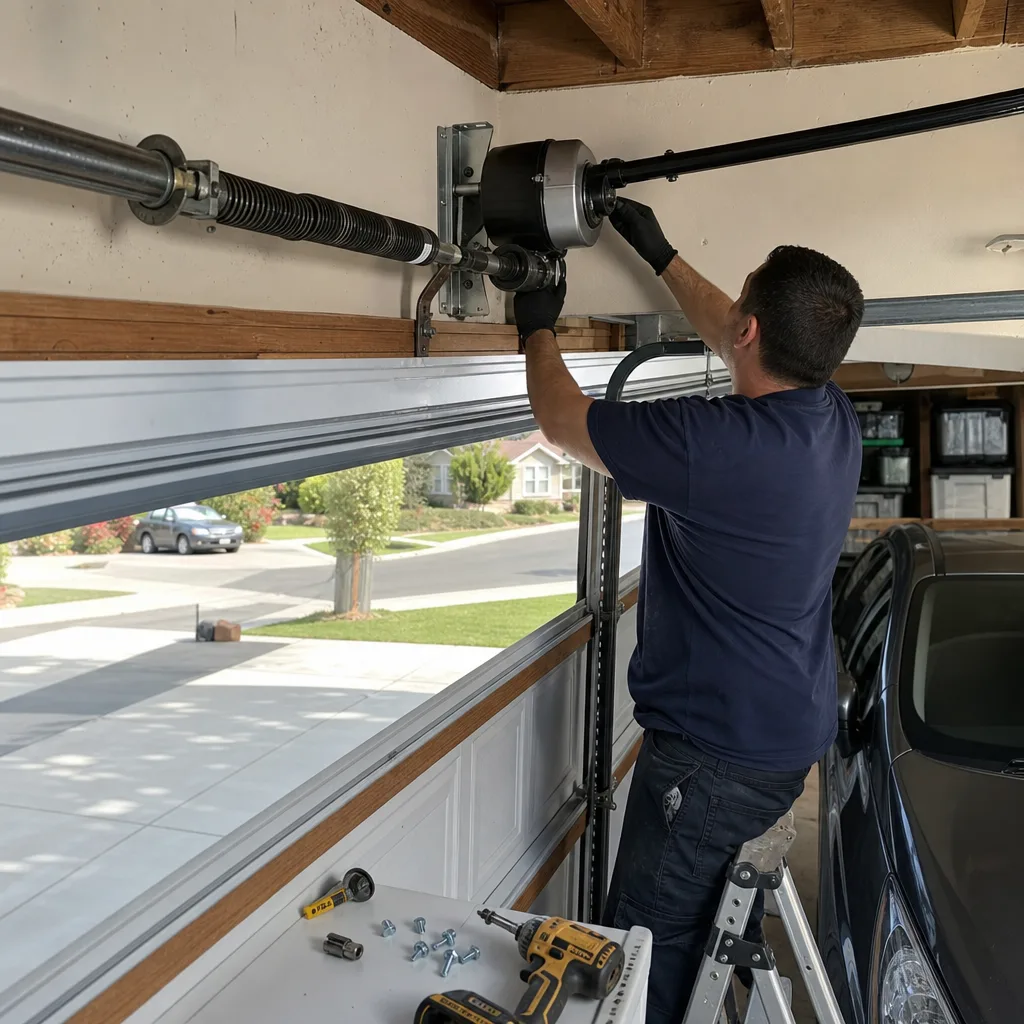
The hiring decision ends when the technician leaves. What the customer is holding in their hand at that moment is the difference between a repair and a paper trail. Most homeowners never think to ask what “leaving” looks like before the job starts, and then it’s too late.
What leaving should look like, on every job, in Santa Clarita or anywhere else:
- The written invoice. Matching line items and total to the written quote provided before work began. If the invoice doesn’t match the quote, the written quote is the document that protects you.
- The photo record. Photographs of the failed component before removal and the completed repair after installation. You should be able to look at those photos and verify, with your own eyes, that the part that was quoted as failed actually failed. This is the founding rule Servo was built on in 2015, the one that says the customer sees the failed part before anyone quotes a replacement.
- The written warranty. Terms, duration, and what’s covered, in writing. If the technician says “we guarantee it for a year” and hands you a receipt that doesn’t mention a warranty, you don’t have a warranty.
- The technician’s name and license number. On the invoice, not just the truck. If something goes wrong after the job, you need to know who was on site and which license to reference.
The photo record deserves more emphasis than it usually gets. A photograph of a torsion spring cleanly broken at the coil is the single most valuable document a garage door contractor can hand a customer, because it transforms the transaction from a trust exercise into an evidence exchange. “Your spring failed” is a claim. “Here is your spring, measured at 0.25-inch wire diameter, with a clean break at the coil” is a document. The difference is the difference between a contractor who sells their services and a contractor who proves them.
This is what Clause 4 of The Haven Standard codifies: the photograph before the quote. It’s not a nicety. It’s the mechanism by which the customer knows the repair was real. If you’re hiring a garage door repair contractor in Santa Clarita, ask about the photo record up front. The answer will tell you more about the company than any review ever will.
Common Mistakes to Avoid
- Approving a verbal quote over the phone. A number spoken aloud over the phone is not a quote. In Santa Clarita, where a failed garage door is often an emergency, the pressure to just get someone out and sort it out later is real. Sorting it out later is how line items appear. Get the number in writing.
- Checking only that the license exists, not that it’s the right classification. The C-61/D28 classification is the specific authorization for garage door work. A general contractor’s license is not the same thing, and a contractor without the right classification has no more business working on your garage door than an unlicensed one.
- Accepting “while we’re in there” as a reason to approve additional work. The phrase is a script. The question is whether the technician can show you the wear, the play, or the damage. No photograph, no evidence, no additional work.
- Comparing bids by total price alone. A $450 quote without line items and a $475 quote with full documentation are not comparable. The documentation is part of the price.
- Not asking what documentation they’ll receive at job completion. The photo record, the written invoice, and the written warranty are the paper trail. If the contractor can’t describe what you’ll be holding when they leave, that’s a red flag.
- Hiring the first contractor who can arrive fastest without checking the documentation process. Speed matters when the car is stuck in the garage at 6:00 a.m. on a Valencia morning, but a fast arrival with a verbal quote is just a fast sales call. The written price can happen just as quickly as the handshake, and one of them protects you.
- Spending more on the opener than the door and skimping on the spring. In Santa Clarita’s heat, torsion springs cycle more than in coastal climates, and a cheap spring fails faster. A reputable contractor will quote the right spring for the door weight and cycle rating, not the cheapest one on the truck.
When to Call a Professional
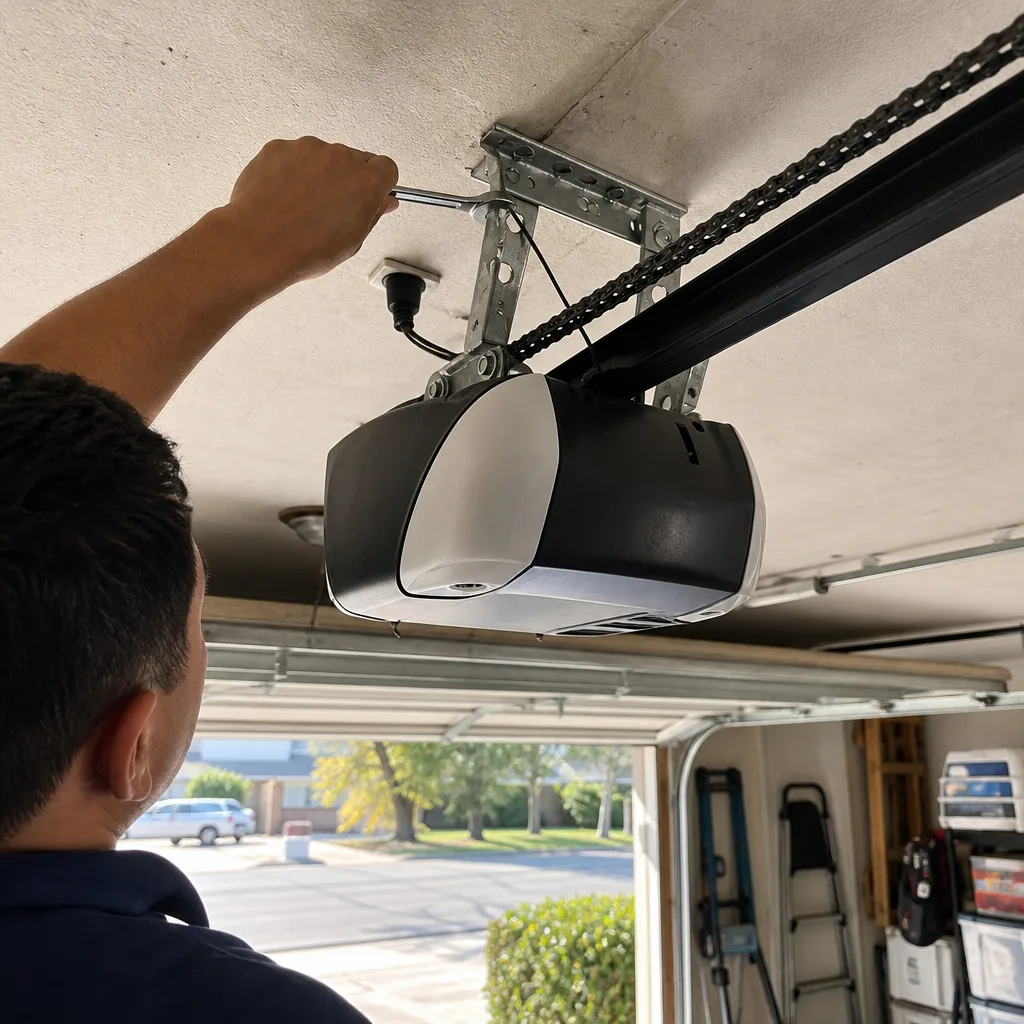
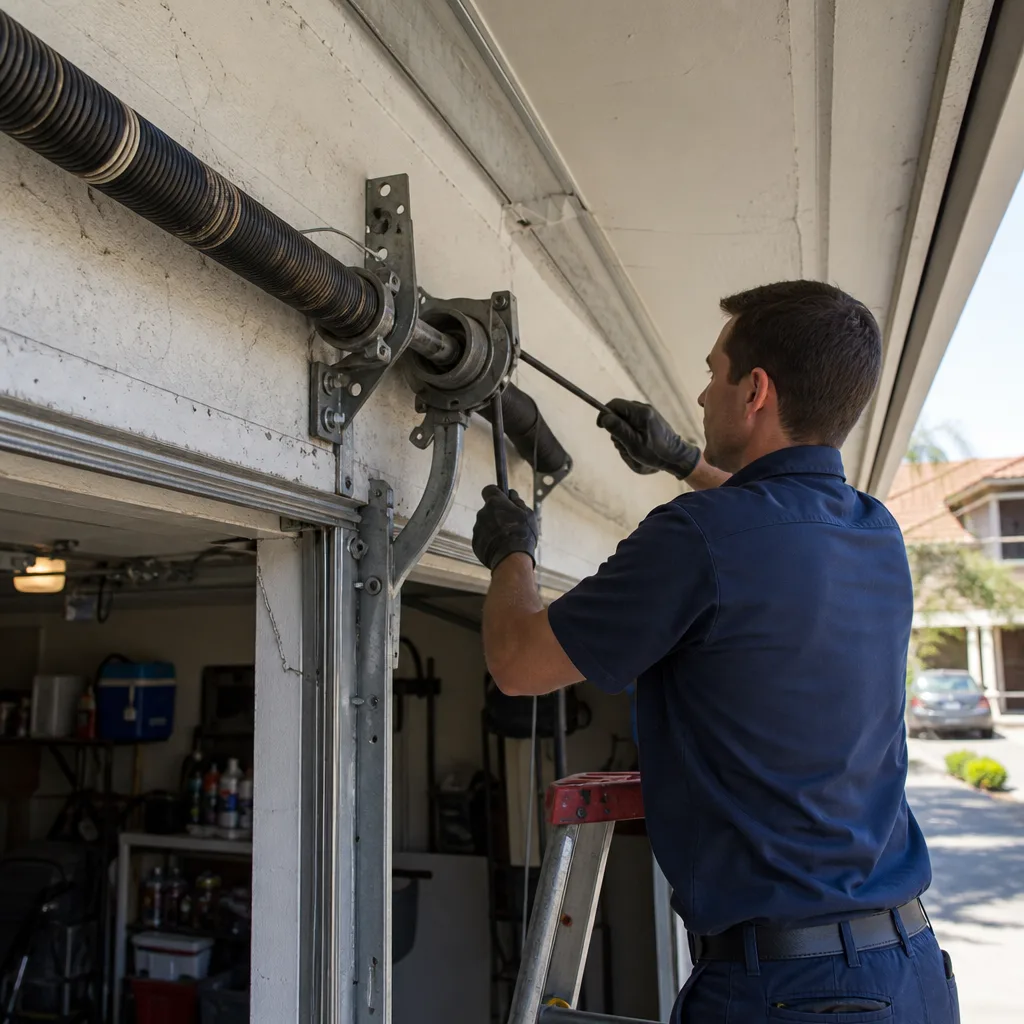
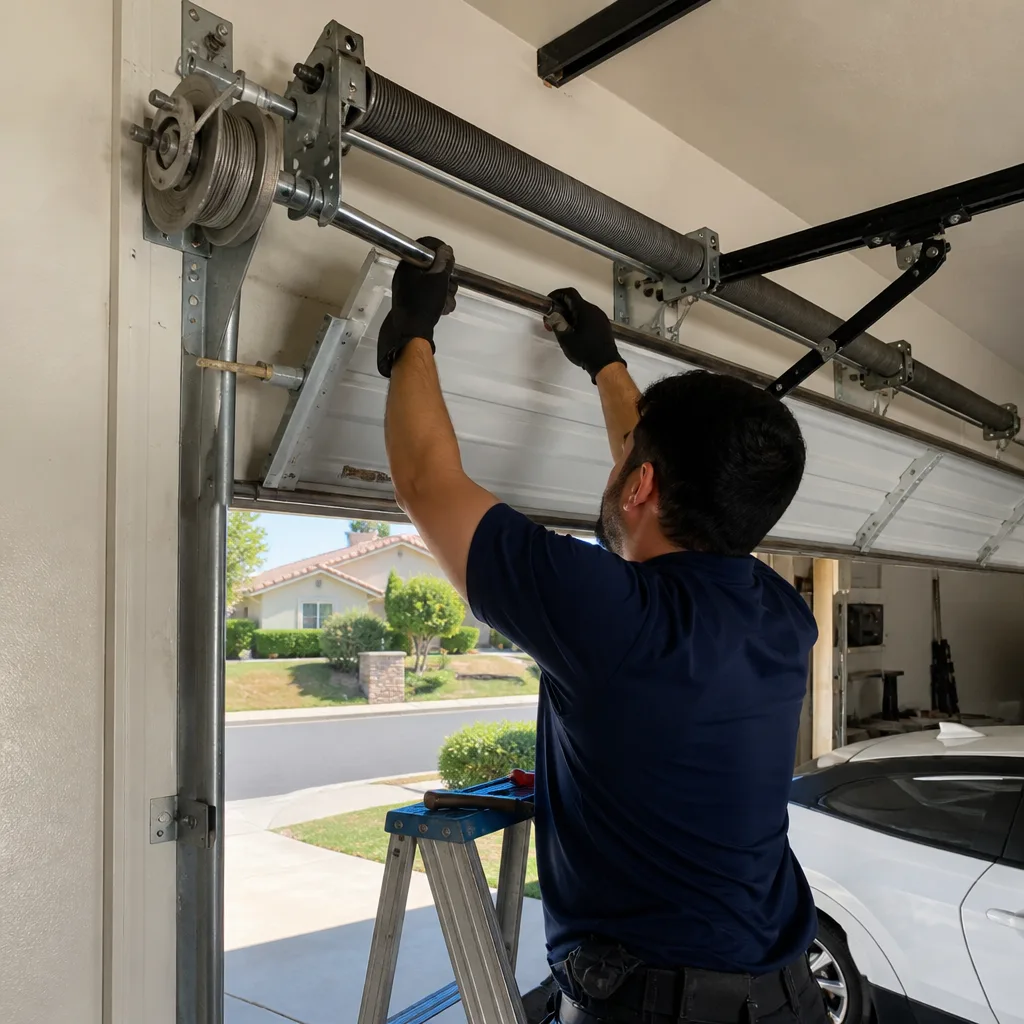
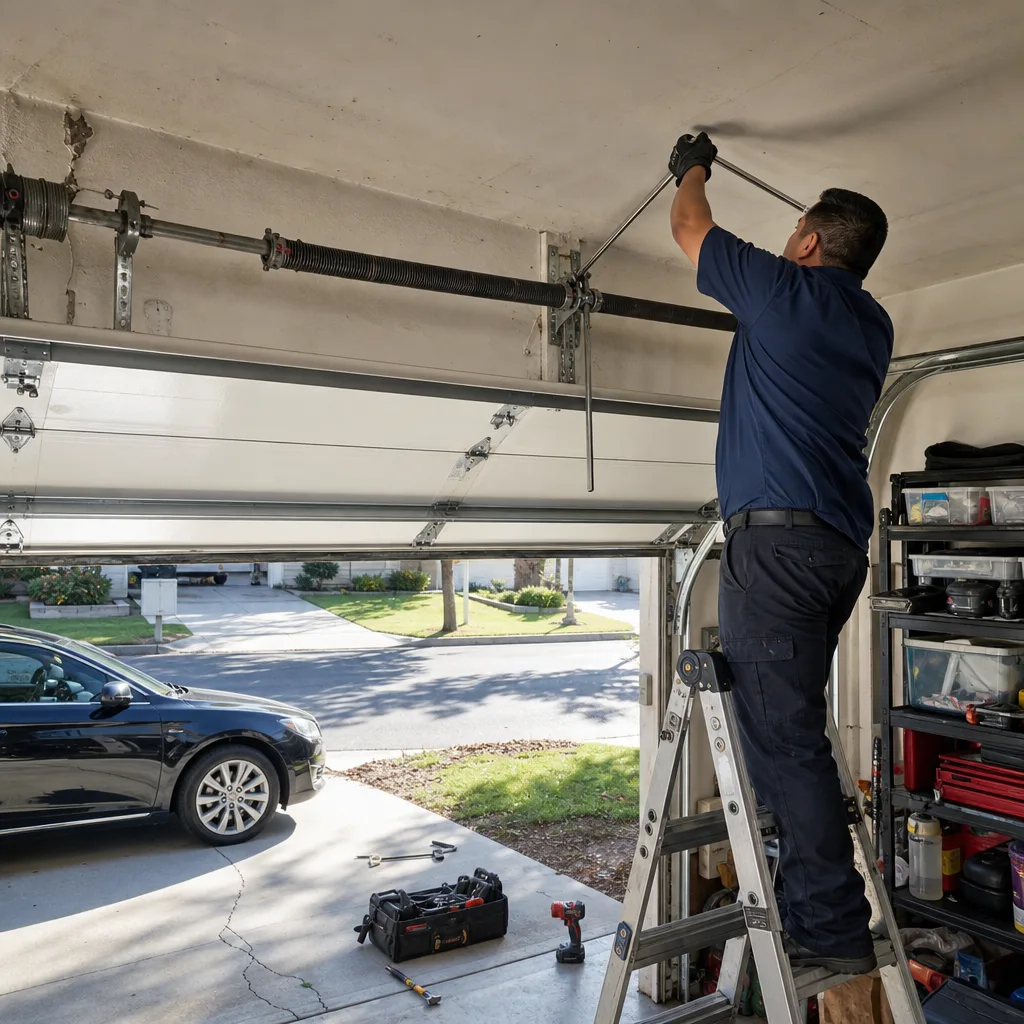
A garage door spring under tension is not a DIY project. The torsion spring on a standard residential door in Santa Clarita holds enough stored energy to cause serious injury or death if it releases unexpectedly, and the cables, brackets, and drums are part of the same tension system. Attempting to replace or rewind a torsion spring without the right hardware and training is a known cause of serious accidents, which is why any competent contractor will tell you the same thing: this is not a job for a weekend afternoon. If the spring is broken, the door is stuck on the tracks with a visible gap in the spring coil, or the opener’s logic board has failed and you’re looking at a wiring harness, call a professional. If the door is off its tracks, the cables are frayed, or the opener makes a grinding sound that persists after lubrication, stop using the door and get someone out. The garage door is the largest moving object in your house, and it’s a security boundary. When it’s compromised, the house is compromised. Garage door opener repair and installation work involves electrical components and high-tension systems that require a trained technician. Servo Garage Doors Santa Clarita offers free estimates in Santa Clarita, and we answer the phone with a live person 24/7. Call (661) 542-4007 if the door won’t open or the spring has failed.
Frequently Asked Questions
Garage door installation and repair in California requires the C-61/D28 classification, also called the “Door and Gate” specialty, issued by the Contractors State License Board. This classification specifically authorizes garage door work, and a general building contractor’s license (Class B) does not cover it by itself. You can verify the classification on the CSLB website in about forty seconds.
A torsion spring replacement in Santa Clarita typically runs between $220 and $450 depending on the spring size, wire gauge, and whether the technician carries the part on the truck. The price should be written down with the line items and labor scope before any work begins. If a contractor won’t name the price on the page, walk away. Call (661) 542-4007 for a flat, written quote before any work starts.
Yes, in nearly all cases. Torsion springs are rated for a specific number of cycles, and when one spring has failed, the other is at the same point in its life. Replacing both at once costs more up front but avoids a second service call when the other spring fails weeks later. A reputable contractor in Santa Clarita will quote both springs in the same written scope.
Yes, for repairs and emergency calls. Many Santa Clarita garage door contractors, including Servo, keep common parts like torsion springs, cables, and rollers on the truck and dispatch same-day for spring failures and doors that won’t open. Installation and full door replacement are usually scheduled, because those jobs require measuring and ordering. For a same-day repair, call (661) 542-4007 and speak to a live person, not a recording.
A quote is a fixed price, offered after the contractor has seen the door, with the scope and the price written down and matched line by line. An estimate is an approximation, often given over the phone without a site visit, and it’s flexible by definition. The document that protects you is the written quote, not the verbal estimate. Insist on the quote before the work begins.
If the quote is written after the technician has seen the door, the price should not change. If the quote is written before the technician sees the door, it’s an estimate, not a quote, and the price may change. This is why our technicians quote the flat, written price after inspecting the door, with the photograph of the failed part in hand. The price is agreed before any work starts, and the invoice matches the quote. That’s Clause 1 of The Haven Standard.
The Bottom Line
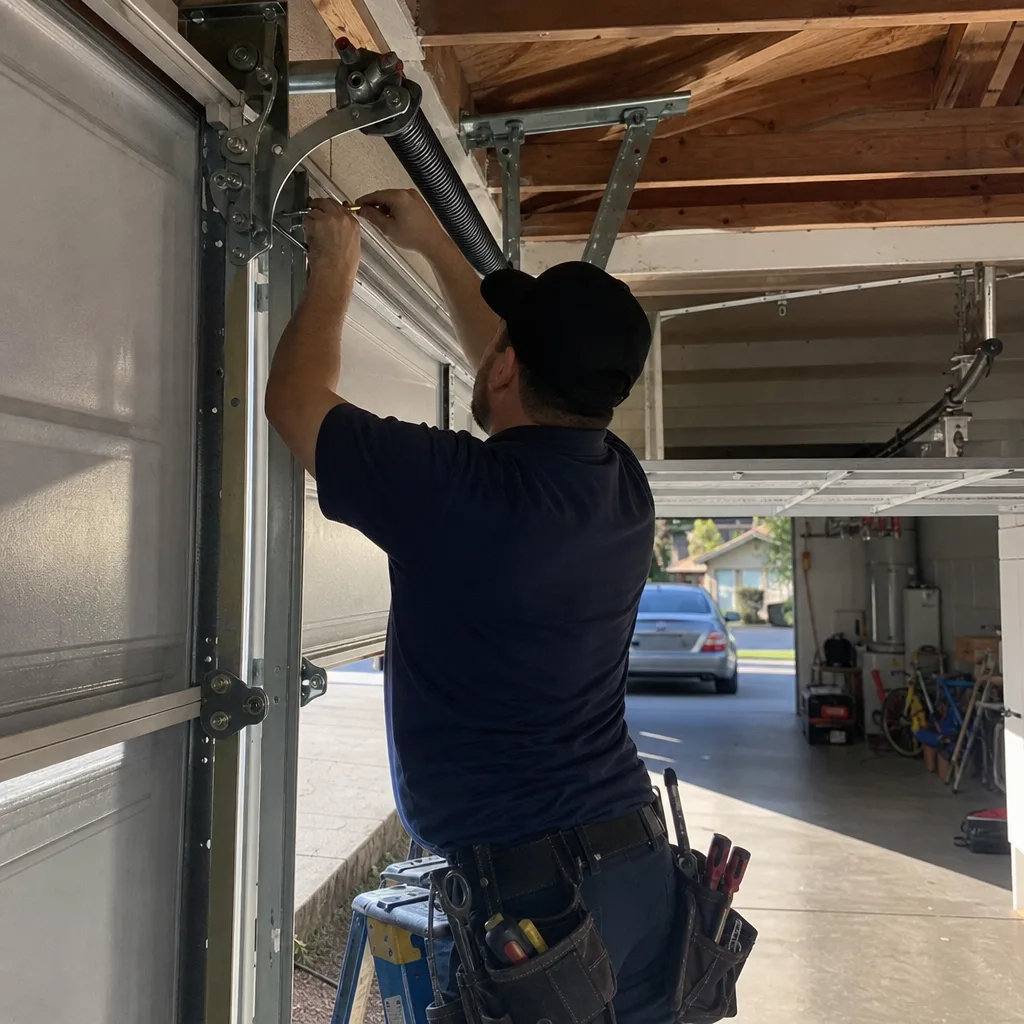
Hiring a garage door contractor in Santa Clarita comes down to one question: does the contractor write the price down before touching the door? Everything else, the license check, the comparison worksheet, the upsell script awareness, is in service of that question. Verify the C-61/D28 classification, require the written quote with line items and part numbers, ask the five questions before the toolkit opens, and hold the contractor to what they wrote. The contractors who do this work right, with a documented installation process and a photo record on every visit, have no problem with any of it. The ones who don’t will find a reason to skip the paperwork. Santa Clarita homeowners who hire this way never wonder what the final invoice will say, because they’ve already seen it in writing. If you’d like to see how a written price and photo record work in practice, our Santa Clarita garage door team can walk you through it. Call (661) 542-4007 for a free estimate, written before any work begins.
Written by Marcus Deller, Owner at Servo Garage Doors Santa Clarita, serving Santa Clarita since 2015.