
Last updated September 19, 2026
Full 25-point door and opener safety check with every visit - springs, cables, rollers, tracks, and your LiftMaster or Chamberlain opener included
You get a price before we start. It does not change when the truck arrives.
Modern flush
LiftMaster openers
 Before
 After
After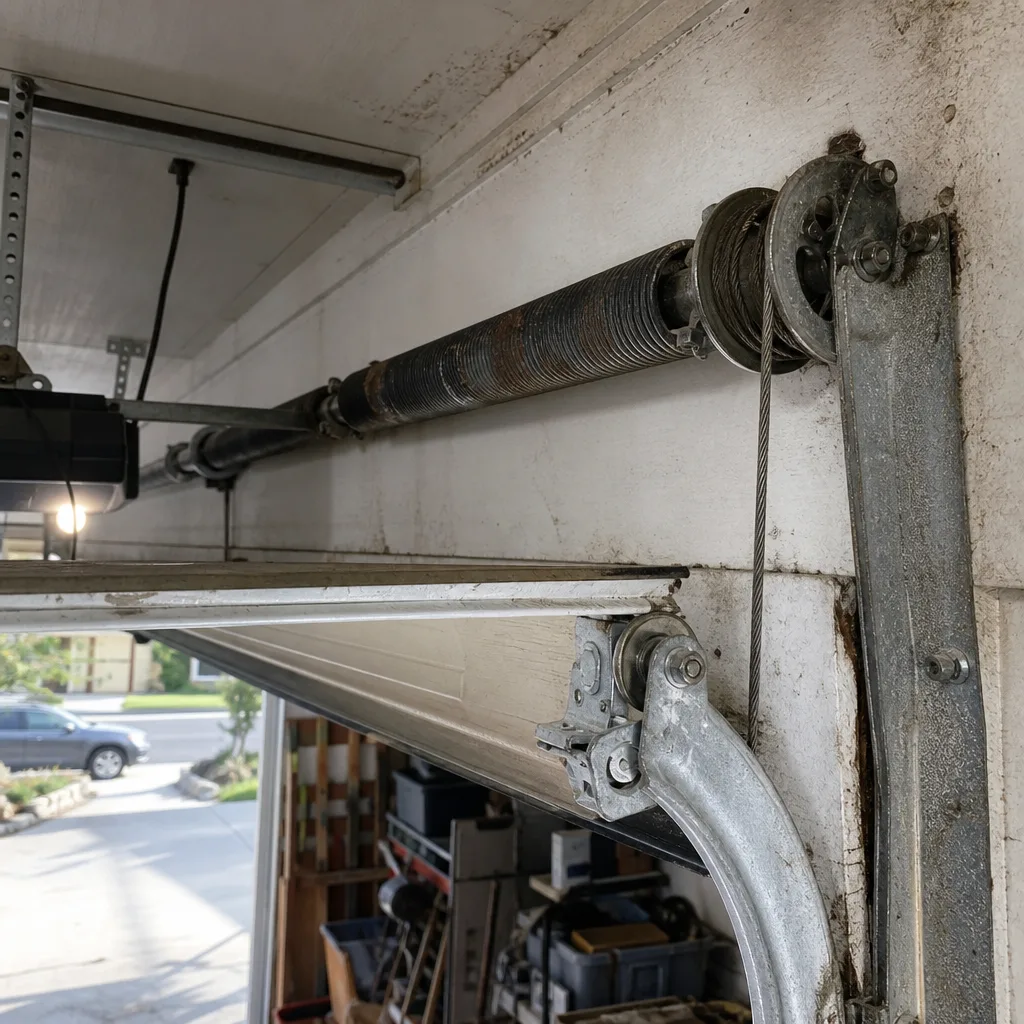 Before
 After
After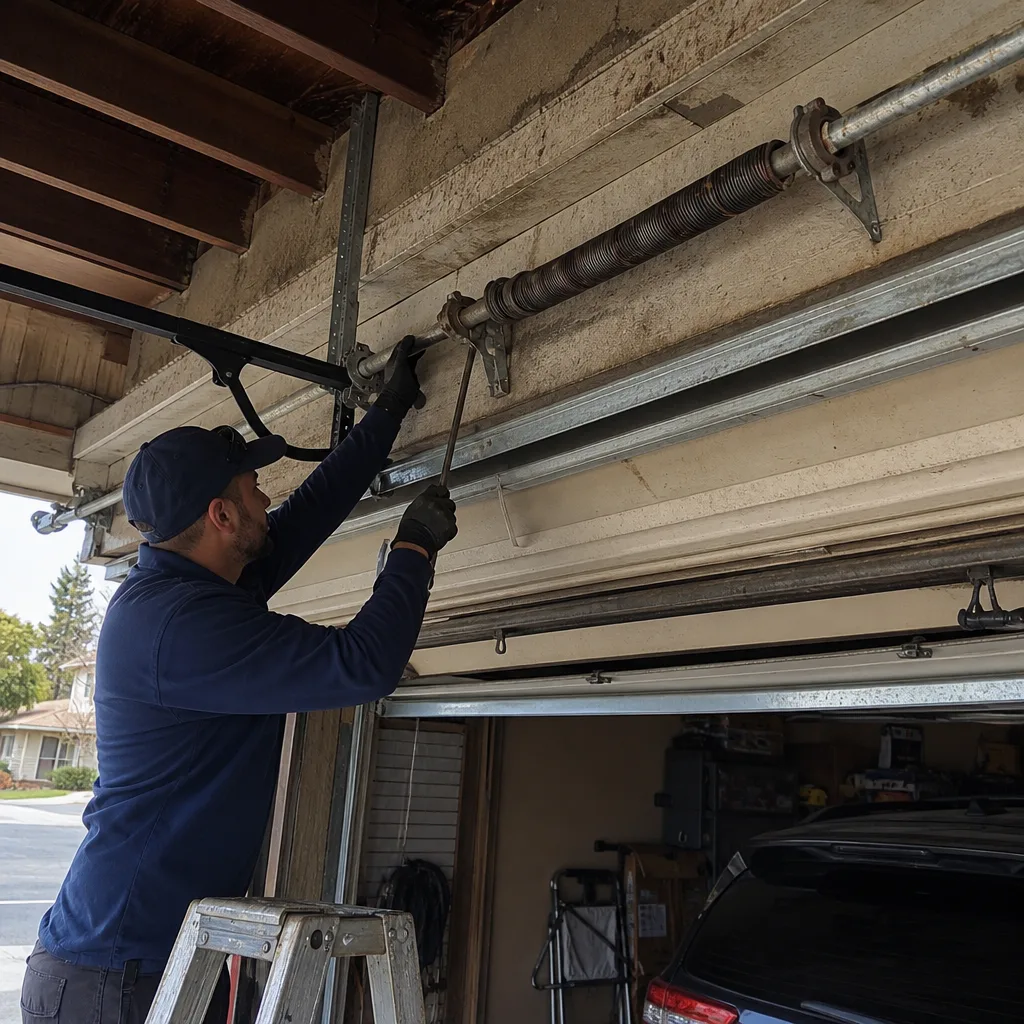 Before
 After
AfterGarage Door Warning Signs: A Santa Clarita Homeowner’s Reference Guide
A garage door in Santa Clarita rarely fails without warning. The noise starts first. The hesitation comes second. The full stop arrives later, sometimes weeks later, but it almost never arrives silently. Most homeowners don’t miss these signs because they’re subtle; they miss them because they don’t know what they’re listening for. This complete guide to garage door in Santa Clarita identifies the warnings by the subsystem that produces them, explains what each sign means in plain language, and tells you how much time you actually have to act. We’ll cover what you can see and hear yourself, what requires a measurement tool to confirm, and how Santa Clarita’s specific climate accelerates certain failures.
Quick Answer
The most common garage door warning signs in Santa Clarita are grinding or squealing during operation, a door that reverses before fully closing, visible cable fraying near the bottom roller bracket, and a door that sits slightly uneven when closed. These signs originate in specific subsystems; the spring, cable, track, opener, or panels each produce distinct warnings, and each warning comes with a predictable timeline before failure. A homeowner who can identify the source of the sound or movement knows whether to act within 24 hours or can safely schedule service within two weeks.
Table of Contents
- Spring Warning Signs
- Cable Warning Signs
- Track and Roller Warning Signs
- Opener Warning Signs
- Panel Warning Signs
- Response Timelines: When Each Sign Demands Action
- Santa Clarita-Specific Failure Patterns
- A Documentation Template for Homeowners
BeforeAfterSpring Warning Signs
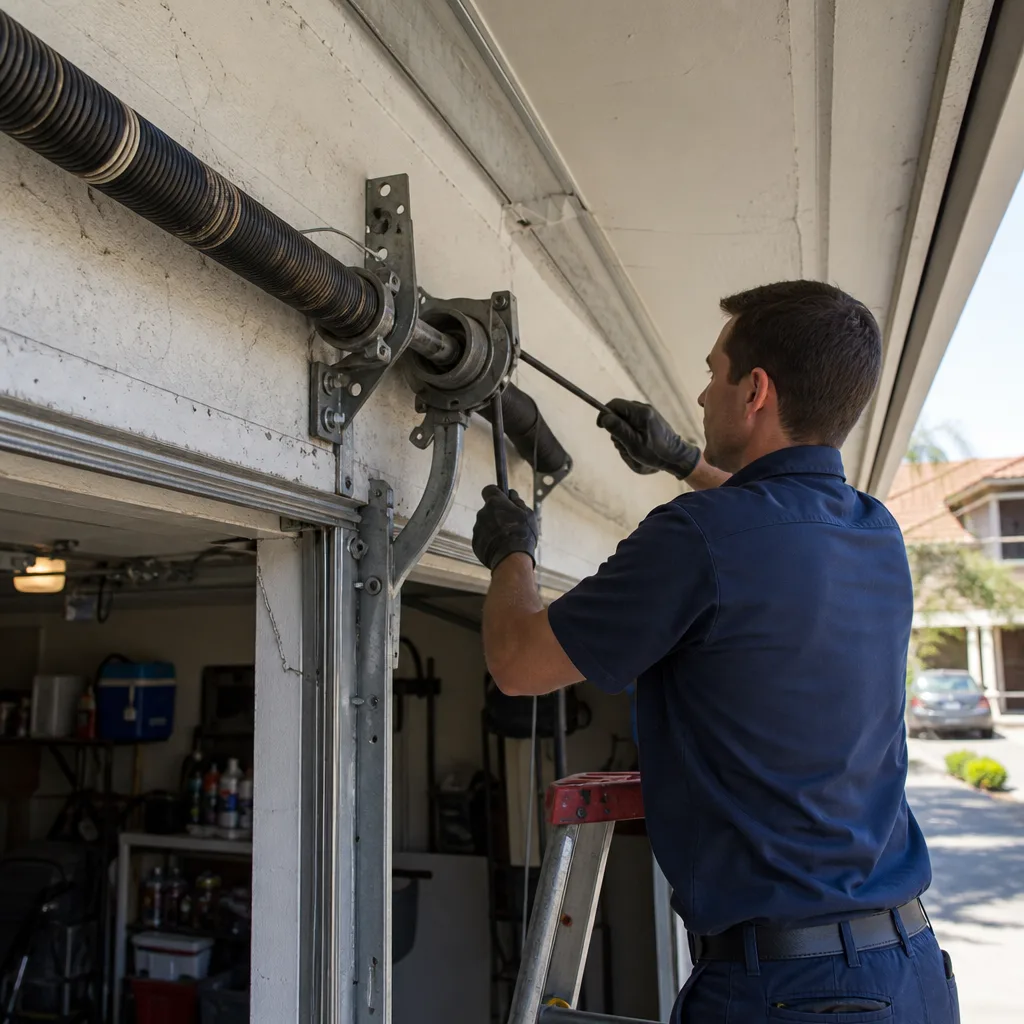
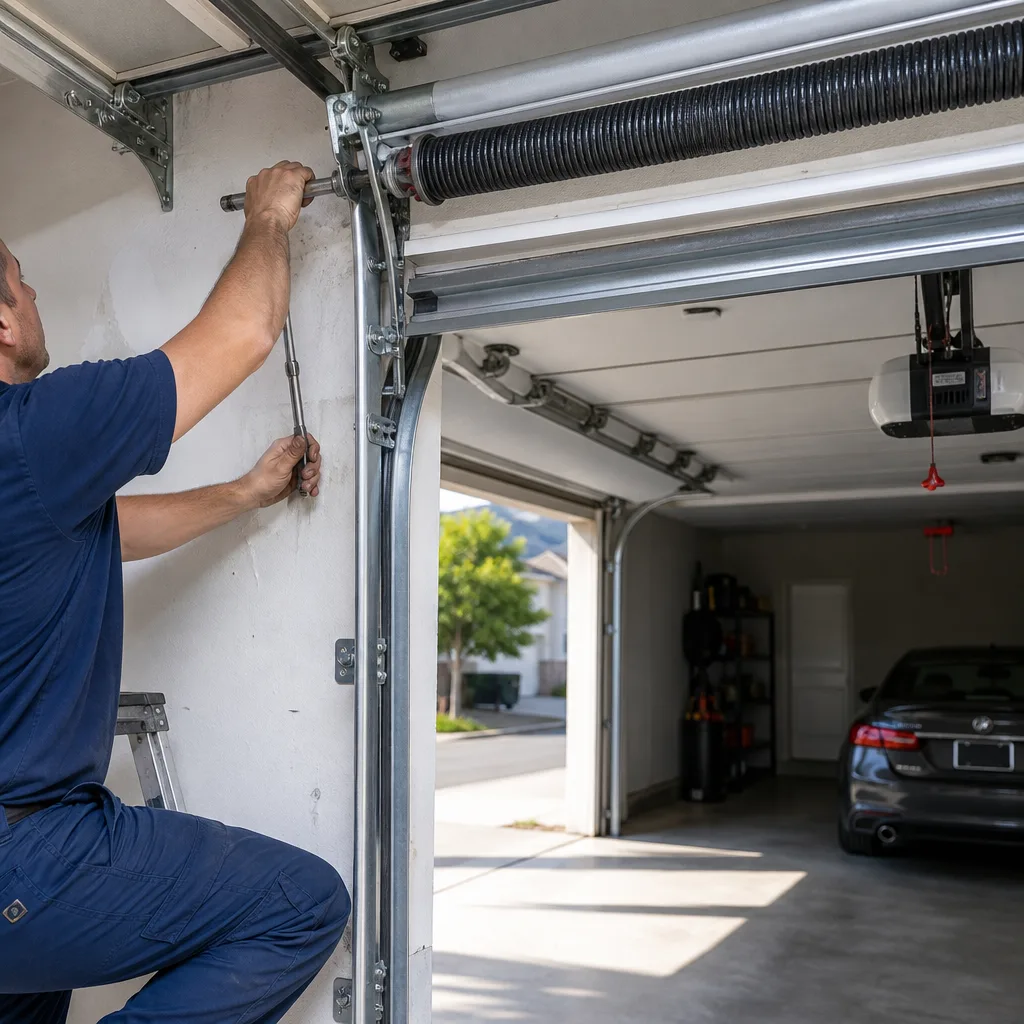
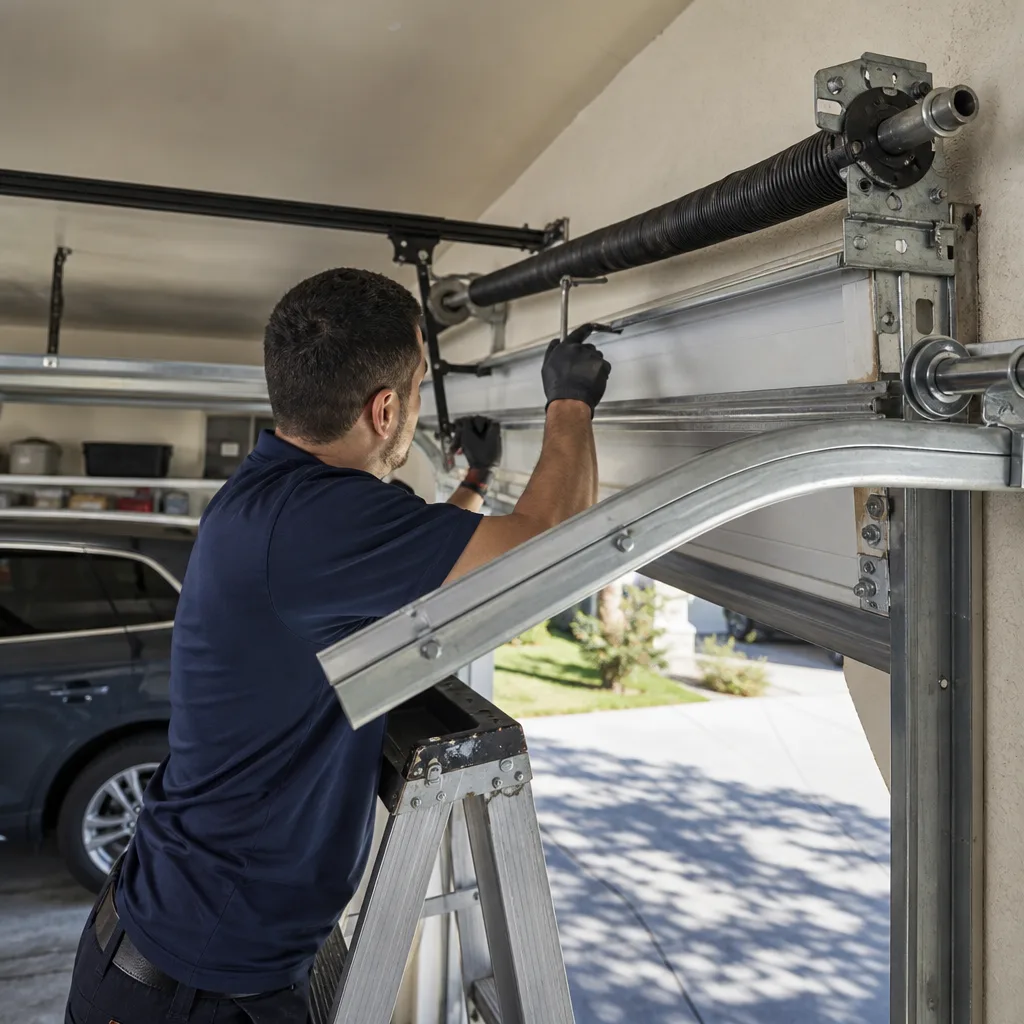
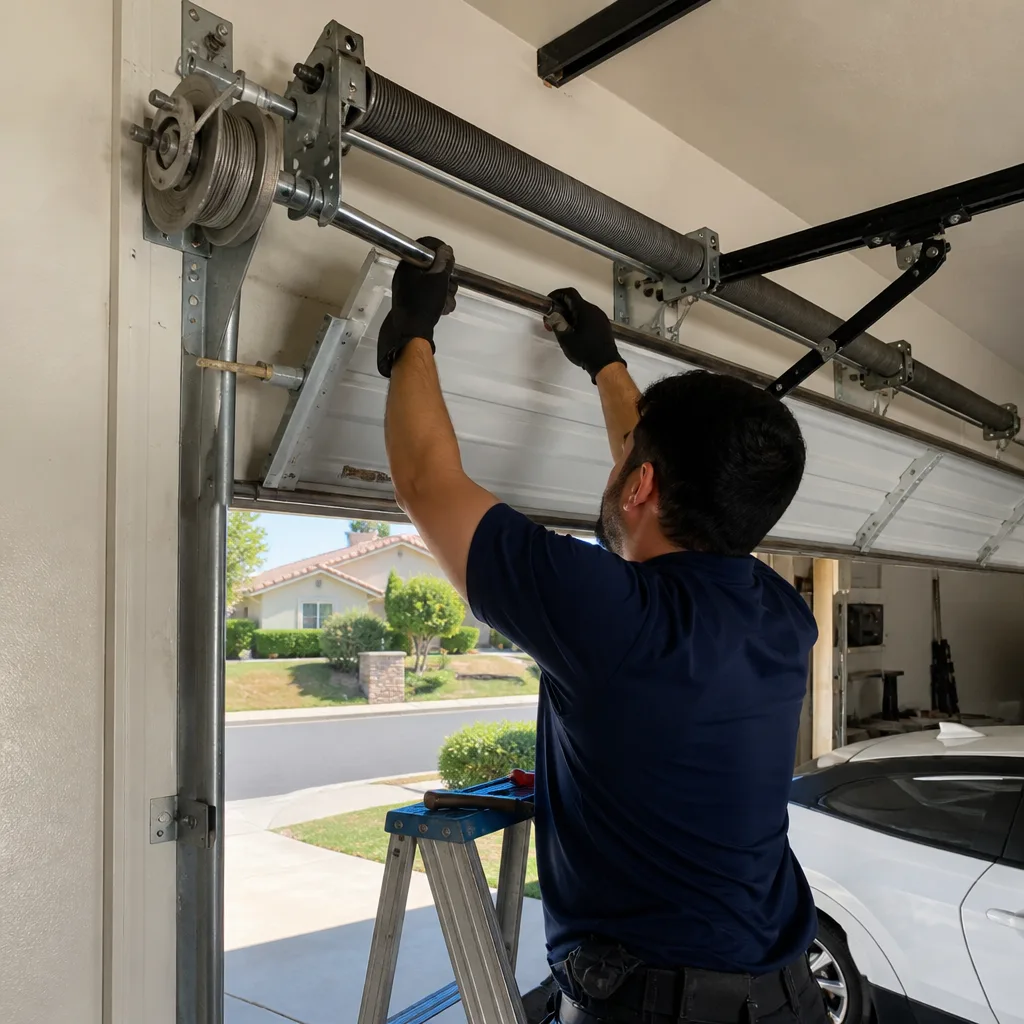
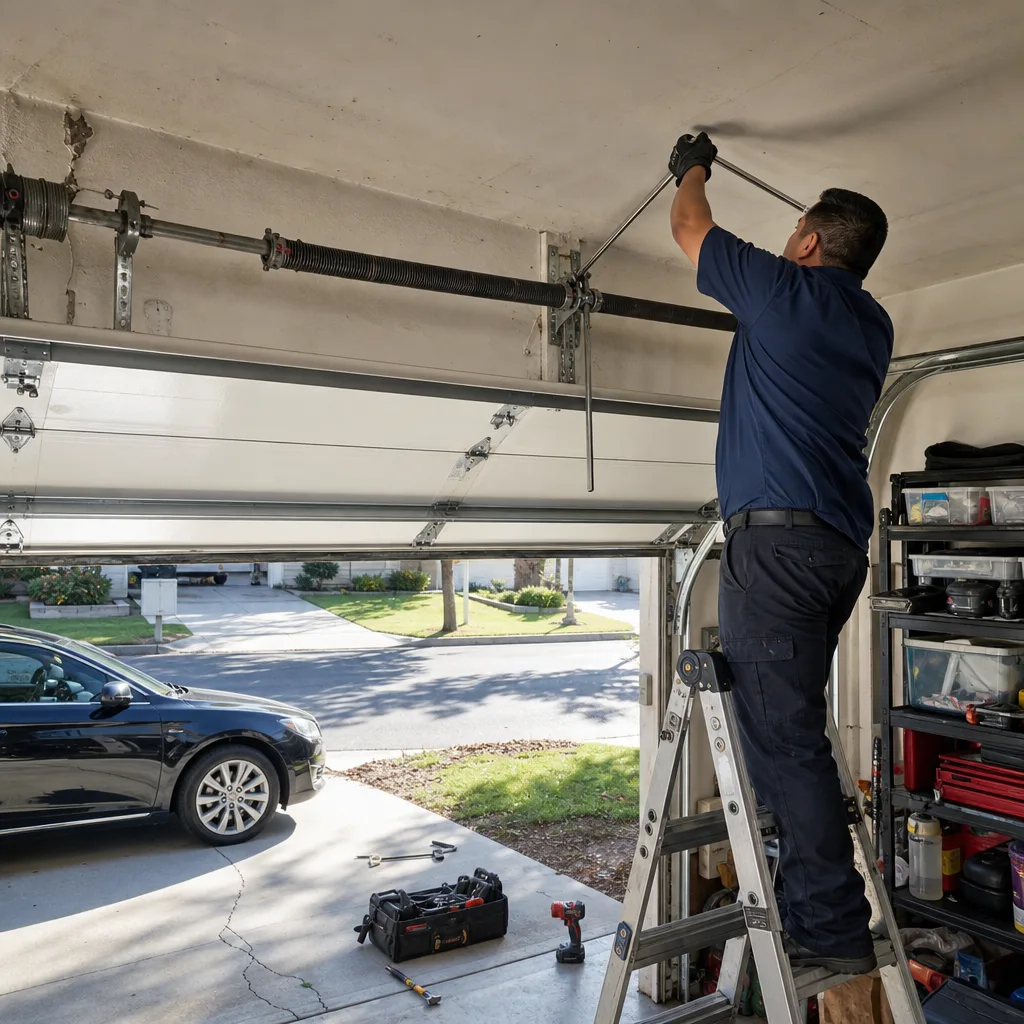
Torsion springs do the actual lifting on the overwhelming majority of garage doors in Santa Clarita, including doors from Clopay, Amarr, and Wayne Dalton. These springs sit on a metal shaft above the closed door, wound tight with stored mechanical energy. When they begin to fail, they telegraph it. Listen for what technicians call a “spring ping” – a sharp, metallic pop heard when the door reaches the fully open position. That sound is a coil shifting, and it tells you the spring is no longer seating evenly on its cone. In our experience, that ping precedes a visible crack by anywhere from two weeks to two months, depending on cycle count.
Visually, inspect the spring with the door closed. Look for a visible gap in the coil, a separation that looks like the spring was pulled slightly apart at one point. On a torsion spring, that gap means the spring has already fractured and is no longer under tension; the only reason the door still operates is the second spring carrying the full load. That second spring is now doing double duty, which shortens its remaining life substantially. This is not a “keep an eye on it” situation. A broken spring on one side while the other holds is how doors end up stuck halfway with a spring that lets go completely seconds later.
One more subtle signal that gets ignored: the door feels heavier than it did six months ago. You notice it as a slight grunt when you lift the door manually, or the opener motor sounding like it’s working harder, running a beat slower than it used to. Springs lose tension gradually as they age toward the end of their 10,000-cycle rated life. A door that should feel nearly weightless in manual operation, and instead feels like forty pounds, is a door whose springs are fatigued. That’s not normal wear you should accept; it’s a warning sign you can measure yourself.
A note on DIY inspection: torsion springs store an enormous amount of mechanical energy. What you can do safely is look and listen. Do not place your hand on a spring while the door is moving, and never attempt to adjust or replace a spring yourself. The injury risk from an unwinding spring is catastrophic. Observe the signs, then call a professional.
Cable Warning Signs
The cables on your garage door run from the bottom roller brackets, up along both sides, and onto cable drums at each end of the spring shaft. They are braided steel, and they fail incrementally. The first visible sign is almost always fraying: individual wire strands separating from the braid, most commonly near the bottom roller bracket where the cable bends tightest. Run your eyes, not your fingers, along each cable. If you see what looks like fine steel fur or whiskers sprouting from the cable body, that cable has begun to unravel. It has not failed yet, but it has started.
A second warning is a loose cable. Look at both cables with the door closed. Both should be taut, like a guitar string that’s been tuned low. If one cable has slack in it, even a half-inch of play, something has changed. That slack often means the cable has slipped on the drum, which means one side of the door is now supported by less than it should be. A door with a slack cable will sometimes sit slightly uneven in the closed position, with a light gap under one side. That unevenness is not a panel problem; it’s a cable problem in nearly every case.
You may also notice the door jerking to one side during operation, a motion that looks like a brief shimmy halfway up. That lateral movement is one cable momentarily supporting more load than the other. It’s a warning sign that appears before visible fraying in about a third of the cable failures we see, which is why a door that moves unevenly but has no obviously damaged components still warrants attention. Cables under this kind of stress can snap without prior visual warning, and a snapped cable under tension is dangerous to anyone standing near the track.
Safety note: never attempt to re-seat or tighten a garage door cable yourself. The cable is under spring tension even when the door is closed. Call a professional; cable replacement is a routine job, but only when done with the correct release procedure.
Track and Roller Warning Signs
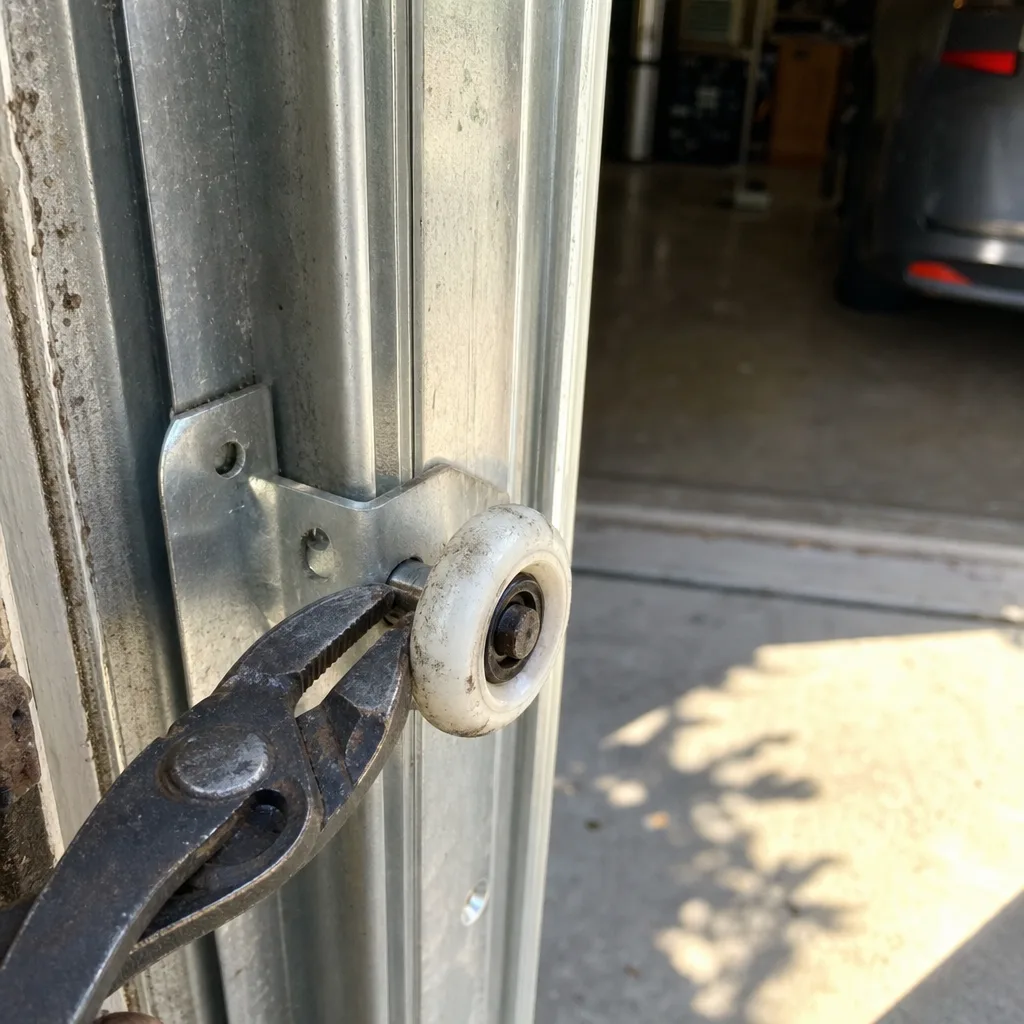
Track warnings are usually audible before they’re visible. A grinding or scraping sound during door movement suggests metal-on-metal contact between the roller and the track, which happens when a roller has worn down past its ball-bearing layer. Nylon rollers wear differently: they go quiet first, then develop a visible flat spot, then the track itself starts to show scoring. That scoring is the warning sign, and in Santa Clarita’s summer heat, nylon roller degradation accelerates noticeably. The material softens at high ambient temperatures, and a door that cycles four or more times daily in August heat wears rollers at roughly 1.5 times the rate of a door in a coastal climate.
Look at the track brackets on both sides. Rivets should sit flush, and the track should be continuous and straight. A visible bend, a gap between track sections, or a bracket that has pulled away from the wall or ceiling is a structural warning. The track carries the entire weight of the door through its travel; a loose bracket means that metal is flexing with every cycle, which eventually fatigues and fails. If a track looks like it’s been hit something, even slightly, schedule a service visit. The door may operate today, but the repeated flexing will worsen the misalignment, and a door that comes off its track is not just stuck; it’s a hazard.
Roller inspection is owner-observable if you’re willing to get on a ladder with the door closed. Look at each roller in the track. A steel roller with visible rust is a candidate for replacement. A nylon roller with a cracked outer ring, even a hairline crack, is on its way to disintegration. If you see black dust or powder on the inside face of the track, that’s nylon material grinding off the roller; it’s the earliest, quietest warning sign of roller failure, and it appears weeks before the first audible scrape. In our experience, catching a roller at the powder stage means a $15 to $40 part replacement instead of a track replacement that runs into the hundreds.
Opener Warning Signs
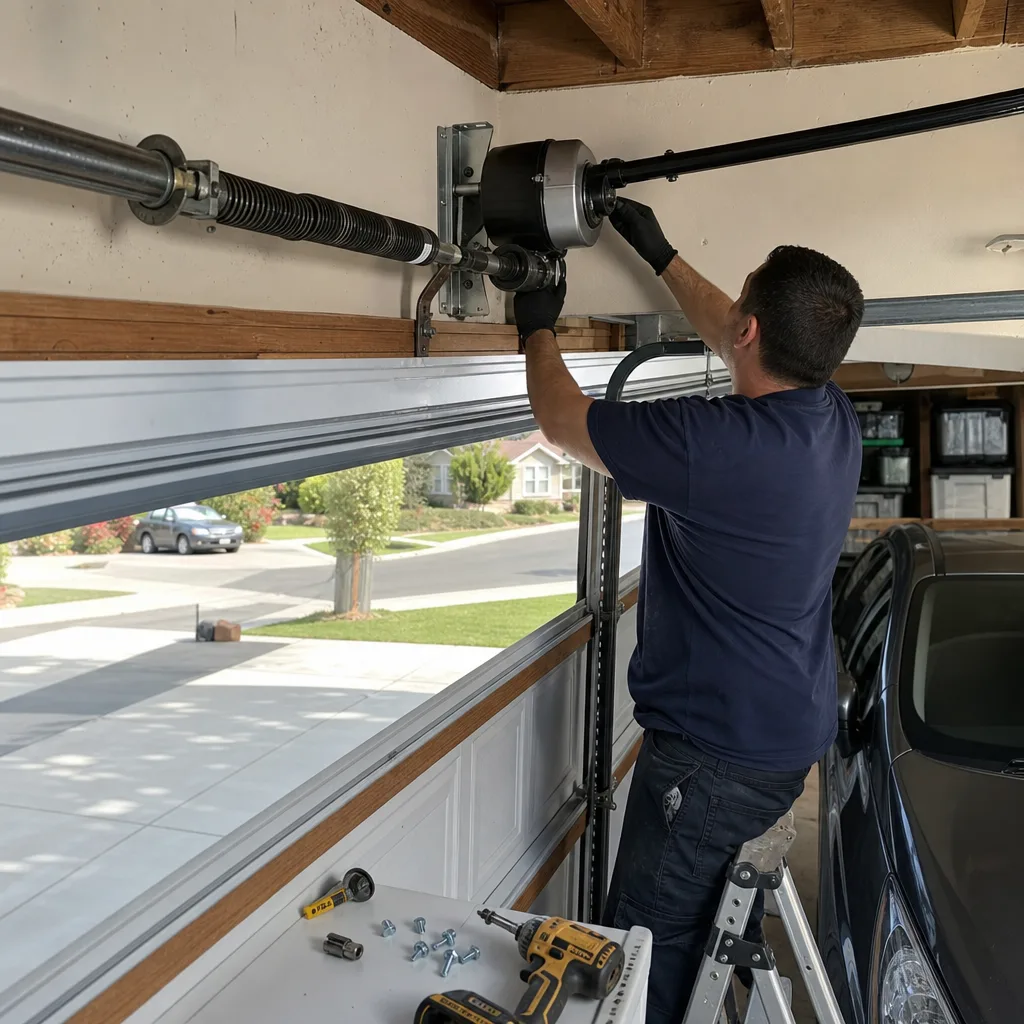
A garage door opener that’s beginning to fail usually warns you through behavior changes, not sounds. The first common sign: the door reverses two inches off the floor, then opens again. This is frequently blamed on the safety sensors or the force limit, and sometimes it is. But if the sensors are aligned and clean, and the door still refuses to close, the logic board may be misreading the resistance level. The door stops adding force and assumes something is in the way. That’s the opener’s safety algorithm at work, and the warning sign isn’t the reversal; it’s the logic board’s changing interpretation of normal door weight.
Another behavioral sign is intermittent operation from the wall button or remote when it’s not a battery issue. If you replace the remote battery and the opener still only responds intermittently, the receiver logic or the wall console wiring may be degrading. This is different from a dead battery in that it’s intermittent rather than absent. The door works, then doesn’t, then works again, with no clear pattern. That unpredictability is the warning: the opener is no longer able to maintain a consistent signal, and that pattern tends to progress to failure within a few weeks, not months.
A grinding or rumbling from the opener motor itself, distinct from the door track, suggests the internal gears are worn. On chain-drive and belt-drive openers from Craftsman, LiftMaster, and Chamberlain, the main drive gear is sacrificial by design. It’s meant to strip out to protect the motor and logic board from overload. When you hear a clicking or grinding from the powerhead, that’s the drive gear telling you it’s nearing its end. Replacing the gear is a normal repair, but it has to happen before the gear fails completely, which can burn out the motor in the process.
Our garage door opener repair and installation service in Santa Clarita handles all of these warnings on every major brand.
Panel Warning Signs
Steel garage door panels in Santa Clarita face a specific set of stressors: intense UV exposure, routine temperature swings between day and night, and occasional Santa Ana wind events that throw fine dust against the door’s face. The first warning sign on a steel panel is chalking, that white or gray powdery film that rubs off on your hand. Chalking is the paint film oxidizing under UV. It’s an indication that the protective layer is degrading, and while chalking itself is cosmetic, it precedes the failure mode that matters: delamination, where the paint and primer separate from the steel substrate. A door that’s chalking heavily in its eighth or ninth year is a door that will delaminate if the panel isn’t refinished or replaced.
Denting is the next observable sign. A dent in a steel panel is not a warning sign; it’s the event that starts the process. What follows the dent is what you need to watch: moisture intrusion at the point of paint compromise, which begins rust. In Santa Clarita, where the dry air slows but doesn’t stop rust, a small dent becomes a rust bloom over two or three seasons. That rust is the real warning sign, and it tells you the panel’s structural layer is now exposed. Once a panel has rusted through at any point, the panel is compromised, and the warning is to replace it before the rust spreads to the stiles behind it.
Wood and composite doors from Wayne Dalton and similar manufacturers have their own warning: panel warping. Look at the door edge-on with it closed. A panel that bows outward, even a quarter-inch over its length, is absorbing moisture or has lost its internal seal. That warp will not self-correct; it compounds, and a warped panel puts unequal pressure on the hinges and the track. That’s how a cosmetic panel issue becomes a mechanical track issue.
Response Timelines: When Each Sign Demands Action
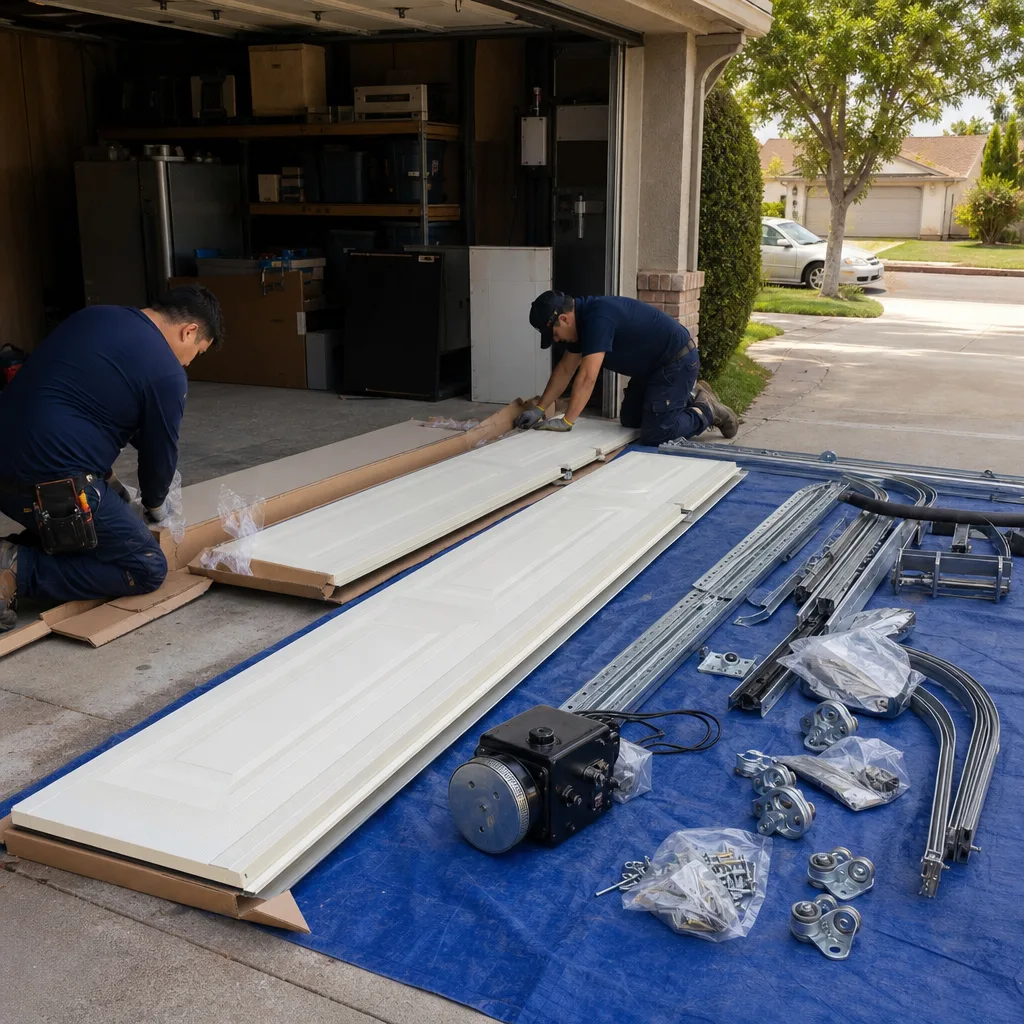
Warning signs do not all carry the same urgency. Here’s how to read them, based on failure risk rather than pressure tactics.
Act within 24 hours: a cable with visible fraying; a loose cable with door unevenness; a spring with a visible gap or fracture; a track bracket that has separated from the wall or ceiling; any grinding sound that intensifies from one cycle to the next. These are signs that indicate the system is actively failing and the failure mode is rapid. A frayed cable can snap on the next cycle, not next week. A loose bracket can let the track twist and drop the door. When you see these, stop cycling the door and call for service.
Schedule within two weeks: a spring ping that’s infrequent; nylon powder accumulating in the track; door feeling consistently heavier than it did last season; an opener that reverses intermittently with clean sensors; panel chalking that’s progressed to visible paint cracking. These seasonal garage door care warnings indicate progressive decline. The system is degrading, not actively failing, but the degradation is smooth and predictable. Two weeks is enough time to schedule without risk of escalation, but not enough to forget about it.
Monitor for 30 days: a dry roller that’s quiet but shows rust patina; a door that sits level but makes a faint squeak on the first cycle of the morning; minor paint chalking that’s even across the panel face. These are maintenance-level warnings. You’re not in a failure sequence yet; you’re in the early part of the lifespan curve where observation is the appropriate response. Document what you see, re-check in a month, and if the sign has progressed, escalate it to the appropriate timeline.
Santa Clarita-Specific Failure Patterns
Every climate has its own signature failures. In Santa Clarita, we see three patterns more often than anything else, and they map directly to the local environment.
First: heat-induced nylon roller wear. Santa Clarita regularly sees summer days above 95 degrees, and the inside of an unconditioned garage can reach well above that. Nylon rollers, the standard on nearly every modern door, lose dimensional stability at high sustained temperatures. The outer ring softens, the bearing seat loosens, and the roller begins to wobble in the track. What starts as a wobble becomes a flat spot, and a flat spot becomes a track groove. We replace more rollers in August and September than in any other two-month window, and the wear pattern is almost always heat-related rather than age-related.
Second: UV panel chalking that precedes delamination. The high number of clear, sunny days, combined with the valley’s open exposure, means garage door paint sees more UV hours per year than a comparable door in a coastal microclimate. Paint failures that take twelve years to develop in San Diego often show up in eight to nine years in Santa Clarita. The progression is predictable: gloss loss first, then chalking, then micro-cracking, then separation at the panel edges. The warning to catch is micro-cracking, because delamination becomes visible shortly after.
Third: dust-clogged sensor eyes during fire season. This one surprises homeowners because it doesn’t look like a component failure. The door simply stops closing, or reverses without touching anything, and a quick visual check of the safety sensors shows they’re aligned and lit. But the lenses have accumulated a film of fine dust carried by the Santa Ana winds, and that film diffuses the infrared beam just enough to trigger a false obstruction reading. The fix is usually straightforward: clean the lenses with a dry cloth and verify alignment. But if cleaning doesn’t resolve it, the warning sign isn’t dust; it’s a sensor or logic board issue, and that carries a different timeline. For homeowners who encounter persistent sensor problems or other repair needs, our garage door repair service in Santa Clarita is built around the same diagnostic process: identify the source before quoting anything.
A Documentation Template for Homeowners
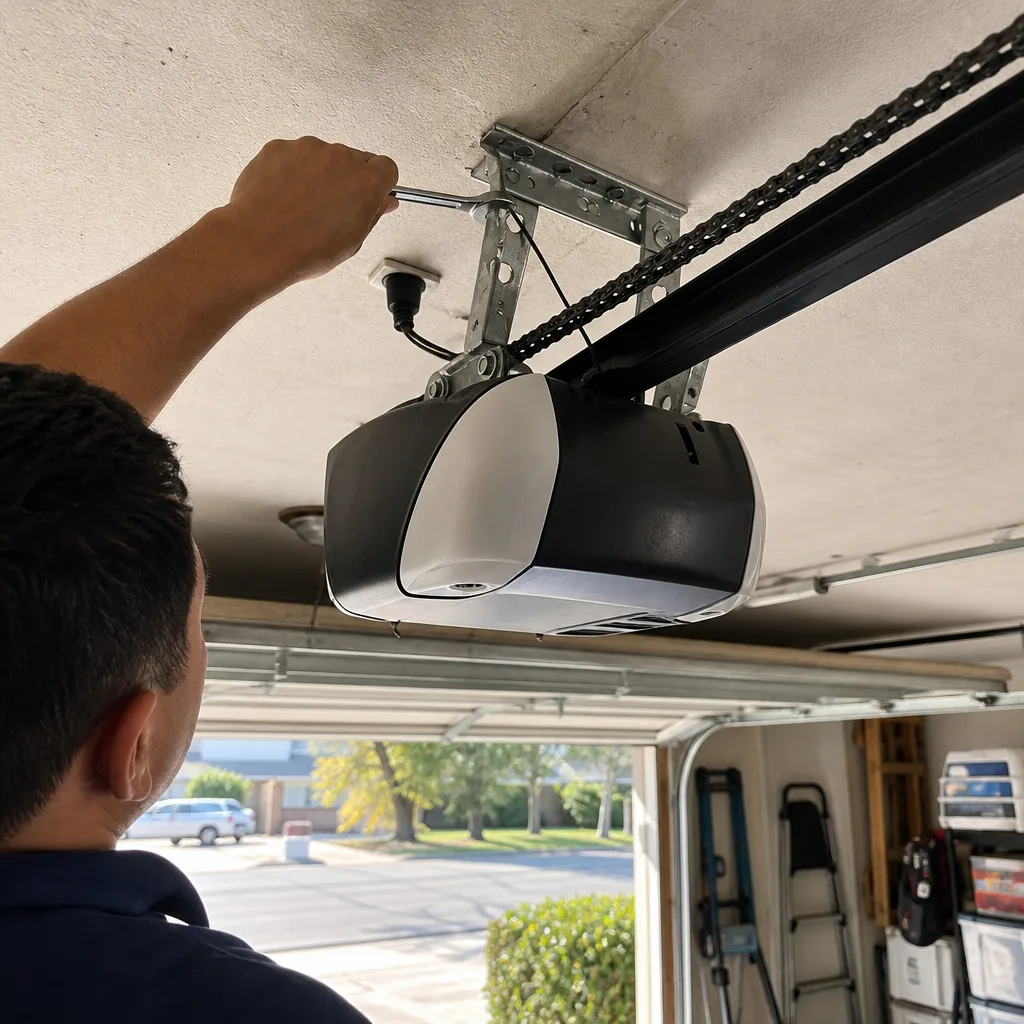
If you’re the kind of homeowner who researches before you contact anyone, you’ll appreciate this. Recording what you observe, when you first observed it, and how it’s changed gives you leverage later. It’s useful for warranty claims, insurance questions, and for giving a technician the history they need to diagnose faster. It’s also how we work at Servo Garage Doors Santa Clarita: every visit closes with a documented photo record of what was found and what was done. Your own notes are the counterpart to that record.
Here’s a template you can copy into your phone’s notes app:
- Date first noticed: [Write the exact date you first observed the sign.]
- Symptom description: [What did you see or hear? “Grinding sound from left track when door is halfway up, heard on 5 of 7 cycles since Sunday.” Be specific about frequency and location.]
- Subsystem source: [Spring, cable, track, roller, opener, or panel? Use this guide to identify it.]
- Trigger conditions: [Does it happen only on cold mornings? Only when the door is opened from the wall button? Only after the door sits open for a while? The trigger tells you a lot about the source.]
- Photos or video: [Take a photo or short video each time you document. Angle matters; capture the component, not just the door.]
- Change since first notice: [Has it gotten louder, more frequent, or moved to a different part of the door? This progression is the single most useful piece of information for diagnosis.]
We cannot count the number of times a customer’s phone note has saved an hour of diagnosis. A dated observation that “the cable looked frayed last Thursday but now it looks fuzzy” tells a technician exactly where the failure sequence is. That precision is how the written price stays flat, because the scope is understood before work begins.
Common Mistakes to Avoid
- Ignoring the door that “sounds different today.” A door that changes its sound signature overnight has changed something mechanical. Normal garage doors sound the same this week as they did last week. Different means something; write it down.
- Lubricating without cleaning first. Spraying lubricant onto a dirty track or roller traps the particulate and accelerates wear. The correct order is clean first, then lubricate, and only with a lubricant designed for garage doors. General-purpose WD-40 is not a garage door lubricant.
- Adjusting the opener force limit to “fix” a reversing door. If the door reverses near the floor and the sensors are clean and aligned, the force limit may be set too low, or the logic board may be misreading resistance. Turning up the force is not a repair; it’s overriding a safety system, and it can damage both the opener and the door.
- Replacing the remote battery when the problem is the receiver. If a fresh battery doesn’t restore consistent operation, the remote isn’t the issue. The opener’s logic board or receiver antenna is degrading, and replacing batteries repeatedly just delays the real repair.
- Treating all reverse-at-floor events as sensor problems. Dust-clogged sensors are common in Santa Clarita during fire season, but so are logic board failures and track obstructions. Clean the sensors; if the problem persists, the warning sign is something else, and it needs diagnosis, not another wipe-down.
- Waiting for a visible cable snap before replacing a frayed cable. Visible fraying at the bottom bracket is visible for weeks, sometimes months, before the snap. That’s the window. If you see the fraying and keep using the door, you’re gambling that the cable holds through one more cycle. It’s a gamble with a real cost.
- Rejecting a written quote because you “just need a simple fix.” The quote isn’t a sales document; it’s a scope document. A flat, written price before any work begins is Clause 1 of The Haven Standard at Servo, and it exists so you never face a surprise invoice. The quote is the fix; it’s the proof that the technician identified the specific failed component before touching anything.
When to Call a Professional
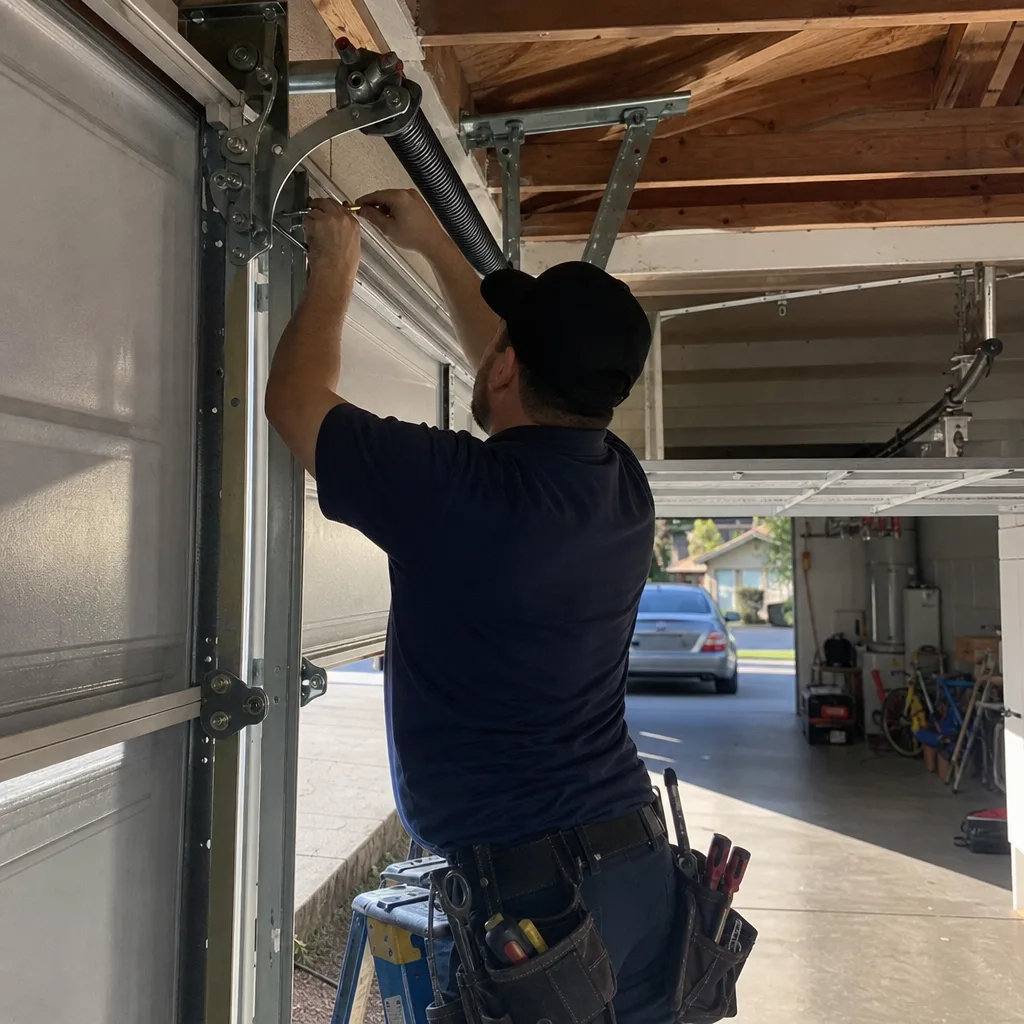
Call a professional when the warning sign involves stored mechanical energy, which means springs and cables, no exceptions. Call when the door doesn’t respond to the opener with clean sensors and a fresh battery, because that points to logic components that can’t be owner-diagnosed. Call when the track has visible damage or a bracket has pulled away from its mounting point; a dropped door is a structural failure with potential for serious injury. And call when you’ve documented a warning sign that has progressed over the 30-day monitoring window. That progression data is valuable, and it’s exactly what a diagnostic visit is built around. Servo Garage Doors Santa Clarita offers free estimates in Santa Clarita. Call (661) 542-4007 and you’ll reach a live person who can schedule a visit; every job carries a flat, written price before any work starts, and every visit ends with a documented photo record of what was found and what was done.
Frequently Asked Questions
The most common warning sign is a spring ping heard at the fully open position, followed closely by a visible gap in the coil when the door is closed. The ping is coil movement on the cone, and the gap is a full fracture that has already released the spring’s tension. Any visible gap means you’re on borrowed time, and in Santa Clarita, where doors press through more daily cycles in warmer months, that borrowed time is shorter than in cooler climates. Call (661) 542-4007 to have it inspected; a written quote is produced before any work starts.
In Santa Clarita, the repair most often needed after an ignored warning sign is spring replacement, which typically ranges from $180 to $340 for a standard two-spring system. Cable replacement runs $120 to $220, roller replacement runs $90 to $180 for a full set, and logic board replacement on older openers runs $120 to $250. These are flat, written prices quoted before any work begins when you work with Servo, so the number you see on the quote is the number on the invoice. For a precise quote on your door, call (661) 542-4007.
Your garage door reverses two inches off the floor because the safety sensor beam is being interrupted, or because the opener’s force threshold is tripping, or because the logic board is misreading resistance. In Santa Clarita during fire season, the most common cause is fine dust on the sensor lenses; clean them with a dry cloth and try again. If the door continues reversing with clean, aligned sensors, the opener needs diagnosis. The reversal itself is a safety feature working correctly, and the warning sign is whatever is causing the beam interruption, not the reversal.
You can inspect your own cables and springs visually from a safe distance, which means standing on the floor with the door closed and using your eyes. What you cannot safely do is touch, adjust, or attempt to replace spring or cable components. Torsion springs store enough mechanical energy to cause catastrophic injury, and cables under tension can release without warning. Visual inspection will show you the warning signs; leave the repair to a professional who can release the tension safely.
In Santa Clarita, a garage door should receive a prescriptive maintenance visit once per year, with visual inspection of rollers, cables, springs, and track brackets at least once every six months by the homeowner. The six-month check is the one that catches nylon powder in the track and fraying cables before they become repairs. If your door cycles more than four times daily, shift to service every nine months. Our annual maintenance at Servo Garage Doors Santa Clarita includes the full written scope and photo record on every visit, and you can find more guides & resources on our blog.
A door that sits uneven when closed usually means one side has a cable that’s slipped on its drum, or a spring that’s fatigued on one side only, or a track that’s out of level. The most common of the three is cable slippage, which is identifiable by looking for slack in one cable while the door is closed. Uneven sitting is not a panel problem; it’s a load-balancing problem, and it should be addressed within 24 hours. The longer the door runs uneven, the more wear concentrates on one side of the track system.
Yes, our service vehicles at Servo Garage Doors Santa Clarita carry the most common replacement parts, including torsion springs in standard sizes, cables, rollers, hinges, sensors, and opener gears. The goal is to complete the repair in one visit whenever possible, with the written quote delivered before the work starts and the photo record delivered when the work is done. If you’re planning ahead, see How to Hire a Garage Door Contractor in Santa Clarita: A Step-by-Step Guide. For less common parts, we order from the manufacturer and return with a scheduled appointment. No part of the job happens without your approval of the written price first.
The Bottom Line
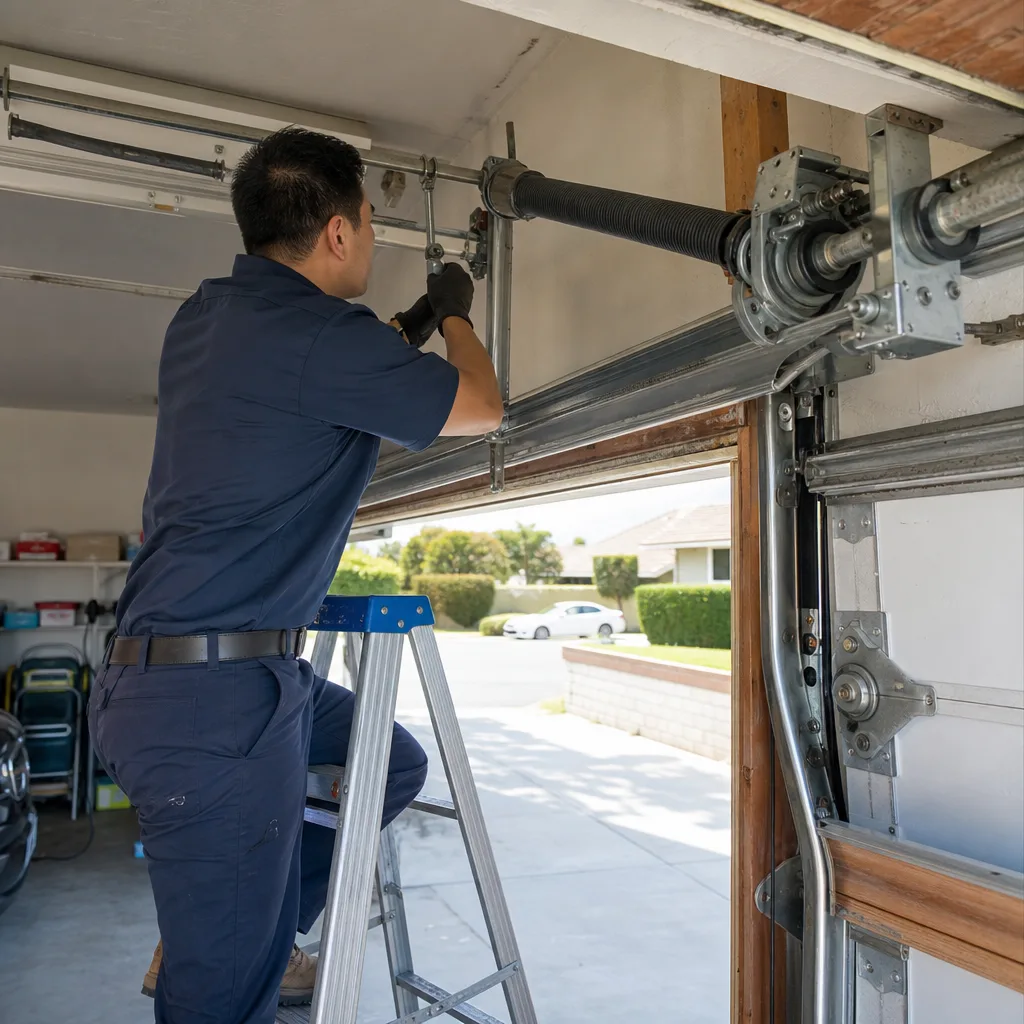
Garage door warning signs are best understood as a sequence, not a list. The ping comes before the gap. The nylon dust comes before the roller flat spot. The chalking comes before the delamination. Read the signs in that order, and you know not just that something is wrong, but how much time you have to respond. In Santa Clarita, where heat and sun compress those timelines, a monthly visual check takes five minutes and costs nothing. Write down what you see. Take photos. Escalate when the sign progresses. And when a professional is called for, a written price before any work starts is not a perk; it’s the baseline. Our garage door installation service in Santa Clarita follows the same documented standard when the time comes for replacement rather than repair.
Written by Marcus Deller, Owner at Servo Garage Doors Santa Clarita, serving Santa Clarita since 2015.