
Last updated September 19, 2026
Full 25-point door and opener safety check with every visit - springs, cables, rollers, tracks, and your LiftMaster or Chamberlain opener included
You get a price before we start. It does not change when the truck arrives.
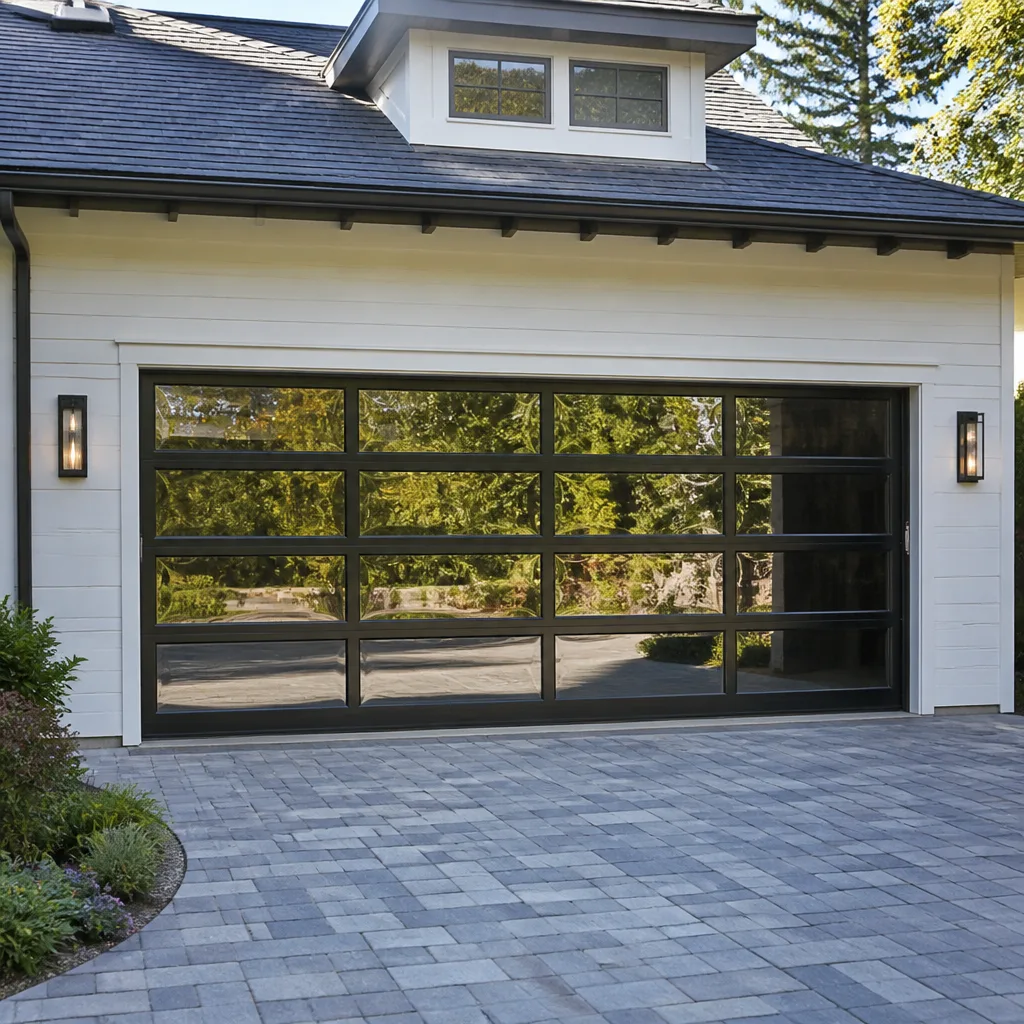
Modern flush
LiftMaster openers
 Before
 After
After Before
 After
After Before
 After
AfterGarage Door Permits, Codes & Inspections in CA: What You Need to Know
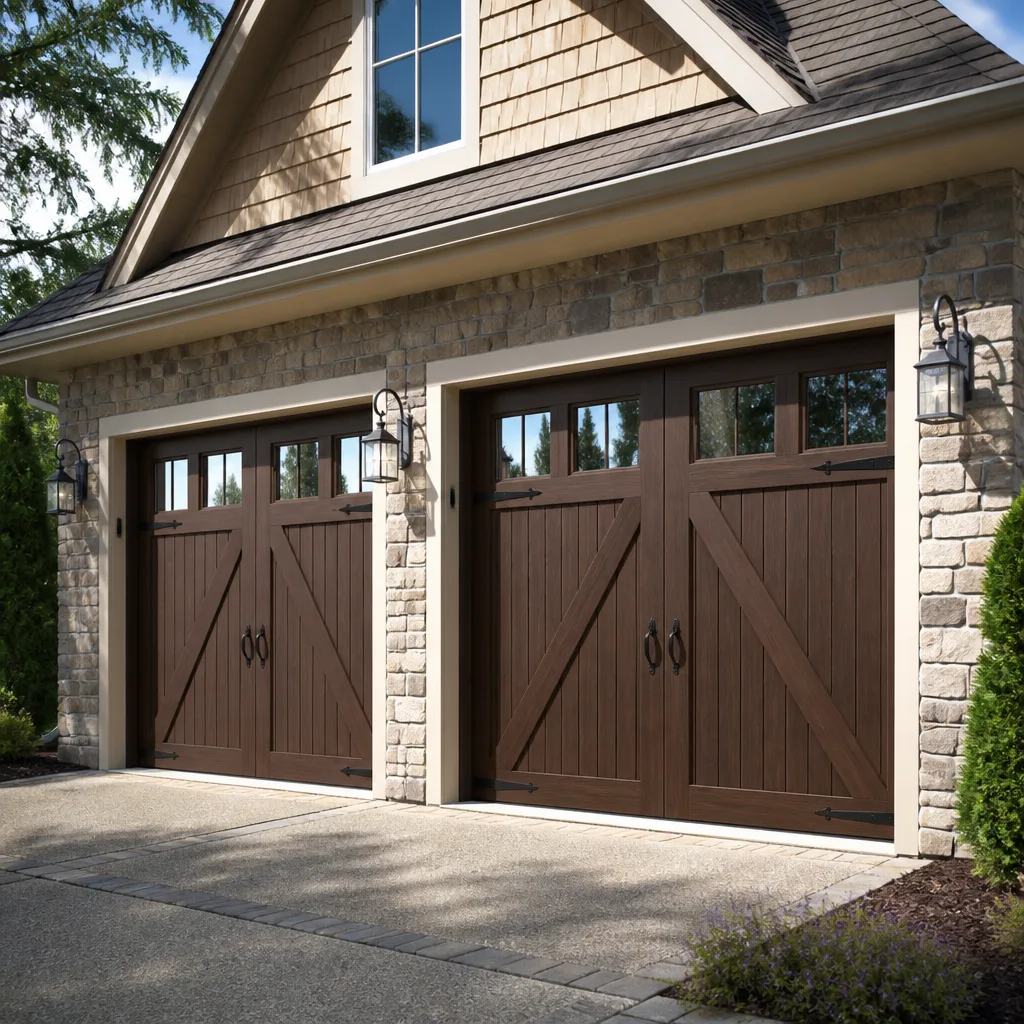
Here’s the thing about garage door permits in California that most guides get wrong: the line isn’t between “new door” and “repair.” It’s between work that touches the structural opening and work that doesn’t. In Burbank, swapping a tired steel door for a Clopay carriage-style door on the same header might need nothing more than the installer’s signature on a receipt. In Santa Clarita, the same job can trigger a permit because of how the City’s municipal code amendment treats the fire-rated separation between the garage and living space. This guide explains exactly where those lines sit, which California Building Code sections govern them, what an unpermitted replacement actually costs you later, and how the Santa Clarita Building and Safety process works when you do need to pull one. If you’re replacing, upgrading, or structurally altering anything in that opening, the next fifteen minutes of reading will tell you more than most contractors will volunteer.
Quick Answer
You need a garage door permit in California when the work alters the structural header above the opening, replaces a fire-rated door separating the garage from living space in a municipality that enforces that condition, or adds new electrical circuitry for an opener. A straightforward same-size door replacement on an unmodified header typically does not require a permit at the state level, but Santa Clarita’s local amendments add a condition most statewide guides omit entirely. When in doubt, call the Santa Clarita Building and Safety Division with the job description before the first bracket comes off.
Table of Contents
- The California Building Code Sections That Actually Govern Garage Doors
- Where Santa Clarita’s Municipal Code Diverges From the State
- The Three Conditions That Trigger a Permit
- Fire-Rated Separation Walls: The Permit Most People Miss
- What an Unpermitted Replacement Actually Risks
- The Santa Clarita Building and Safety Permit Process, Step by Step
- C-61/D28 Contractors and the Electrical Subcontractor Question
- What the Inspector Checks During a Garage Door Inspection
BeforeAfterThe California Building Code Sections That Actually Govern Garage Doors
The California Code of Regulations, Title 24, Part 2, is the California Building Code (CBC). It’s updated on a three-year cycle and locally amended by municipalities. The sections that touch garage doors fall into three buckets: structural, fire-safety, and electrical.
The structural provisions live in CBC Chapter 16 and the residential portions of CBC Chapter 7. Section R301 covers structural design criteria, and Section R609 specifically addresses garage doors in one- and two-family dwellings. Here’s what R609 actually says, stripped of the legalese: a garage door opening must be designed to handle the wind and seismic loads prescribed for the area, and the header spanning that opening has to be sized for the load path it carries. That matters for permits because altering the header to accommodate a taller door or a different track system changes the load path, and load path changes are exactly what plan review is designed to catch.
The fire-safety provisions sit in CBC Section R302, particularly R302.5 and R302.6. Those sections govern the separation between a garage and dwelling unit. Garages contain gasoline, paint, fertilizers, and a parked vehicle that can become an accident. The code treats the garage-to-house wall and any door in that wall as a fire-rated assembly. R302.5 specifies the materials and ratings; R302.6 addresses any openings in that assembly, including the door that leads from garage to house. A garage vehicle door and the pedestrian door from garage to interior are different animals under code, and we’ll get into why that matters in the permit discussion below.
The electrical provisions live in CBC Chapter 27 and the California Electrical Code (CEC), which references NFPA 70. When a garage door opener installation requires a new circuit, the work falls under CEC Article 210 and the LA-specific amendments in Title 24, Part 3. Adding a dedicated 120-volt receptacle for a wall-mount opener like the Genie 6170 or the LiftMaster 8500W generally requires a residential electrical permit, full stop. No matter what the door itself requires.
The practical takeaway: if a contractor tells you that “garage doors never need a permit in California,” they’re reading the bottom line instead of the code. Certain replacements don’t need one. Others absolutely do. The difference is the condition the existing opening is in, not what the contractor would prefer to do.
Where Santa Clarita’s Municipal Code Diverges From the State
California lets every city amend the building code to suit local conditions. Los Angeles County has its own amendments, and Santa Clarita has specific local amendments that change the calculus for garage door work. Here’s the divergence most people miss.
Santa Clarita Municipal Code Chapter 15.05 adopts the California Building Code and adds local administrative provisions. The City enforces the CBC’s fire-separation requirements with more specificity than some neighboring jurisdictions. Because Santa Clarita experiences high Santa Ana wind events, the City also has local wind-load design criteria that apply to any garage door opening above a certain threshold. A vehicle door facing into the prevailing wind corridor can require documentation that the installed door meets the City’s specified wind pressure rating.
The practical result: a door replacement that a contractor would classify as “same size, no structural work” in Burbank or Glendale can land on the City’s radar in Santa Clarita when the property sits on a hillside, in a fire-hazard severity zone, or against a known wind corridor. The City’s counter asks a simple question: does the replacement door carry the same wind rating as the door that came out, and can you document it?
This is not about making work harder for the sake of it. The building department is answering to real failure modes. A door that flutters or blows in under wind load can amplify into structual damage, and in fire-hazard zones, the garage door is one of the largest openings in the building envelope. The department’s job is making sure that what goes back into the opening is not weaker than what came out.
The Three Conditions That Trigger a Permit
After working with hundreds of garage door replacements in Santa Clarita, we’ve distilled the permit question down to three trigger conditions. If your job touches any of them, a permit is the correct path, regardless of what the installer tells you.
Condition 1: Structural Header Modification
If the work involves changing, lowering, raising, or reinforcing the header beam above the garage door opening, a permit is required. This is the least ambiguous case. The header carries the load of the wall above and part of the roof, and changing it changes the load path through the structure. Examples include: converting a single-car opening to a double-car opening, raising the opening height from 7 feet to 8 feet for a larger vehicle, or installing a high-lift track kit that requires modifying the framing above the door. In Santa Clarita, this work triggers plan review, engineering documentation, and an inspection. There is no gray area here, and any contractor who suggests otherwise should be crossed off the list. For help spotting red flags early, see Garage Door Warning Signs: A Santa Clarita Homeowner’s Reference Guide.
Condition 2: Fire-Rated Door Replacement Between Garage and Living Space
This is the one most homeowners never hear about. The pedestrian door between the garage and the interior of the house is, under CBC Section R302.5, a fire-rated assembly. When that door is replaced, the replacement must match the original fire rating. In many municipalities, replacing one fire-rated door with another of the same rating is treated as a like-for-like maintenance item. In Santa Clarita, the City’s local amendment makes documentation of that rating part of the standard for any door that separates a garage from conditioned living space. If you can’t find a label on the old door and the contractor can’t verify the rating, the work stops until the rating is established. This is not a vehicle door issue; this is a walk-through door issue, and it’s the number-one missed permit in the county.
Condition 3: Opener Electrical Work
If the opener install requires running a new circuit, adding a new receptacle, or converting from a 110-volt opener to a 240-volt unit, a separate electrical permit is required under the California Electrical Code. A qualified C-61/D28 contractor can perform the physical installation of the door and track, but any new wiring falls under C-10 licensing rules. More on that below in the licensing section. A like-for-like replacement of an existing opener plugged into an existing receptacle is not an electrical permit item in most cases.
Everything else, a same-size vehicle door replacement on an unmodified header, a spring replacement, a panel replacement, hinge and roller work, is generally exempt in Santa Clarita. But the moment one of those three conditions is in play, the answer changes.
Fire-Rated Separation Walls: The Permit Most People Miss
Let’s talk about the fire-rated separation wall in more detail, because this is the area where a permitted job and an unpermitted job diverge with the most expensive consequences.
The wall between a garage and the living space of a house is not an ordinary wall. Under CBC Section R302.5, it’s a fire-resistance-rated assembly of at least 30 minutes. The door leading from the garage into the house is part of that assembly, and it carries a 20-minute fire rating. This has been code in California for decades. The purpose is straightforward: if a car catches fire in the garage at 2 a.m., the fire-rated wall and the fire-rated door slow the fire long enough for the smoke alarms to wake occupants and for the fire department to arrive.
Now, the practical question: when do you need a permit to replace a fire-rated door between garage and house? In most California cities, replacing like with like, a 20-minute steel or solid-core wood door with another 20-minute door, is a maintenance item. In Santa Clarita, the City wants documentation. If the inspector can’t read the label on the old door because it was painted over or removed, the new door’s rating must be documented with a certification label or manufacturer’s spec sheet.
For vehicle garage doors, the fire-separation question is different. The vehicle door is not a fire-rated assembly, but it sits in the same wall plane. In fire-hazard severity zones, and parts of Santa Clarita blanket these zones, the City may require that the replacement door meet specific wind and debris impact standards that feed into the same fire-safety logic: the opening should not become a breach point during a wind-driven fire event.
What an Unpermitted Replacement Actually Risks
The risk of an unpermitted garage door replacement shows up later, often at the worst possible time. Here’s what’s actually at stake, not in hypotheticals but in the way it plays out for real homeowners in Santa Clarita.
Resale Disclosure Requirements
California Civil Code Section 1102 requires sellers to disclose material facts about their property. When you sell a house with an unpermitted garage door replacement or a modification to the structural opening that was not signed off by the building department, you have a disclosure problem. The question on the Transfer Disclosure Statement is not “Did you personally do unpermitted work?” It’s “Are you aware of any unpermitted work on the property?” A buyer who discovers a door header that doesn’t match the original plans can use that disclosure failure to reopen negotiations or walk entirely. We’ve watched homeowners in Valencia and Canyon Country take a five-figure hit at the closing table because of an unpermitted header modification done by a previous owner.
Insurance Claim Complications
When a claim is filed, an adjuster looks at the loss through the lens of cause. If a garage door failed during a wind event and the subsequent inspection reveals the door was replaced without a permit and without documentation of wind rating compliance, the insurance carrier may deny the claim or restrict coverage based on non-compliance. This is not a scare tactic; it’s a documented pattern. The adjuster’s question is blunt: would this loss have occurred if the work had been done with the proper permit and inspection?
Re-inspection and Correction Costs
This is the least pleasant scenario, and we’ve seen it happen. A homeowner sells their house. The buyer’s inspector or the lender’s appraiser flags the garage door opening. The building department is called. The result: a retroactive permit is required, the work is inspected, and if the work doesn’t comply, it gets redone. The cost of the rework is not the original door cost; it’s the cost of a second door, plus the retroactive permit fees, plus the labor to make the opening comply. All of that, on top of a sale that’s already in motion. The cheapest permit is always the one you pull before the work starts.
The Santa Clarita Building and Safety Permit Process, Step by Step
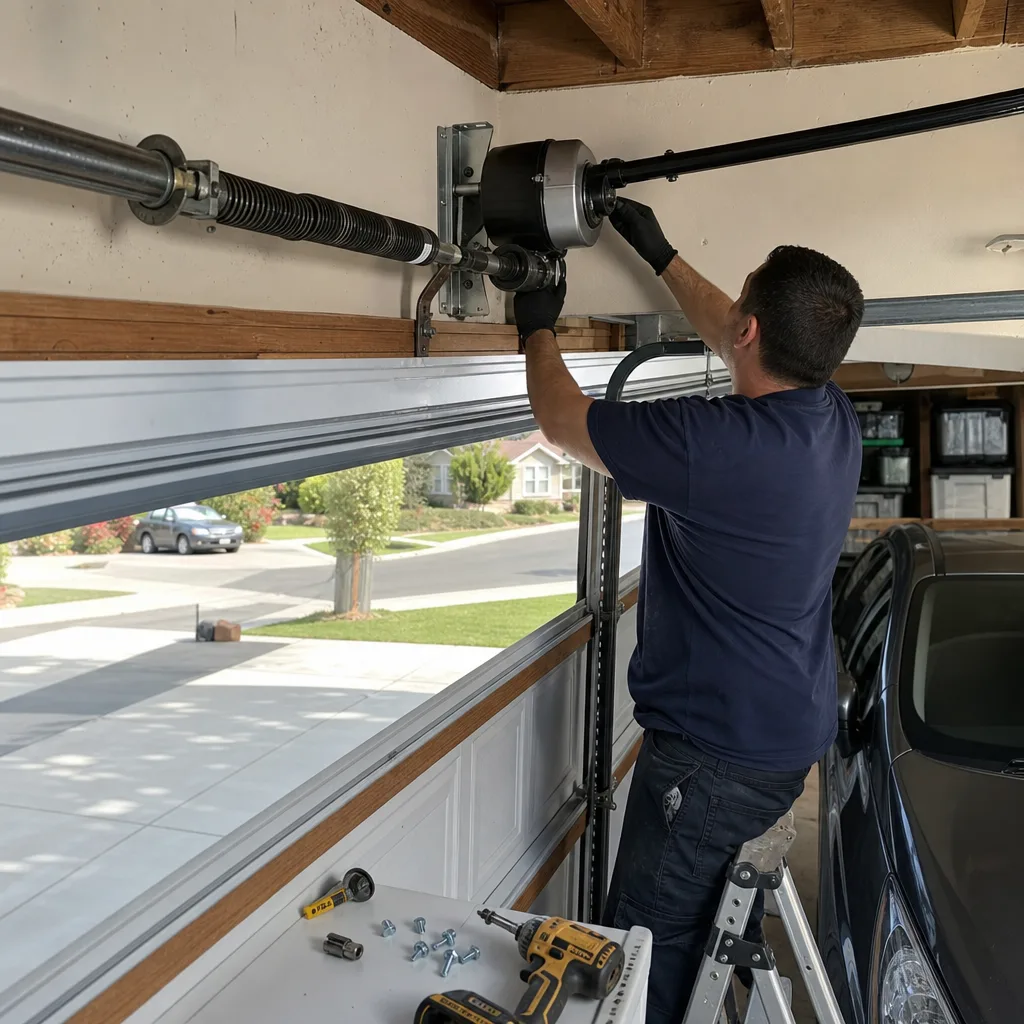
If you’ve determined that your job triggers a permit, here’s the actual process in Santa Clarita, walked through in the order it happens. The Building and Safety Division operates out of City Hall on Valencia Boulevard. The process is more straightforward than most people expect.
Step 1: Determine the Permit Type
For structural header work, you need a residential building permit. For a fire-rated door replacement where documentation is needed, you need a residential building permit with a fire-separation notation. For a new electrical circuit for the opener, you need a residential electrical permit. Most garage door projects that require a permit will involve a residential building permit, possibly with an electrical sub-permit.
Step 2: Prepare the Plan
For structural work, the City requires a plan or diagram showing the existing opening, the proposed modification, the header sizing, and the connection details. Many contractors have standard details already prepared. For non-structural replacements, a scope-of-work description is often sufficient. The City’s website lists the minimum submittal requirements for garage door permits, and the counter staff will tell you directly if something is missing.
Step 3: Submit the Application
Application submission is in person at the permit counter or online through the City’s e-service portal. The application includes the job address, the contractor’s license number, the scope of work, and the project valuation. Valuation determines the fee. For a typical garage door replacement with structural modifications in Santa Clarita, expect plan check and permit fees in the range of $300 to $800 depending on scope. For a simple electrical sub-permit, the fee is typically under $200. The City assesses plan check fees separately from issuance fees, and both are calculated from the project valuation. Do not rely on a contractor quoting “permit included” without seeing the City’s fee receipt with the job address on it; that receipt is the paper trail.
Step 4: Plan Review
For structural work, plan review typically takes 7 to 14 business days. For non-structural fire-door documentation, the review is often same-day or next-day. The plan checker is looking at the header sizing, the bolt spacing, the connection detail, and, for fire-separation replacement, the door’s rating documentation. If the plan checker conditions something, you get a written correction list, not a phone conversation you have to remember.
Step 5: Permit Issuance
Once plan review clears and fees are paid, the permit is issued. The permit includes the inspection schedule. Do not start work until the permit is issued. Starting without a permit and then trying to legalize the work after the fact doubles the paperwork and, in Santa Clarita, comes with a penalty fee.
Step 6: The Inspection
After the work is complete, the contractor calls for inspection. The inspector verifies that the installed conditions match the approved plan. For structural work, this means the header height, the bolt spacing, the attachment brackets. For fire-door replacements, this means the door label or documentation is visible. A green tag on the permit card closes the process. That green tag is the document you keep at closing.
C-61/D28 Contractors and the Electrical Subcontractor Question
This is the most misunderstood part of garage door permitting in California: who is legally allowed to perform the different parts of the job. The answer is embedded in the Contractors State License Board classifications, and it’s cleaner than most people think.
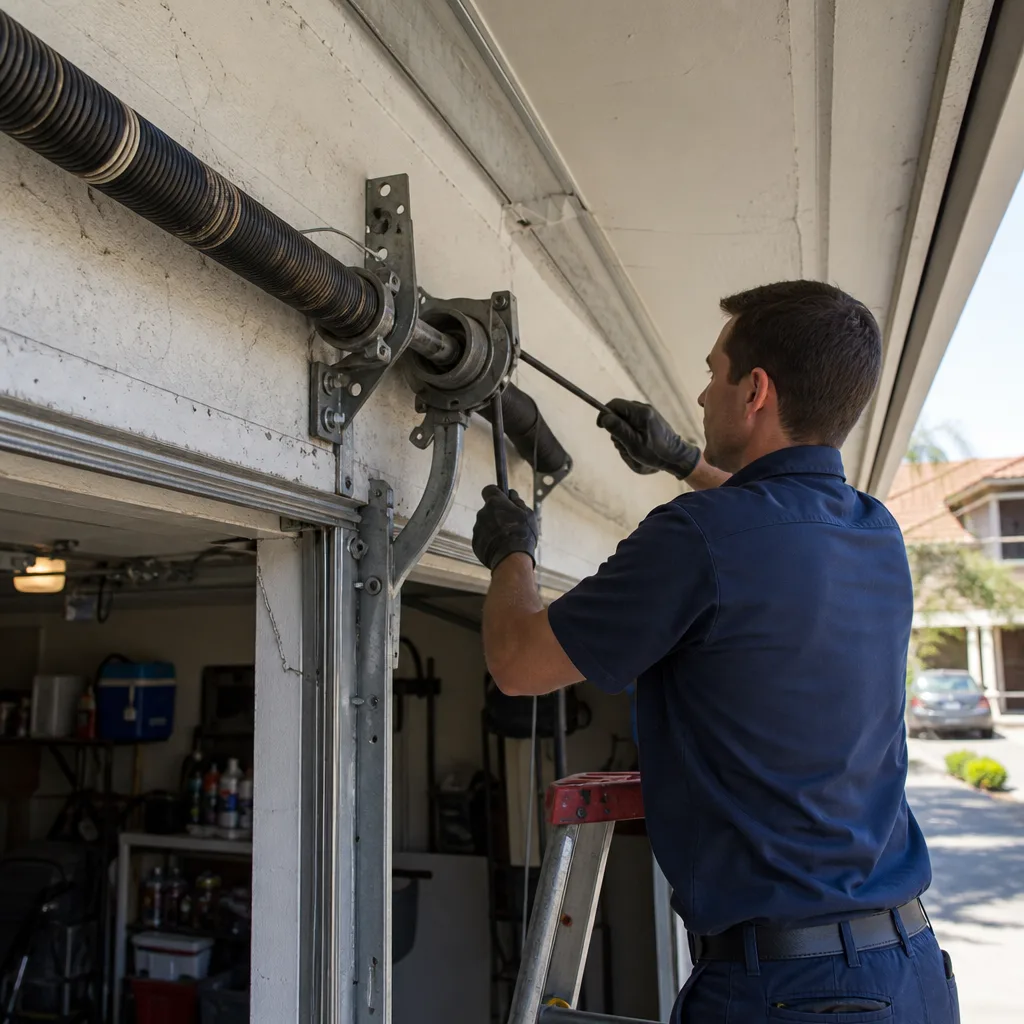
A C-61/D28 contractor, which is the Door and Gate specialty classification, can perform the physical installation of the garage door, the track system, the springs, the hinges, the rollers, and the hardware. That’s the entire mechanical scope of a garage door replacement. The D28 classification does not extend to electrical work. Running new wire, adding a receptacle, modifying a branch circuit, or hardwiring an opener all require a C-10 Electrical contractor. Servo Garage Doors Santa Clarita holds its C-61/D28 and coordinates with a licensed C-10 for the electrical scope when the job calls for it. That coordination is standard practice and protects the homeowner’s permit.
The distinction matters for permits. If the job triggers an electrical permit, the permit must be pulled by the C-10, not the D28. When you hire a contractor for a job that includes both mechanical and electrical work, ask directly: which scope does your license cover, and who is pulling the electrical permit? A contractor who waves the question off is telling you what you need to know. For a full walkthrough, see How to Hire a Garage Door Contractor in Santa Clarita: A Step-by-Step Guide.
What the Inspector Checks During a Garage Door Inspection
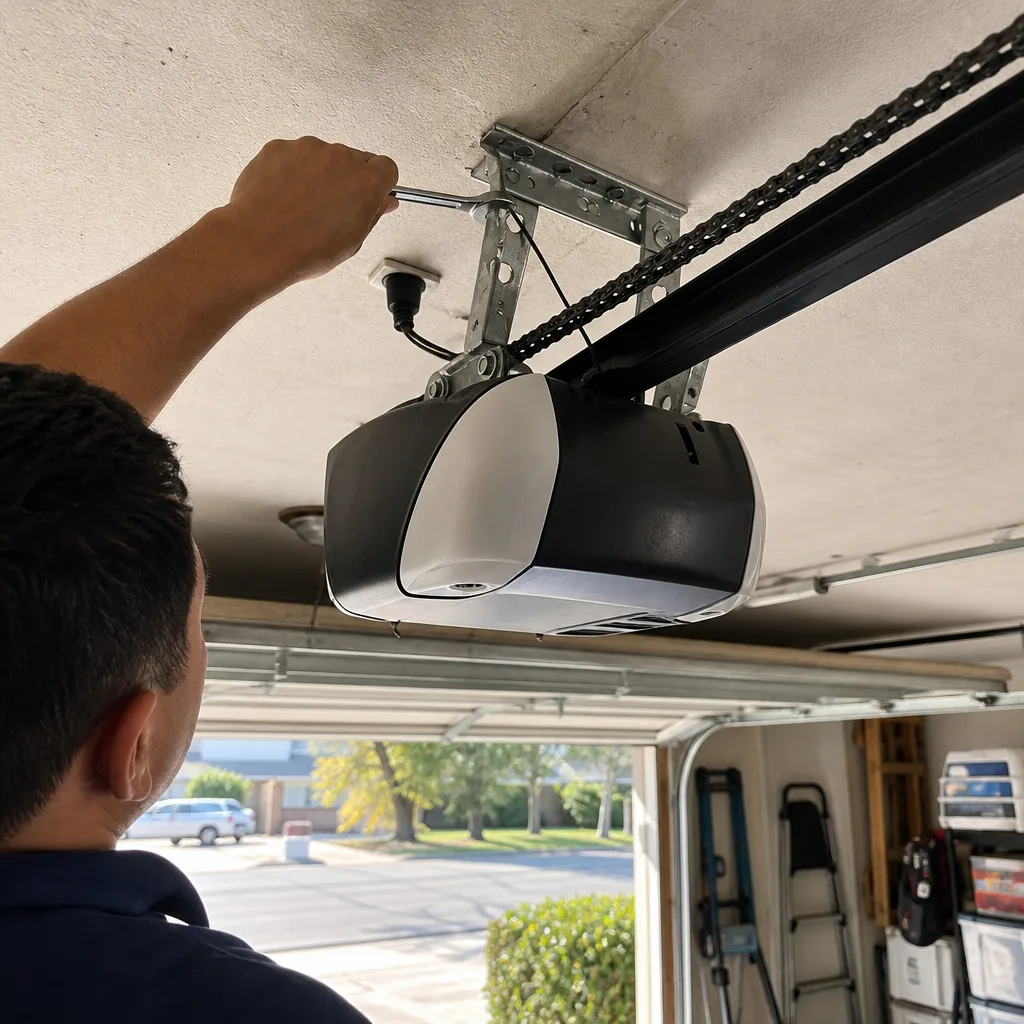
If the inspector is coming out for your garage door permit, here’s what they’re actually looking at. This is not a mystery list; it’s a punch list, and knowing it before the inspection keeps you from failing the first trip.
- Header and framing: For structural work, the inspector verifies the installed header matches the approved plan, including dimensions, material, and connection details. The header must bear on the approved bearing points, not on shims or improvised blocking.
- Attachment brackets: The door track brackets must be secured with the specified fastener pattern into the framing. The inspector will check bolt spacing and lag size. Corner brackets bolted through drywall into a single stud will not pass.
- Fire-rated door label: For fire-separation replacements, the inspector looks for the certification label on the door or for the manufacturer’s spec sheet if the label was removed. A painted-over label fails unless the documentation is present.
- Electrical rough-in: If the job included electrical work, the C-10 pulls a separate electrical inspection. The inspector verifies the circuit size, the receptacle placement, and the grounding. A wall-mount opener on a shared general-purpose circuit may be conditional depending on the City’s current electrical interpretive guidelines.
- Wind load documentation: In wind-hazard areas of Santa Clarita, the inspector may ask for the door manufacturer’s wind-load certification. This is especially true for homes on the exposed canyon slopes or in areas with known Santa Ana exposure.
When an inspector fails a job, the failure is written up. The correction list is specific. The contractor fixes the list, calls for re-inspection, and the permit closes. It’s a process designed to leave a paper trail, not a negotiation.
Common Mistakes to Avoid
- Buying a door online and hiring a handyman to mount it. A handyman without a D28 license cannot legally install a garage door in California, and any structural or fire-separation work done under those circumstances lands on you at resale.
- Replacing the fire-rated pedestrian door with whatever’s at the big-box store. That door is a 20-minute fire-rated assembly. A hollow-core interior door will fail a fire inspection and will not pass in Santa Clarita.
- Converting a single door to a double without a permit. Removing a post, the load path changes. The house does not care about the contractor’s confidence; it cares about the beams and bearing points.
- Trusting the “we don’t pull permits around here” line. The City’s records are searchable by address. The buyer’s inspector will find it. The disclosure packet will ask about it. The answer to that line should be to find a different contractor, not a different city.
- Ignoring the opener’s electrical reality. A dead outlet behind the opener that needs a new home run is an electrical permit item. Skipping it to “save time” is how a simple replacement becomes a disclosure problem later.
When to Call a Professional
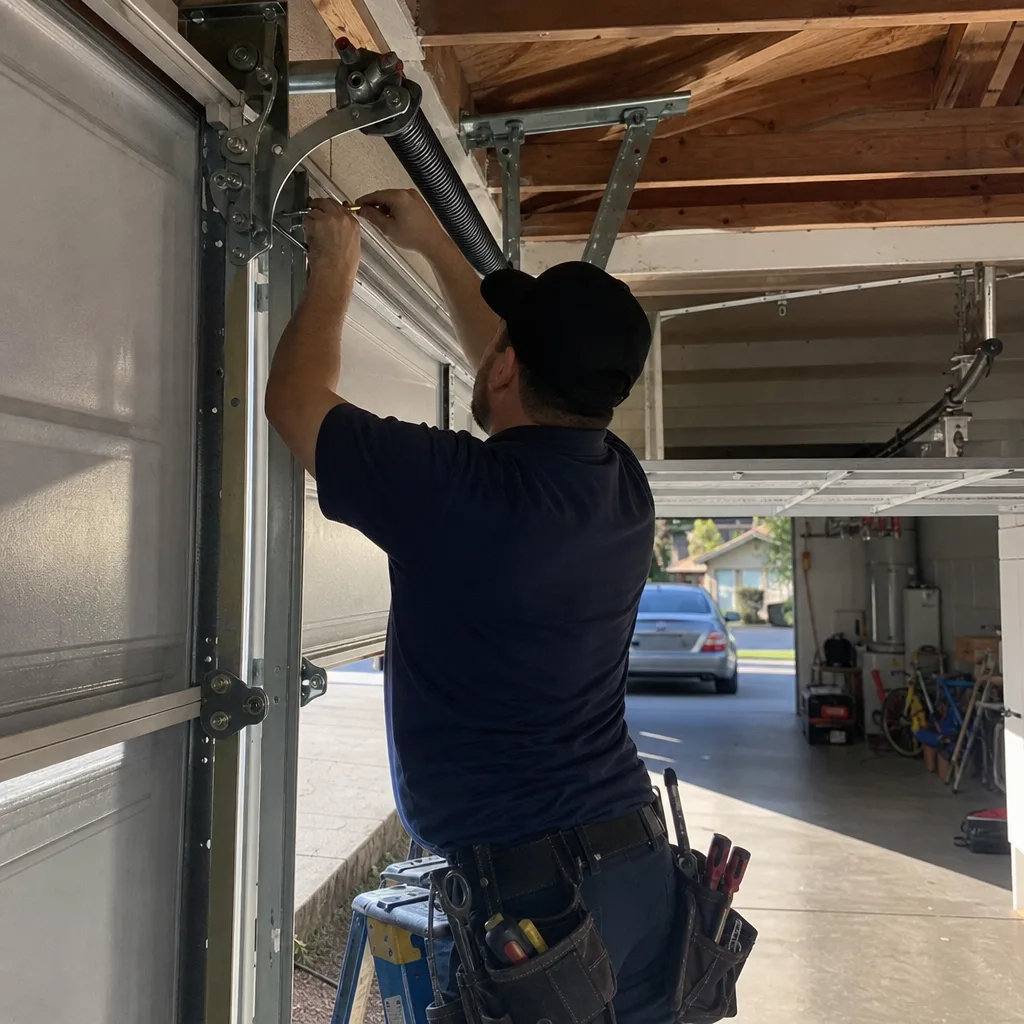
If your job involves a structural header modification, a fire-rated door replacement, or adding electrical circuitry, the right move is to bring in a licensed contractor, not to work through the permit alone. The contractor’s license number goes on the permit application, and the permit process moves faster when the City sees a qualified D28 or C-10 on the paperwork. A professional is also the one who can tell you, before you pay for a permit, whether your job actually needs one, a conversation that costs you a phone call. Servo Garage Doors Santa Clarita offers free estimates in Santa Clarita; call (661) 542-4007 and we’ll walk the project scope with you, identify which conditions apply, and give you a written plan for the work and the permits, before any commitment.
Frequently Asked Questions
Not always. Replacing an existing garage door with a same-size door on an unmodified header generally does not require a permit. The permit requirement kicks in when the structural opening changes, when a fire-rated door between garage and living space is replaced in a city like Santa Clarita that enforces documentation, or when new electrical work is added for the opener. For an exact answer on your property, call the Santa Clarita Building and Safety Division or ask a licensed contractor to check.
For a typical residential garage door permit with structural modifications, expect $300 to $800 in plan check and issuance fees combined. A simple electrical permit typically runs under $200. The exact fee is based on project valuation, and the City’s permit counter gives you the fee schedule before you commit.
No. A C-61/D28 contractor can install the door, track, springs, and opener bracket, but any new wiring requires a C-10 Electrical contractor to pull the electrical permit. At Servo Garage Doors Santa Clarita, we coordinate that electrical scope so the permits stay clean and the inspection passes.
California’s Transfer Disclosure Statement requires you to disclose unpermitted work. A buyer’s inspector may flag the opening, the building department may be contacted, and a retroactive permit could be required before the sale closes. The retroactive permit often costs more than the original permit would have. The paper trail is cheaper before the work starts.
Yes. California Building Code Section R302.5 requires a minimum 30-minute fire-rated wall and a 20-minute fire-rated door between the garage and the living space. In Santa Clarita, the door’s rating must be documented. If the old door’s label is gone, the replacement’s rating must be shown with a certification label or the manufacturer’s spec sheet.
Structural plan review typically takes 7 to 14 business days. Fire-door documentation reviews are often same-day or next-day. After issuance, the inspection happens after the work is done, and closing the permit takes as long as the punch list takes. The process is advertised on the City’s website, and the permit counter can confirm current timelines for your scope of work.
The Bottom Line
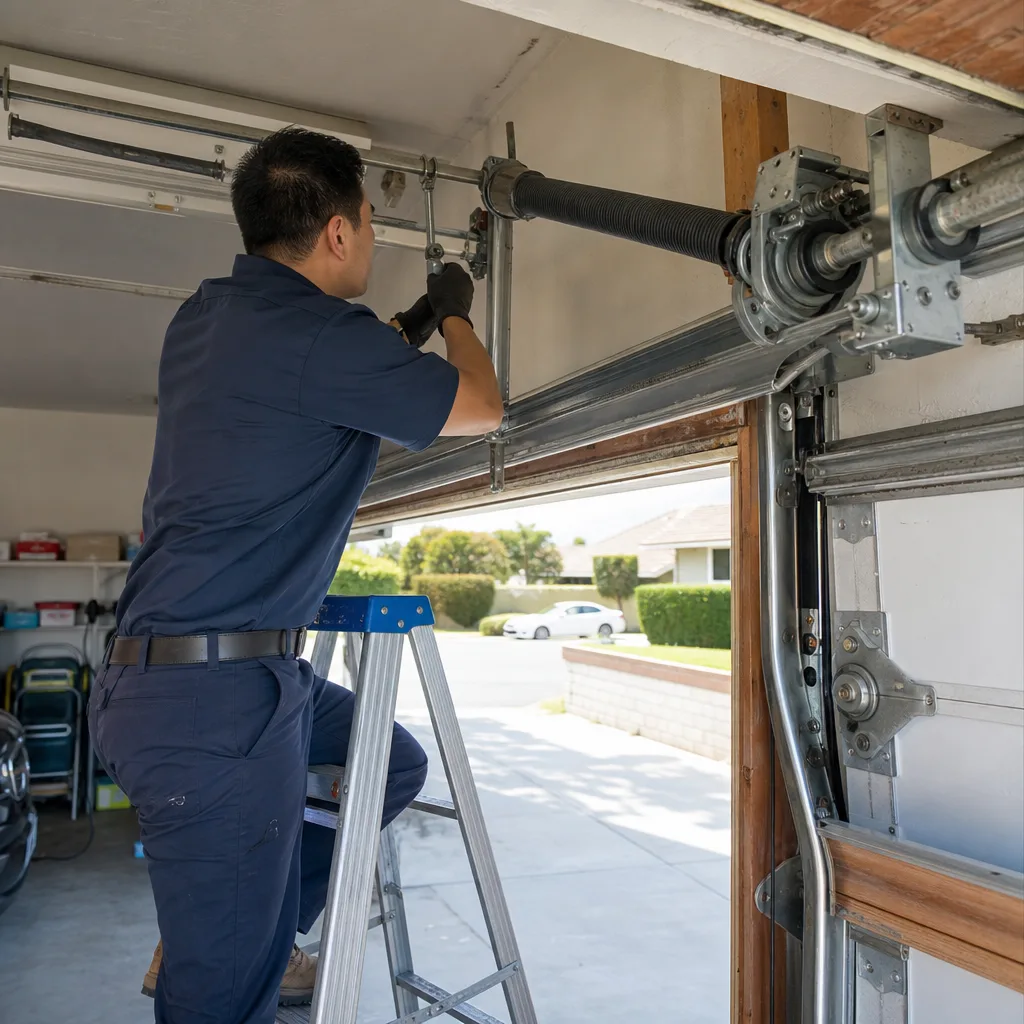
A garage door permit in California, and specifically in Santa Clarita, is a documentation problem, not a mystery. The code sections are specific, the trigger conditions are limited, and the process is followable. The House’s job is to close the loop, not to guess. If the job is a same-size replacement on a good header with no electrical work, write the scope down and get the receipt. If the job touches the header, the fire-rated door, or the electrical panel, pull the permit and keep the paper trail. Servo Garage Doors Santa Clarita has been installing and repairing garage doors under the same discipline since 2015: written price before work starts, documentation of what was done, and permits pulled when the job calls for them. For garage door repair in Santa Clarita, garage door installation in Santa Clarita, or garage door opener repair and installation in Santa Clarita, call (661) 542-4007 for a free estimate. We’ll tell you exactly what your job requires, in writing, before any work starts.
Written by Marcus Deller, Owner at Servo Garage Doors Santa Clarita, serving Santa Clarita since 2015.